
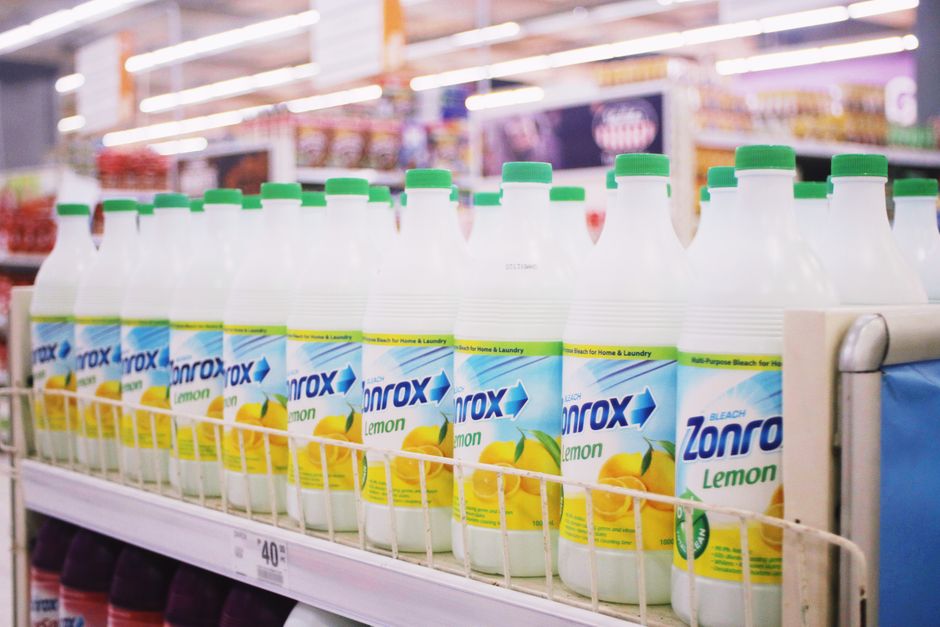
Bleach is not a good solution for mold on porous surfaces, and experts advise against using it for most mold problems in homes. The science is clear: bleach cannot penetrate porous materials like drywall and wood, so it only bleaches the surface mold while leaving the roots alive to regrow. On non-porous surfaces like tile and glass, bleach can kill surface mold, but it is still not the preferred method for treating larger mold infestations.
Why Bleach Fails on Porous Surfaces
Mold grows roots called hyphae that dig into whatever surface they land on. When mold grows on drywall, wood, or ceiling tile, those roots penetrate deep into the material. Bleach is mostly water. The active ingredient, sodium hypochlorite, stays on the surface while the water soaks in.
This means the bleach never reaches the mold roots. It only whitens the surface, making the mold appear gone. Within days or weeks, the mold grows back from the surviving roots. The Environmental Protection Agency and most industrial hygienists recommend removing porous materials that are heavily mold-damaged rather than trying to clean them.
Even on surfaces that appear smooth, tiny cracks and pores can hide mold roots. If you cannot remove the material, professional remediation is often the safer option.
What Bleach Can and Cannot Kill
Bleach does kill many types of mold on non-porous surfaces. Tile, glass, metal, and sealed countertops can be effectively cleaned with a bleach solution when the mold is only on the surface. The key word is surface. If mold has not penetrated the material, bleach can work.
The problem is knowing whether mold has penetrated. Visible mold on grout, for example, often has roots extending into the porous grout itself. Grout is technically a porous material even though it looks smooth. Cleaning it with bleach may whiten the surface while the mold continues growing underneath.
For non-porous surfaces, a bleach solution of one cup bleach per gallon of water is commonly recommended by public health agencies. Always use bleach in a well-ventilated area and never mix it with ammonia or other cleaners. Mixing bleach with ammonia creates toxic chloramine gas, and mixing with acidic cleaners creates chlorine gas.
Why Experts Recommend Against Bleach for Mold
Experts give several reasons for avoiding bleach as a mold treatment. First, bleach does not work on porous surfaces, which is where most household mold grows. Second, bleach can actually feed some mold species. Research has shown that certain molds can break down the components of bleach and use them as nutrients. This is not true for all molds, but it is a documented concern.
Third, bleach is harsh on human health. The fumes can irritate the lungs, eyes, and skin. People with asthma, allergies, or respiratory conditions are especially vulnerable. Using bleach in a confined space like a bathroom without proper ventilation can cause coughing, wheezing, and breathing difficulty.
Fourth, bleach does not address the underlying moisture problem. Mold grows because there is water. If you clean the mold but do not fix the leak or humidity issue, the mold will return no matter what you use. Bleach gives a false sense of accomplishment because the mold disappears visually, but the conditions that caused it remain unchanged.





Is Bleach Good For Mold Why Experts Say No — The Evidence
Studies on bleach and mold have produced surprising results. Some research indicates that bleach is actually less effective at killing mold than plain water. This sounds counterintuitive, but the reasoning is that water penetrates porous surfaces better and disrupts the mold structure. Bleach, by contrast, stays on the surface and does not reach the mold colony.
Other studies have found that bleach can create conditions that allow certain mold species to thrive. When bleach breaks down, it leaves behind salt residues. Some mold species tolerate or even prefer these conditions. This is not a universal finding, but it is enough to make experts cautious about recommending bleach as a primary mold treatment.
The consensus among environmental health professionals is clear. Bleach is not recommended for mold remediation on porous surfaces. For non-porous surfaces, it is acceptable but not ideal. The best approach is always to fix the moisture problem first, then address the mold.
Safer Alternatives for Mold Removal
For small areas of mold on non-porous surfaces, a simple solution of dish soap and water is often sufficient. Scrub the area, rinse it, and dry it thoroughly. Mold cannot grow without moisture, so drying is the most important step.
For porous surfaces with mold, the standard recommendation is removal and replacement. Cut out the affected drywall, remove the damaged wood, and replace it after fixing the moisture source. This is not always convenient, but it is the only method that reliably eliminates mold that has penetrated a material.
Commercial mold removers exist, but they vary widely in effectiveness. Some contain hydrogen peroxide, which can penetrate porous surfaces better than bleach. Others contain quaternary ammonium compounds, which are effective at killing mold but can be irritating to the lungs. No product works if the moisture problem is not fixed first.
Vinegar has gained popularity as a natural mold remover. Some studies suggest vinegar can kill certain mold species on non-porous surfaces. The evidence is limited, and vinegar is not a registered disinfectant. It may have a place in routine cleaning, but it is not a proven mold remediation tool.
When to Call a Professional
Small areas of mold, roughly less than ten square feet, can often be handled by homeowners. Larger areas, or mold that keeps returning, warrant professional assessment. If you have health conditions like asthma, or if you suspect the mold is toxic, do not attempt to clean it yourself.
Professional mold remediation companies have specialized equipment and training. They can identify the type of mold present, find the moisture source, and remove contaminated materials safely. They also use containment procedures to prevent mold spores from spreading to other parts of the home during removal.
If you see mold after a flood, take extra caution. Floodwater can contain sewage and other contaminants. Do not attempt to clean flood-damaged materials yourself. Discard anything porous that came into contact with floodwater, and call professionals for the rest.
Preventing Mold Before It Starts
Mold prevention is simpler than mold removal. Control moisture in your home, and mold will not have the conditions it needs to grow. Fix leaks promptly. Dry wet areas within 24 to 48 hours. Use exhaust fans in bathrooms and kitchens. Keep indoor humidity between 30 and 50 percent.
Pay attention to areas where moisture collects. Check under sinks, around windows, and in basements. Look for condensation on pipes and walls. Address any water intrusion immediately, even if you cannot see mold yet. Mold can begin growing within 24 to 48 hours of water exposure.
Good ventilation is important. Stagnant air allows moisture to linger. Open windows when weather permits, run fans, and make sure your HVAC system is functioning properly. These simple habits do more to prevent mold than any cleaning product ever will.
Frequently Asked Questions
Can I use bleach to kill mold on tile?
Yes, bleach can kill surface mold on non-porous tile, but it is not the preferred method for grout or other porous materials. A soap and water scrub followed by thorough drying is often just as effective and safer for your lungs.
Why does mold come back after using bleach?
Mold comes back because bleach only whitens the surface and does not kill the roots embedded in porous materials. The moisture problem that caused the mold also remains, allowing regrowth.
What is the best way to remove mold from drywall?
The best way to remove mold from drywall is to cut out and replace the affected section. Drywall is porous, and mold roots penetrate deep into the material where no cleaning product can reach.
Is vinegar better than bleach for mold?
Vinegar is not proven to be better than bleach, but it is less toxic to breathe. Some studies suggest vinegar can kill certain mold species on non-porous surfaces, but no cleaning product replaces fixing the underlying moisture problem.
