
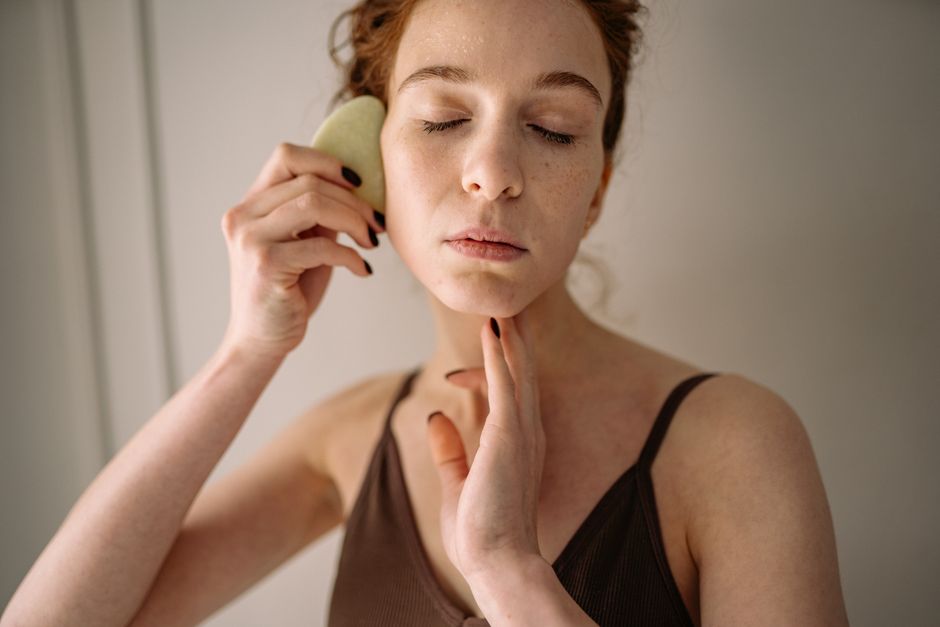
Beef tallow is rendered beef fat, and it has become one of the most talked-about skincare ingredients online. The short answer: it can moisturize your face, but there is no clinical evidence that it is better than standard moisturizers, and it carries real risks for people prone to acne or with sensitive skin. It is a traditional fat with real emollient properties — not a proven skincare treatment.
What Is Beef Tallow, Exactly?
Beef tallow is the fat rendered from beef suet, the hard fat around the kidneys and loins. Rendering means melting the fat slowly and straining out the solid bits, which leaves a shelf-stable, semi-solid fat that is mostly saturated and monounsaturated fatty acids.
In skincare terms, tallow is an emollient. Emollients fill the small gaps between skin cells and make the surface feel softer and smoother. That is a real, well-understood function. It is also the same basic job performed by petrolatum, shea butter, and the oils in ordinary moisturizers.
One point that gets lost in the online conversation: tallow is not a new discovery. It has been used as a skin protectant for generations in many cultures, long before it became a social media trend. Traditional use is not the same as proof of benefit, but it does explain why the ingredient feels familiar to so many people.
Is Beef Tallow Good For Your Face?
For dry, intact skin, tallow can work as a moisturizer. Its fatty acids and cholesterol are similar to some of the lipids found naturally in human skin, which is why it spreads well and feels occlusive — meaning it forms a layer that slows water loss from the skin surface.
That occlusive effect is the main mechanism. By reducing water loss through the skin, tallow can temporarily improve dryness and roughness. This is the same principle behind petrolatum, which remains one of the most effective and best-studied occlusive ingredients in dermatology.
What tallow does not have is clinical trial evidence showing it outperforms established moisturizers. No large human trials have confirmed that tallow is superior for hydration, barrier repair, or any skin condition. The claims you see online — that it “heals” eczema, “balances” skin, or replaces a full skincare routine — go beyond what any published research supports.
So the honest position is this: tallow is a reasonable traditional emollient, and it is not a proven treatment. Those are two different things.
What Are the Risks of Putting Beef Tallow on Your Face?
The biggest concern is acne. Beef tallow is high in saturated fat and is fairly heavy and occlusive. For people with oily or acne-prone skin, occlusive ingredients can trap oil and dead skin cells in pores, which may contribute to clogged pores and breakouts.
This does not happen to everyone. Skin responses vary widely, and some people with dry skin tolerate heavy emollients well. But the risk is real enough that dermatologists generally do not recommend thick occlusive fats for acne-prone skin.
Other considerations:
- Comedogenicity varies by product. How likely a fat is to clog pores depends on how it is refined and what else is in the product. There is no reliable rating specific to every tallow product on the market.
- Purity and contamination. Tallow sold for cooking is not held to the same standards as cosmetics. Skincare products should be formulated and tested for use on skin. Buying food-grade fat and applying it to your face is not the same as using a cosmetic product.
- Allergic reactions are possible. Any topical ingredient can cause contact dermatitis in some people. If you notice redness, itching, or swelling, stop using it.
- Fragrance and additives. Many tallow balms include essential oils or fragrances, which are common causes of skin irritation and allergic contact dermatitis.
If you have a diagnosed skin condition such as eczema, rosacea, or psoriasis, talk to a dermatologist before adding any new occlusive product to your routine. This is especially true if you are using prescription treatments, because heavy occlusives can affect how those products absorb.
How Does Beef Tallow Compare to Regular Moisturizers?
Standard moisturizers are built from ingredients with decades of safety and efficacy data. Petrolatum, glycerin, ceramides, and dimethicone all have strong evidence behind them for reducing water loss and improving skin hydration.
Tallow’s fatty acid profile is genuinely similar to human skin lipids in some respects, and that is the basis for most of the enthusiasm online. But similarity to skin lipids is not the same as demonstrated clinical benefit. A logical mechanism does not prove a product works better than what already exists.
The table below compares tallow with common moisturizing ingredients on the factors that matter most. It reflects general properties, not results from head-to-head trials, because those trials do not exist for tallow.
| Ingredient | Main Function | Evidence Base | Acne Risk |
|---|---|---|---|
| Beef tallow | Occlusive emollient | Traditional use; limited clinical data | Higher for some people |
| Petrolatum | Occlusive; reduces water loss | Extensive clinical data | Low; generally well tolerated |
| Glycerin | Humectant; draws in water | Extensive clinical data | Low |
| Ceramides | Supports skin barrier lipids | Good clinical data | Low |
| Shea butter | Emollient | Moderate data | Moderate for some |
The pattern is clear. Tallow sits in the same functional category as well-studied emollients, but it has far less evidence behind it. If your goal is simply softer, less dry skin, established moisturizers have a stronger track record.
Who Should Avoid Beef Tallow on Their Face?
People with acne-prone or oily skin should be cautious. So should anyone with a history of clogged pores or milia, since heavy occlusives can worsen both.
People with sensitive skin or a known allergy to beef products should avoid it. Anyone with an active skin flare, open skin, or a rash should not apply a new occlusive product until the skin has settled and a clinician has weighed in.
There is also a practical point about how tallow is used. Many tallow balms are marketed as a single product that replaces cleanser, moisturizer, and treatment. That is marketing, not dermatology. Skin needs cleansing and, for many people, sun protection. No single fat covers all of that.
What Does the Evidence Actually Say?
The evidence for beef tallow as a facial skincare ingredient is thin. There is a long history of traditional use and a plausible mechanism — occlusive fatty acids reducing water loss — but no large, well-controlled human trials comparing tallow to standard moisturizers.
What is well established is that occlusive moisturizers reduce water loss from the skin and improve dryness. That principle is solid. The question is whether tallow is the best way to apply it, and the honest answer is that we do not have the research to say it is.
This is a case where the absence of evidence matters. When a product is promoted as a cure-all for skin problems, the burden of proof should be on the product. So far, that proof has not been produced.
If you want to try tallow, treat it as what it is: a traditional moisturizer, not a treatment. Patch test first, watch for breakouts, and do not stop prescribed skin care in favor of it.
Frequently Asked Questions
Is beef tallow good for your face?
It can moisturize dry skin because it is an occlusive emollient, but there is no clinical evidence it works better than standard moisturizers. It may clog pores in acne-prone skin.
Can beef tallow cause acne?
It can contribute to clogged pores and breakouts in some people because it is a heavy, occlusive fat. People with oily or acne-prone skin should be cautious.
Is beef tallow better than regular moisturizer?
No clinical trials have shown that. Regular moisturizers contain ingredients with far more safety and efficacy data, such as petrolatum, glycerin, and ceramides.
Can I put cooking tallow on my face?
It is not recommended. Food-grade tallow is not formulated or tested for skin use, and cosmetic products are held to different standards.
