
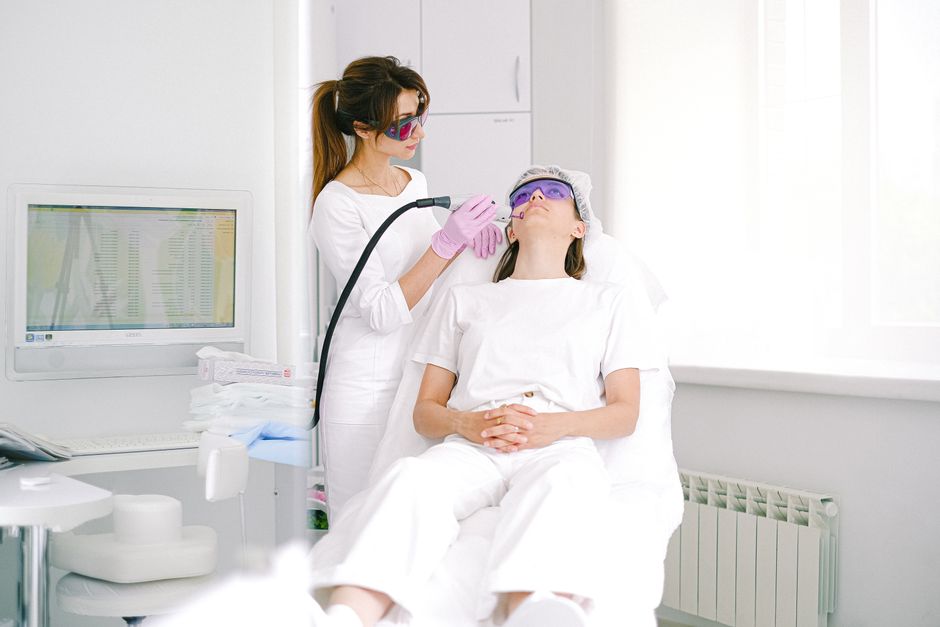
BroadBand Light (BBL) treatment feels like a quick snap of a rubber band against your skin, followed by a brief flash of heat. Most people rate the discomfort at 3 to 5 on a 10-point scale. The sensation lasts less than a second per pulse, and the entire face usually takes 15 to 30 minutes. No numbing cream is required for most patients, though some clinics offer it.
Is BBL Laser Painful? What the Treatment Actually Feels Like
BBL is not a laser. It is intense pulsed light, or IPL. The device fires broad-spectrum light across many wavelengths rather than a single focused wavelength like a true laser. That distinction matters for how the treatment feels.
Each pulse delivers a short burst of light energy. Patients consistently describe the sensation as a rubber band snap or a small static shock. The heat comes immediately after — a warm, prickling feeling that fades within a second or two. The device also blows cool air onto the skin during treatment, which helps offset the heat.
Pain varies by treatment area. The face is generally well tolerated. Areas with thinner skin or more nerve endings — the upper lip, the nose, the neck, and the hands — tend to sting more. Larger treatment areas like the chest or back require more pulses, so the cumulative discomfort can feel more noticeable even if each individual pulse is the same.
Most providers do not use topical numbing cream for standard BBL sessions. Some clinics offer it, particularly for patients with lower pain tolerance or for more aggressive settings. Whether numbing cream changes outcomes is not well studied. It is a comfort measure, not a clinical requirement.
How Long Does the Discomfort Last During and After Treatment?
The discomfort during treatment is momentary. Each pulse lasts a fraction of a second. Between pulses, there is no ongoing pain — just warmth and the cool air from the device.
After the session, the skin typically feels warm and slightly tight, similar to a mild sunburn. This usually resolves within a few hours. Some patients notice mild swelling or redness that persists for a day or two. Cold compresses and gentle moisturizer are commonly recommended. Avoiding direct sun exposure after treatment is standard advice because the skin is more sensitive during recovery.
More aggressive settings — used for pigmentation, vascular lesions, or skin tightening — can produce more discomfort during treatment and a longer recovery period. Settings are adjusted based on skin type, concern being treated, and the provider’s clinical judgment. Higher energy does not automatically mean better results, and it does increase discomfort.
What Factors Make BBL More or Less Painful?
Skin type plays a role. People with darker skin tones may require different device settings to reduce the risk of burns and pigmentation changes. The discomfort level can vary depending on how the provider adjusts those settings. This is one reason treatment should be performed by an experienced provider who understands how to calibrate the device for different skin types.
Treatment area matters significantly. The forehead and cheeks are generally less sensitive than the upper lip or around the nose. The neck is often reported as more uncomfortable than the face. Body areas with more hair follicles or pigment may also feel more intense because the light energy targets melanin and hemoglobin.
Individual pain tolerance varies widely. Some people describe BBL as barely noticeable. Others find it moderately uncomfortable but tolerable. Anxiety before treatment can amplify perceived pain. Knowing what to expect helps most patients manage the sensation without difficulty.
Medications and skin condition also affect sensitivity. Certain medications increase photosensitivity, which can make treatment more uncomfortable and increase the risk of adverse reactions. Providers typically review medications before treatment for this reason.

Does BBL Hurt More Than Other Light or Laser Treatments?
BBL is generally considered less painful than ablative lasers, which remove the top layer of skin and require significant recovery time. Fractional lasers and CO2 lasers are widely reported as more uncomfortable both during and after treatment.
Compared to other IPL devices, BBL discomfort is similar. The technology is the same category. Differences between devices are more about cooling mechanisms, pulse duration, and provider technique than about inherent pain levels.
Some patients find BBL more uncomfortable than a chemical peel or microneedling. Others find it easier. There is no standardized way to compare pain across cosmetic procedures because perception is subjective and study designs vary. What is consistent is that BBL is not typically described as severely painful.
What Can You Do to Reduce Discomfort During BBL?
Communication with your provider is the most effective tool. Tell them if the sensation is more than you expected. They can adjust energy settings, increase cooling, or pause between pulses. There is no clinical benefit to enduring unnecessary pain.
Arriving with clean skin free of makeup, lotions, or topical products reduces interference with the light energy and may allow for more efficient treatment. Some providers recommend avoiding sun exposure for a period before treatment, as tanned or sunburned skin can be more sensitive and increases the risk of complications.
Over-the-counter pain relievers taken before treatment are not routinely recommended. Some medications, including certain anti-inflammatories, could theoretically affect healing, though this has not been well studied specifically for BBL. Ask your provider before taking anything in advance.
Topical numbing cream, when offered, is typically applied 20 to 30 minutes before treatment. Its effectiveness for BBL specifically has not been established in large clinical trials, but it is widely used in clinical practice for patient comfort. If you are concerned about pain, it is reasonable to ask whether it is available.
Cooling during treatment is built into most modern BBL devices. The chilled air or contact cooling significantly reduces the heat sensation. If your provider’s device does not have integrated cooling, that is worth asking about beforehand.
Is BBL Safe, and What Are the Real Risks?
BBL is cleared by the FDA for several skin conditions, including pigmentation, vascular lesions, and certain signs of skin aging. It has a long track record in dermatology. That does not mean it is risk-free.
Common side effects include redness, mild swelling, and temporary darkening of pigmented spots before they flake off. These are expected and usually resolve within days to a week or two. Blistering, burns, and scarring are rare but possible, particularly with improper settings or treatment by an inexperienced provider.
People with darker skin tones face a higher risk of post-inflammatory hyperpigmentation or hypopigmentation when treated with IPL devices. This does not mean BBL cannot be performed safely on darker skin — it means the provider must adjust settings appropriately and have experience treating diverse skin types. Not all clinics do.
BBL is not recommended for people taking certain photosensitizing medications, those with active skin infections in the treatment area, or those with certain autoimmune conditions. A thorough consultation before treatment is not a formality — it is how providers identify who should not be treated.
Results vary. Some people see improvement in pigmentation and redness after one session. Others need multiple sessions. The evidence supports BBL for certain conditions, but it is not a cure for all skin concerns, and marketing claims sometimes go beyond what studies have shown. No clinical evidence currently confirms that BBL tightens skin or reverses aging beyond what is documented for specific pigment and vascular targets.
Frequently Asked Questions
How painful is BBL laser treatment on a scale of 1 to 10?
Most patients rate BBL discomfort between 3 and 5 out of 10. The sensation is brief — each pulse feels like a rubber band snap and lasts less than a second.
Can I use numbing cream before BBL treatment?
Some clinics offer topical numbing cream, though it is not required for standard sessions. Its effectiveness for BBL specifically has not been confirmed in large clinical trials, so it is best discussed with your provider.
How long does the pain last after a BBL session?
Skin warmth and tightness typically resolve within a few hours after treatment. Mild redness or swelling can last a day or two.
Is BBL more painful on certain parts of the face?
Yes. Areas with thinner skin or more nerve endings — like the upper lip, nose, and neck — tend to feel more uncomfortable than the cheeks or forehead.
