
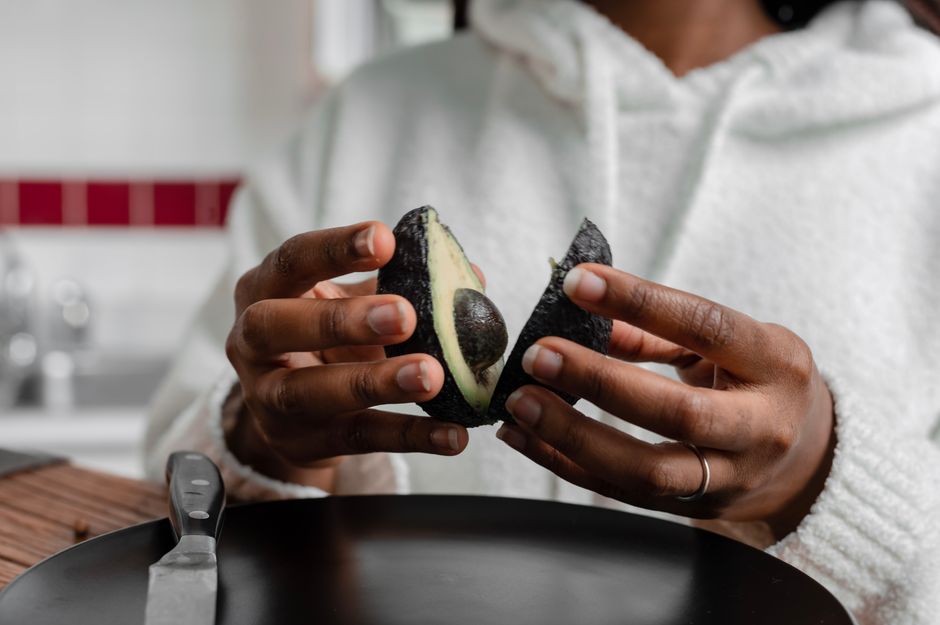
Avocado is a genuinely nutrient-dense fruit, and some of its components have real roles in skin biology. But the popular claim that eating avocado or slathering on avocado oil will transform your skin goes further than the evidence supports. Here is what is actually established, what is promising, and what is marketing.
What Nutrients in Avocado Actually Support Skin?
Avocado flesh contains several nutrients that the human body uses in skin maintenance. That part is not in dispute.
A whole avocado provides meaningful amounts of vitamin E, vitamin C, vitamin K, several B vitamins including folate and pantothenic acid, potassium, and dietary fiber. It also contains monounsaturated fat, mostly oleic acid, which helps the body absorb fat-soluble vitamins from other foods eaten at the same time.
Vitamin C is required for collagen synthesis. Without it, the body cannot properly form collagen, which is the structural protein that gives skin its firmness. Vitamin E functions as an antioxidant in cell membranes. Vitamin K plays a role in blood clotting and has been studied for its effect on skin discoloration, though the evidence there is limited.
The key word is required. These nutrients are necessary for normal skin function. That does not mean adding more of them above what the body needs will improve skin appearance. For someone eating a varied diet, avocado adds nutrients the body already has enough of.
The exception is deficiency. If someone is genuinely low in vitamin C or vitamin E, correcting that deficiency will help their skin. For everyone else, the benefit is less clear.
Can Eating Avocado Improve Your Skin?
There is no strong clinical evidence that eating avocado specifically improves skin appearance in well-nourished people. The research on avocado and skin is mostly small, short-term, and often funded by avocado industry groups.
Some studies suggest that compounds in avocado, including certain carotenoids and healthy fats, may support skin elasticity or provide some protection against UV-related oxidative stress. These findings are preliminary. They do not establish that eating avocado makes skin look better, younger, or clearer.
What the evidence does support is that overall diet quality affects skin. Diets rich in fruits, vegetables, and healthy fats are associated with better skin outcomes in observational research. Avocado fits into that pattern. It is not a standalone skin treatment.
Anyone expecting noticeable skin changes from adding avocado to their diet is likely to be disappointed. The effect, if any, is modest and difficult to separate from overall diet and lifestyle.
Is Avocado Oil Good for Skin When Applied Topically?
Avocado oil applied to the skin can act as an emollient. It sits on the surface and helps reduce water loss from the outer layer of skin, which can make skin feel softer and look less dry. This is a real, measurable effect.
Avocado oil contains oleic acid, a monounsaturated fat that can penetrate the skin barrier to some degree. It also contains vitamin E and other antioxidants. These properties make it a reasonable ingredient in moisturizers and skin care products.
What avocado oil does not do is reverse wrinkles, fade scars, treat acne, or repair sun damage. No well-designed human trial has confirmed those claims.
One practical note: oleic acid can be irritating for some people, particularly those with sensitive or acne-prone skin. If you try avocado oil and notice redness, breakouts, or irritation, stop using it. Patch-test on a small area first.
People with a known avocado allergy should not apply avocado oil to their skin. Avocado allergy is uncommon but real, and it can cause contact dermatitis in sensitive individuals.





What About Avocado Oil for Hair and Scalp?
Avocado oil is used in hair products as a conditioning agent. It can coat the hair shaft, reduce frizz, and add shine. These are cosmetic effects, not repairs.
There is no evidence that avocado oil stimulates hair growth, prevents hair loss, or treats scalp conditions like dandruff or seborrheic dermatitis. Some small studies suggest certain plant oils may have mild antifungal or anti-inflammatory properties, but this does not translate to proven hair regrowth.
If your scalp is dry or irritated, avocado oil may provide temporary relief by moisturizing the skin. If you have a scalp condition that persists, see a dermatologist. Oil is not a treatment for a medical problem.
Does Avocado Help With Acne or Eczema?
No clinical evidence supports avocado, eaten or applied, as a treatment for acne or eczema.
Acne is driven by several factors: excess oil production, clogged hair follicles, bacteria, and inflammation. Diet can influence acne in some people, but avocado is not a known trigger or treatment. Some people find that high-oleic oils, including avocado oil, worsen their acne when applied to the face.
Eczema is a chronic inflammatory skin condition. It requires medical management. Moisturizing is part of that management, and avocado oil can serve as a moisturizer. It does not treat the underlying inflammation.
Do not replace prescribed treatments for acne or eczema with avocado products. If you want to add avocado oil to your routine as a moisturizer, that is reasonable. It is not a substitute for dermatologic care.
Is Avocado Oil Better Than Other Oils for Skin?
Avocado oil is one option among many. It is not clearly superior to other plant oils for skin.
| Oil | Main fatty acid | Common skin use |
|---|---|---|
| Avocado oil | Oleic acid (monounsaturated) | Emollient, moisturizer |
| Coconut oil | Lauric acid (saturated) | Moisturizer, may clog pores in some |
| Jojoba oil | Wax esters | Moisturizer, often well tolerated |
| Sunflower oil | Linoleic acid (polyunsaturated) | Moisturizer, supports skin barrier |
| Argan oil | Oleic and linoleic acid | Moisturizer, lightweight |
Which oil works best depends on your skin type. Oils high in linoleic acid, like sunflower oil, tend to be better for acne-prone skin because they are less likely to clog pores. Oils high in oleic acid, like avocado and coconut, can be heavier and more comedogenic for some people.
There is no universal best oil. Personal tolerance and skin type matter more than brand claims.
What Are the Risks of Avocado for Skin?
Avocado allergy is the main concern. It is uncommon but can be serious. Symptoms of avocado allergy include itching, redness, hives, and in rare cases, a severe reaction called anaphylaxis.
Some people with latex allergy also react to avocado. This is called latex-fruit syndrome. If you have a latex allergy, talk to your doctor before eating or applying avocado.
Topical avocado oil can cause irritation in people with sensitive skin. It can also clog pores in some individuals, leading to breakouts.
Avocado is high in calories and fat. Eating large amounts regularly can add significant calories to your diet. One whole avocado contains roughly 240 calories and about 22 grams of fat, most of it monounsaturated. That is not a problem in moderation, but it matters if you are watching your weight.
There is no established safe upper limit for avocado consumption in healthy adults. For pregnant women, infants, and children, no specific clinical guidelines exist for avocado intake beyond general dietary recommendations.
The Bottom Line on Avocado and Skin
Avocado is a nutritious food. Its oil can work as a moisturizer. Neither is a skin treatment.
If you enjoy avocado, eat it as part of a balanced diet. If you like avocado oil in your skin care routine, use it as a moisturizer and stop if it irritates your skin. Do not expect it to clear acne, erase wrinkles, or fix eczema.
The skin care industry markets avocado as a miracle ingredient. The science does not support that. It supports avocado as a healthy food and avocado oil as a decent emollient. That is a real but modest role.
Frequently Asked Questions
Is avocado good for your skin?
Avocado provides nutrients like vitamin C and vitamin E that your skin needs, but eating it does not measurably improve skin in well-nourished people. Avocado oil can work as a moisturizer when applied topically.
Can avocado oil remove wrinkles?
No. Avocado oil can moisturize skin and temporarily plump the outer layer, which may make fine lines look less noticeable, but it does not remove wrinkles or reverse aging.
Is avocado oil good for acne-prone skin?
It depends on your skin. Avocado oil is high in oleic acid, which can clog pores in some people and worsen acne. Oils higher in linoleic acid, like sunflower oil, are often better for acne-prone skin.
Can you be allergic to avocado oil on your skin?
Yes, though it is uncommon. Avocado allergy can cause contact dermatitis with redness, itching, or rash. People with latex allergy may be more likely to react to avocado.
