
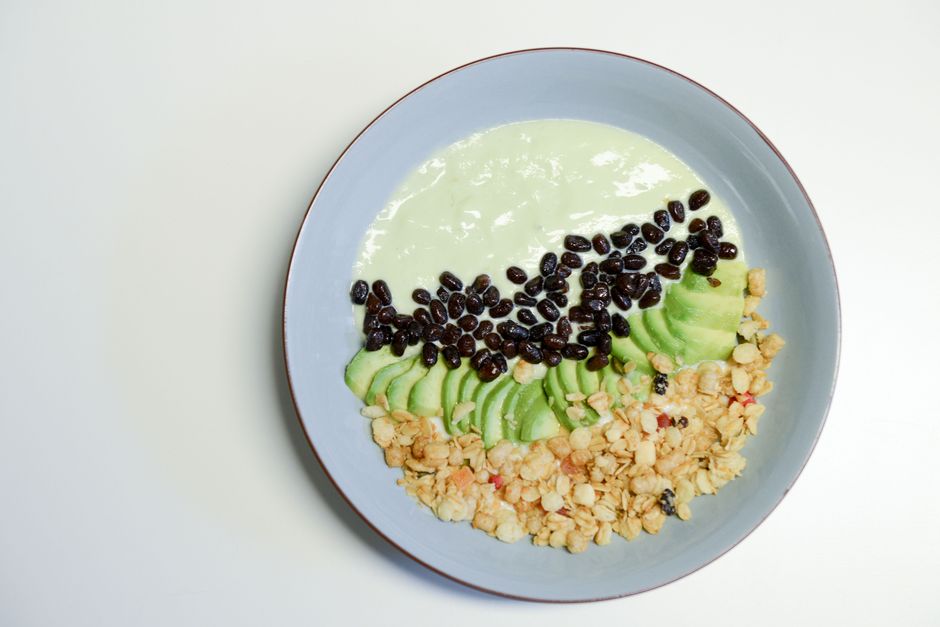
An avocado is not a good source of protein. One cup of cubed raw avocado contains about 3 grams of protein, according to USDA data. That is roughly the same amount of protein you get from a single egg white. The same cup delivers around 21 grams of fat, most of it monounsaturated. So the honest answer is simple: avocado is a fat source with a small amount of protein, not a protein food.
That does not make it a bad choice. It means you should think of it the way you think of olive oil or nuts — as a source of fat that happens to carry some fiber, potassium, and vitamins. If you are building a meal around protein, avocado is a topping, not the foundation.
How Much Protein Is Actually in an Avocado?
The protein content of avocado is low by any standard. A whole medium avocado, roughly 200 grams of edible flesh, provides around 4 grams of protein. A cup of cubed avocado provides about 3 grams.
For context, here is how avocado compares to foods people commonly reach for when they want protein:
| Food (portion) | Protein | Fat |
|---|---|---|
| Avocado, 1 cup cubed | ~3 g | ~21 g |
| Large egg | ~6 g | ~5 g |
| Chicken breast, 3 oz cooked | ~26 g | ~3 g |
| Greek yogurt, plain, 1 cup | ~20 g | varies by fat content |
| Cooked lentils, 1 cup | ~18 g | ~1 g |
Those protein figures come from USDA nutrient data and are well established. The pattern is clear. Avocado has more than six times as much fat as protein by weight. Foods we call protein foods have the ratio reversed.
There is one more detail worth knowing. The protein in avocado is not “complete” in the way animal protein is. Like most plant foods, it is lower in at least one essential amino acid. That matters less than people think if you eat a varied diet across the day, because your body pools amino acids rather than requiring every meal to be complete. But it does mean avocado should not be your main protein anchor.
Is Avocado a Fruit or a Vegetable?
Botanically, avocado is a fruit. Specifically, it is a single-seeded berry that develops from the flower of the avocado tree and contains its seed. That classification is not in dispute.
The confusion comes from how we use it. In the kitchen, avocado behaves like a vegetable — it goes in salads, on toast, and into savory dishes. Nutritionally, it sits closer to olives and nuts than to apples or berries, because it is low in sugar and high in fat.
This matters for one practical reason. Dietary guidelines group foods partly by their nutrient profile, not just their botanical origin. Avocado is often counted with fats and oils rather than with fruits in nutrition planning, precisely because its fat content is so much higher than what you find in typical fruit. A cup of apple slices has well under half a gram of fat. A cup of avocado has around 21 grams.
What Kind of Fat Does Avocado Contain?
The fat in avocado is mostly monounsaturated fat, primarily oleic acid. Oleic acid is the same predominant fat in olive oil. This is the main reason avocado has a reputation as a “healthy fat.”
Roughly speaking, a cup of cubed avocado contains about 21 grams of total fat. Most of that is monounsaturated. A smaller portion is polyunsaturated, and a smaller portion still is saturated fat — around 3 grams per cup.
Replacing saturated fat with unsaturated fat is associated with lower LDL cholesterol in controlled feeding studies. That is a reasonably well-supported finding. What is less well supported is the idea that adding avocado on top of your existing diet will improve your cholesterol. The benefit comes from substitution — what you replace — not from addition. If you swap butter or mayo for mashed avocado, you shift the fat quality in a helpful direction. If you just add avocado to a diet that already has plenty of fat, the picture is murkier.
One clarification worth making: “healthy fat” does not mean unlimited fat. Fat still carries calories. A whole medium avocado has roughly 240 to 320 calories depending on size, and most of those calories come from fat.


Why Do People Think Avocado Is High in Protein?
The misconception likely comes from a few places. Avocado is often paired with protein foods — eggs, chicken, salmon — in meals marketed as high-protein. It also appears in vegetarian and vegan contexts where people are looking for protein, and it gets lumped in with “power foods” that are assumed to be protein-rich.
There is also a texture and satiety effect. Avocado is filling. Fat slows stomach emptying and triggers satiety signals, so a meal with avocado can feel more substantial than the same meal without it. That fullness gets misread as “this must be protein.”
It is not. Fullness from fat and fullness from protein are different mechanisms. Protein tends to be more satiating per calorie in controlled studies, but fat is also strongly satiating. Feeling full after eating avocado tells you nothing about its protein content.
Social media and food marketing amplify the confusion. A smoothie described as “protein-packed” because it contains avocado and a scoop of protein powder is really protein-packed because of the powder. The avocado is contributing fat, fiber, and flavor.
Should You Count Avocado Toward Your Protein Needs?
No. If your goal is to hit a protein target — say, for muscle maintenance, recovery from training, or healthy aging — avocado is not the tool for that job.
Protein needs vary by person. General guidance for most healthy adults sits around 0.8 grams of protein per kilogram of body weight per day, though needs rise with age, physical activity, pregnancy, and certain medical conditions. Athletes and older adults often need more. A single medium avocado contributes only about 4 grams. That is a rounding error against most daily targets.
Where avocado earns its place is in the fat, fiber, and micronutrient columns:
- Fiber: about 10 grams per cup of cubed avocado, which is a meaningful contribution toward the roughly 25 to 38 grams most adults are advised to get daily.
- Potassium: avocado is a good source, with more potassium per gram than banana.
- Folate and vitamin K: both present in useful amounts.
- Monounsaturated fat: a heart-favorable fat when it replaces saturated fat.
Think of avocado as a fat-and-fiber food that also carries a little protein on the side. That framing will keep your meal planning honest.
What Are Better Sources of Protein Than Avocado?
If protein is what you want, there are far more efficient choices. Animal sources tend to be protein-dense: poultry, fish, eggs, dairy, and lean meat. Plant sources that pull their weight include lentils, beans, chickpeas, tofu, tempeh, edamame, and soy milk.
Nuts and seeds are often grouped with avocado in the “healthy fat” category, and they follow the same pattern — high fat, moderate protein. Almonds, for example, have roughly 6 grams of protein per ounce, but also about 14 grams of fat. Peanuts are slightly more protein-dense. None of these are protein foods in the way chicken or Greek yogurt are.
One practical suggestion: if you want avocado in a meal and also want protein, pair it with a genuine protein source. Avocado on whole-grain toast with an egg. Avocado in a salad with chickpeas or grilled chicken. Avocado in a smoothie alongside Greek yogurt or protein powder. The avocado adds fat, creaminess, and fiber. The protein comes from the other ingredients.
Does Avocado Have Any Downsides?
Avocado is generally well tolerated, but there are a few real considerations.
Calorie density is the main one. Because it is mostly fat, avocado is easy to overeat without noticing. A “serving” in nutrition terms is often listed as one-fifth of a medium avocado, which is about 50 calories. That is much smaller than what most people put on a plate.
Avocado allergy exists, though it is uncommon. It is more frequent in people who are also allergic to latex, because the proteins overlap — a pattern called latex-fruit syndrome. Anyone with a known latex allergy should be aware of this possible cross-reactivity and discuss it with a clinician if they have reacted to avocado before.
For people on potassium-restricted diets, usually due to advanced kidney disease, avocado’s potassium content is a genuine concern. This is a situation where individual medical guidance matters more than general nutrition advice.
For most healthy adults, there is no established reason to avoid avocado. The main issue is portion size, not safety.
Frequently Asked Questions
Is avocado a good source of protein?
No. A cup of cubed avocado has about 3 grams of protein, which is low compared with real protein foods like eggs, chicken, or lentils. Avocado is primarily a fat source.
How much protein is in one whole avocado?
A whole medium avocado provides roughly 4 grams of protein, depending on its size. That is a small fraction of what most adults need in a day.
Can avocado replace meat as a protein source?
No. Avocado has far less protein per serving than meat, poultry, fish, or legumes, and its amino acid profile is less complete. It can replace some of the fat in a meal, but not the protein.
Is avocado a fruit or a vegetable?
Botanically, avocado is a fruit — a single-seeded berry. It is used like a vegetable in cooking and counted with fats in many nutrition plans because of its high fat content.
