
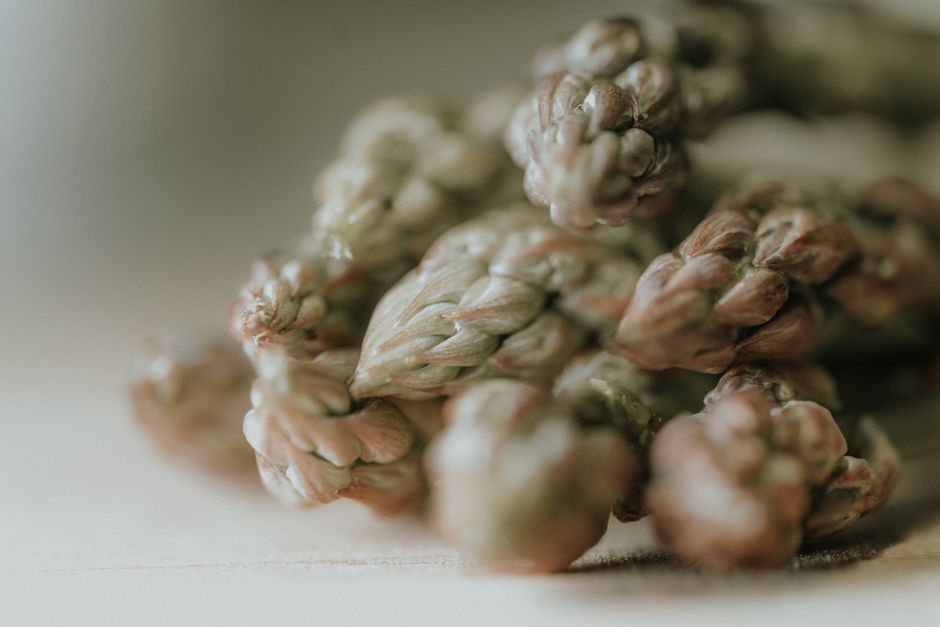
Asparagus is low FODMAP in small servings, but it is not a low FODMAP food at every portion size. Monash University, which develops and maintains the FODMAP food database used by dietitians worldwide, lists asparagus as low FODMAP at about 75 grams (roughly half a cup, or 4 to 5 spears) and moderate to high FODMAP above that amount.
That detail matters if you are following a low FODMAP diet for irritable bowel syndrome (IBS). Portion size, not just the food itself, decides whether asparagus triggers symptoms. This article explains why asparagus behaves this way, which FODMAPs it contains, how cooking affects it, and how it fits into a structured elimination diet.
What Makes Asparagus a FODMAP Food?
Asparagus contains two FODMAP groups: fructans and fructose. Fructans are chains of fructose molecules that the small intestine cannot fully break down or absorb. They continue into the large intestine, where gut bacteria ferment them. Fructose is a single sugar that, in excess of glucose, can be poorly absorbed in some people.
Asparagus contains more fructose than glucose, which is the pattern that makes a food high in excess fructose. When fructose is present in roughly equal amounts to glucose, absorption is usually efficient because glucose helps carry fructose across the intestinal wall. When fructose outweighs glucose, that assistance is reduced, and more fructose reaches the colon unabsorbed.
Fructans are the bigger issue for most people with IBS. They are classified as oligosaccharides in the FODMAP acronym, and they draw water into the intestine through osmosis while also feeding gas-producing bacteria. The result in sensitive people can be bloating, cramping, excess gas, and changes in bowel habits.
It is worth being precise here. FODMAPs do not cause IBS. They are normal components of many foods that healthy people digest without trouble. The low FODMAP diet is a symptom-management tool for people whose guts are already sensitive, not a treatment for the underlying condition.
How Much Asparagus Can You Eat on a Low FODMAP Diet?
Monash University’s serving guidance places asparagus in the low FODMAP range at approximately 75 grams, which is about half a cup of cooked spears or 4 to 5 medium spears. Above that, fructan content climbs into the moderate and then high range.
This is the part many food lists get wrong. A food is not simply “low FODMAP” or “high FODMAP” in the abstract. The dose determines the category. Asparagus sits in the low category at a small serving and moves out of it as the portion grows.
If you are in the elimination phase of the low FODMAP diet, keep asparagus to that small serving and treat it as an occasional vegetable rather than a staple. If you are in the reintroduction phase, asparagus is a reasonable candidate for testing your personal fructan tolerance under the guidance of a dietitian.
One practical note: the 75-gram figure refers to the edible portion. Thick woody stems that you trim off do not count toward the weight you actually eat.
Does Cooking Change the FODMAP Content of Asparagus?
Cooking does not remove fructans or fructose from asparagus in any meaningful way. Fructans are water-soluble to some degree, so a small amount can leach into cooking water, but boiling does not turn a high-FODMAP portion into a low-FODMAP one. The dominant factor remains how much you eat, not how you cook it.
Roasting, grilling, steaming, and sautéing all leave the FODMAP content essentially intact. If you boil asparagus and discard the water, you may lose a minor fraction of water-soluble compounds, but this is not a reliable strategy for reducing FODMAP load.
The more useful lever is what you pair asparagus with. Serving it alongside a protein and a low FODMAP starch keeps the overall meal within your tolerance. Piling it onto a plate with other fructan-rich vegetables such as onion, garlic, or artichoke stacks the same FODMAP group and increases the chance of symptoms.





Why Do FODMAPs Cause Symptoms in Some People?
FODMAPs cause symptoms in people with a sensitive gut, not in everyone. The mechanism is well understood and does not involve allergy or immune reaction.
Fructans and other FODMAPs are poorly absorbed in the small intestine. They pass into the large intestine, where two things happen. First, they pull water into the bowel by osmosis, which can loosen stool and cause urgency. Second, they are fermented by colonic bacteria, which produces hydrogen, methane, and carbon dioxide.
In most people, this gas and fluid is handled without noticeable symptoms. In people with IBS, the gut wall is more sensitive to normal stretching and distension. The same volume of gas that a healthy person does not notice can produce significant pain and bloating in someone with visceral hypersensitivity. This is why the low FODMAP diet can reduce symptoms without the FODMAPs themselves being harmful.
This distinction matters. A food being high in FODMAPs does not make it unhealthy. Onions, garlic, wheat, and legumes are nutritious foods that happen to be high in FODMAPs. The diet is about managing symptoms, not about avoiding “bad” ingredients.
Is Asparagus a Healthy Choice Despite Its FODMAP Content?
Asparagus is a nutrient-dense vegetable. It provides folate, vitamin K, vitamin C, and fiber, and it is low in calories. For people who tolerate it, it is a genuinely good addition to the diet.
The low FODMAP diet is restrictive, and nutrition professionals generally emphasize that it should not be followed long term without reason. The elimination phase typically lasts a few weeks, followed by reintroduction and personalization. Staying in strict elimination indefinitely can reduce fiber intake and narrow the variety of gut bacteria, which is not desirable.
If asparagus triggers symptoms at a small serving, that is useful information about your personal tolerance, not a verdict on the vegetable. Many people find they can eat larger portions once they identify their specific triggers and rebuild their diet around them.
What Are Good Low FODMAP Alternatives to Asparagus?
If asparagus does not work for you, several vegetables sit comfortably in the low FODMAP range at normal serving sizes. These are the ones most commonly recommended by dietitians working with IBS patients.
- Carrots
- Zucchini (courgette)
- Bell peppers
- Green beans (in moderate portions)
- Spinach
- Bok choy
- Tomatoes
- Cucumber
- Eggplant
These vegetables can fill the same role asparagus plays on a plate, and most are low FODMAP across a wider range of serving sizes. That makes them easier to use without measuring every portion.
If you want to keep asparagus in your diet, the practical approach is to weigh or count your serving during the elimination phase, then test larger portions during reintroduction to find your personal threshold.
How Does Asparagus Compare to Other Common Vegetables?
The table below shows Monash University’s general FODMAP classification for several common vegetables at typical serving sizes. These are general guideposts, not personal thresholds. Individual tolerance varies, and a dietitian can help you interpret them for your situation.
| Vegetable | FODMAP Status at Typical Serving | Main FODMAP Group |
|---|---|---|
| Asparagus | Low at ~75 g, higher above | Fructans, excess fructose |
| Carrots | Low | None significant |
| Zucchini | Low | Fructans (at larger servings) |
| Onion | High | Fructans |
| Garlic | High | Fructans |
| Broccoli heads | Low at small serving | Fructans |
| Cauliflower | Moderate to high | Mannitol, fructans |
Notice the pattern. Several vegetables, including asparagus and broccoli, are low FODMAP at small servings and higher at larger ones. Onion and garlic are high regardless of typical portion because their fructan content is concentrated. This is why food lists that label a vegetable simply “low” or “high” can be misleading.
Should You Follow a Low FODMAP Diet on Your Own?
The low FODMAP diet is best done with a registered dietitian who is trained in it. This is not gatekeeping. The diet has three distinct phases — elimination, reintroduction, and personalization — and each requires careful management to work correctly and to avoid unnecessary restriction.
Self-directed low FODMAP diets often fail for a predictable reason. People eliminate a broad list of foods, feel better, and then never reintroduce them, ending up with a narrower diet than they need. Structured reintroduction is what identifies which specific FODMAP groups trigger your symptoms, so you can liberalize your diet as much as your gut allows.
It is also worth ruling out other conditions first. Symptoms of IBS overlap with celiac disease, inflammatory bowel disease, and other gastrointestinal disorders that require different management. A doctor should evaluate persistent digestive symptoms before you assume IBS and start an elimination diet.
What Does the Evidence Say About the Low FODMAP Diet?
The low FODMAP diet has reasonable evidence for reducing IBS symptoms in the short term. Multiple studies and clinical reviews have found that a meaningful proportion of people with IBS report improvement in bloating, abdominal pain, and gas while following it.
The evidence is stronger for short-term symptom relief than for long-term outcomes. There is less certainty about how the diet affects the gut microbiome over time, and whether the changes it produces are harmful, neutral, or reversible. This is an active area of research.
What the evidence does not support is using the low FODMAP diet for general health, weight loss, or people without digestive symptoms. It is a clinical tool for a specific problem, not a wellness trend.
Frequently Asked Questions
Is asparagus low FODMAP?
Yes, at a small serving of about 75 grams, or roughly half a cup. Above that amount, asparagus becomes moderate to high FODMAP because of its fructan content.
How many asparagus spears can I eat on a low FODMAP diet?
About 4 to 5 medium spears, or roughly 75 grams, is the low FODMAP serving. Larger portions push the fructan load into the moderate and high range.
Does cooking asparagus reduce its FODMAP content?
No. Cooking methods like roasting, grilling, or steaming do not meaningfully reduce fructans or fructose. Portion size is the main factor that determines FODMAP load.
What vegetables can I eat instead of asparagus on a low FODMAP diet?
Carrots, zucchini, bell peppers, spinach, bok choy, tomatoes, cucumber, and eggplant are low FODMAP at typical servings. These are generally easier to use across a wider range of portion sizes than asparagus.
