
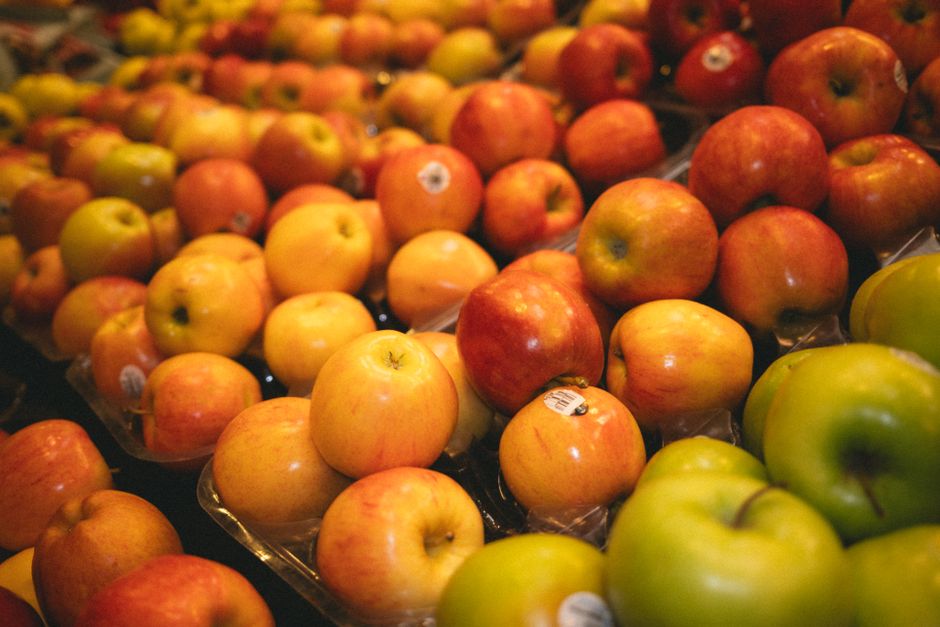
An apple is a good source of fiber. A medium apple with the skin left on provides about 4.4 grams of dietary fiber, according to USDA nutritional data. That is roughly 16 percent of the 28 grams of fiber recommended per day for adults on a 2,000-calorie diet. For a single piece of fruit, that is a meaningful contribution.
The fiber in apples is mostly a mix of soluble and insoluble types, and the skin carries a large share of it. How you prepare and eat the apple changes how much fiber you actually get. Below is what the numbers look like, why the skin matters, and how apples compare with other common fruits.
How Much Fiber Is In An Apple?
A medium apple contains about 4.4 grams of fiber. USDA data puts a medium apple (roughly 3 inches in diameter, about 182 grams with skin) at that figure. A large apple delivers more, a small one less.
The type of apple matters less than its size. Fiber content tracks closely with weight, so a bigger apple simply has more flesh and skin. Differences between varieties like Granny Smith, Fuji, or Honeycrisp are small compared with the difference between a small and a large apple.
Here is a rough picture of how apple size affects fiber, based on USDA figures:
- Small apple (about 2.75 inches across): roughly 3.6 grams of fiber
- Medium apple (about 3 inches across): about 4.4 grams of fiber
- Large apple (about 3.25 inches across): roughly 5.4 grams of fiber
These are estimates for raw apples eaten with the skin on. They are not a target to hit exactly. They are a way to see that an apple is a solid, everyday fiber source rather than a trivial one.
Does Peeling An Apple Remove The Fiber?
Peeling removes some fiber, but not all of it. The skin holds a meaningful portion of an apple’s fiber, along with most of its polyphenols and much of its vitamin C. When you peel an apple, you lose that skin-bound fiber.
The flesh still contains fiber, so a peeled apple is not fiber-free. But the total drops. The exact amount lost depends on the apple and the thickness of the peel, so treat any specific percentage with caution. The practical point is simple: eat the skin when you can, because it is where a good share of the fiber and most of the beneficial plant compounds sit.
This matters for people who peel apples out of habit, or who buy pre-sliced apples without skin. You still get fiber from the flesh, just less of it.
What Kind Of Fiber Is In An Apple?
Apples contain both soluble and insoluble fiber, and each does something different in the body. This is one reason an apple is more than just a number on a label.
Soluble fiber includes pectin, which is abundant in apples. In the gut, soluble fiber dissolves and forms a gel-like substance. This type of fiber is the one most studied for its effects on cholesterol and blood sugar. Pectin binds to some components in the digestive tract and can slow how quickly sugar from food enters the bloodstream.
Insoluble fiber does not dissolve. It adds bulk to stool and helps keep things moving through the digestive tract. This is the fiber most associated with regularity and preventing constipation.
Apples also contain other carbohydrates that behave like fiber, including some that feed gut bacteria. The fiber in an apple is not one single substance but a package of different types working together.
Is Apple A Good Source Of Fiber Skin Matters
The skin is the single biggest reason an apple punches above its weight as a fiber source. Leaving it on preserves the fiber, the polyphenols, and much of the vitamin C in one piece of fruit.
Beyond fiber, apple skin contains plant compounds called polyphenols. These are concentrated in the peel. Some research suggests these compounds may have antioxidant effects, though the evidence for specific health outcomes in humans is limited and mixed. It is fair to say the skin adds nutritional value beyond fiber, without overstating what that translates to in terms of disease prevention.
There is a practical wrinkle here. Many people peel apples for themselves or their children because of pesticide concerns. Washing apples under running water and rubbing the surface removes some residue, and this is the approach food safety guidance generally recommends. Peeling removes more residue but also removes the fiber-rich skin. The trade-off is real, and the right choice depends on your priorities. Buying organic is one way some people resolve it, though organic produce is not pesticide-free.
How Does An Apple Compare With Other Fruits?
Apples are a good fiber source, but they are not the highest-fiber fruit. Several fruits deliver more fiber per serving, and knowing where apples sit helps you build a varied diet.
The table below uses approximate USDA figures for common fruits. Serving sizes and preparation vary, so treat these as close estimates rather than exact matches.
| Fruit (typical serving) | Approximate fiber |
|---|---|
| Medium apple with skin | About 4.4 g |
| Medium banana | About 3.1 g |
| One cup raspberries | About 8 g |
| One cup blackberries | About 7.6 g |
| Medium pear with skin | About 5.5 g |
| One cup sliced strawberries | About 3 g |
| One medium orange | About 3.1 g |
Berries and pears tend to edge out apples on fiber per serving. That does not make apples a poor choice. Apples are widely available, affordable, portable, and easy to eat without preparation, which matters for whether people actually eat enough fiber day to day. The best fiber source is often the one you will reliably eat.
How Much Fiber Do You Need Each Day?
Most adults fall short of the fiber they need. General guidance points to about 25 grams per day for adult women and about 38 grams per day for adult men, based on dietary reference values for a typical calorie intake. Most people in the US eat considerably less than that.
An apple contributes roughly 4 to 5 grams toward that goal. That is a helpful slice, not the whole pie. Fiber needs to come from a range of foods across the day: vegetables, whole grains, legumes, nuts, seeds, and fruit. An apple is one good piece of that pattern.
If you are trying to raise your fiber intake, do it gradually and drink enough water. A sudden jump in fiber can cause bloating and gas. The gut adjusts over time, but a slow increase is easier to tolerate than a fast one.
Does An Apple’s Fiber Help With Fullness And Blood Sugar?
Fiber is one reason an apple can feel more filling than its calorie count suggests. The fiber, water content, and need to chew all contribute to a sense of fullness. Whole apples tend to be more satisfying than apple juice, which has had most of the fiber removed.
On blood sugar, the picture is more nuanced. The fiber in a whole apple slows digestion somewhat, and eating the whole fruit produces a gentler rise in blood sugar than drinking the same amount of juice. That is a general pattern supported by nutrition research, not a guarantee for any one person. People with diabetes should follow the guidance of their own care team rather than relying on any single food.
Apple juice is worth a specific note. It contains little to no fiber compared with the whole fruit, and it delivers sugar quickly. If fiber is your goal, the whole apple is the better choice by a wide margin.
Frequently Asked Questions
How much fiber is in one apple?
A medium apple with the skin on contains about 4.4 grams of fiber, based on USDA data. Larger apples provide more and smaller ones less.
Is it better to eat an apple with or without the skin?
With the skin is better for fiber, because the peel holds a meaningful share of the apple’s fiber along with most of its polyphenols. A peeled apple still has fiber from the flesh, just less overall.
Are apples a high-fiber fruit?
Apples are a good fiber source but not the highest. Berries and pears generally provide more fiber per serving, though apples remain a convenient and affordable option.
Does apple juice have the same fiber as a whole apple?
No. Apple juice contains little to no fiber compared with the whole fruit, and it delivers sugar more quickly. Choose the whole apple if fiber is your goal.
