
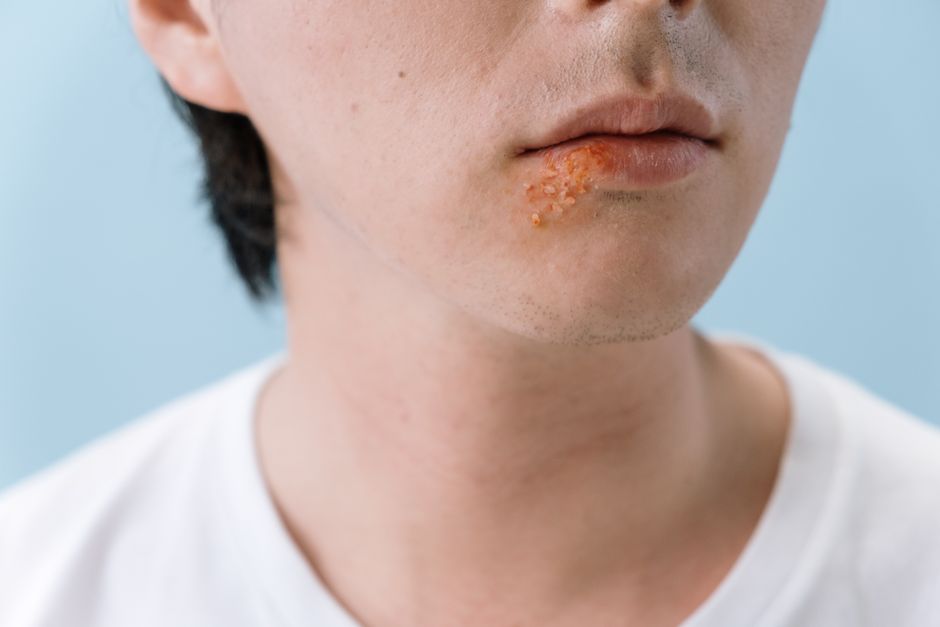
Angular cheilitis is not contagious. The cracks, redness, and soreness at the corners of the mouth are not caused by a germ you can pass to someone else through a kiss, a shared cup, or a handshake. It is an inflammatory condition, and it usually develops when the skin at the mouth corners stays moist, loses its barrier, and becomes irritated or infected by organisms that already live on your skin.
That last point trips people up. Angular cheilitis can involve yeast or bacteria, and those microbes can spread. But the condition itself is not transmitted. Catching the same fungus does not mean you will develop the same cracked corners. The moisture, the anatomy, and the skin barrier are what make those corners vulnerable in the first place.
Is Angular Cheilitis Contagious?
No. Angular cheilitis is not spread from person to person. It is a localized problem at the corners of the mouth, and its causes are internal or environmental rather than infectious transmission.
Doctors call the mouth corners the labial commissures. This skin is thin, and it folds inward. Saliva collects there easily. That trapped moisture softens the outer layer of skin and creates conditions where yeast and bacteria that normally live on skin and in the mouth can overgrow.
This is why the presence of Candida (a common yeast) in a swab does not make the condition contagious. Many people carry Candida in their mouths without any symptoms at all. The yeast is an opportunist that takes advantage of damaged, damp skin. It is not the thing you catch from someone else.
The distinction matters for real life. You do not need to avoid kissing a partner who has angular cheilitis. You do not need to isolate their utensils or towels. There is no incubation period, because there is nothing being transmitted.
What Actually Causes Angular Cheilitis?
Angular cheilitis has several possible triggers, and they often overlap. The common thread is that the skin at the mouth corners becomes damaged, and something moves in to inflame it further.
Moisture and drooling are among the most common drivers. People who drool in their sleep, wear dentures that do not fit well, or constantly lick their lips keep those corners wet. The constant wet-dry cycle breaks down the skin barrier.
Fungal infection is frequently involved. Candida albicans is the organism most often identified. It thrives in warm, moist folds of skin. A swab may confirm it, but its presence is a consequence of the environment, not a sign of something you caught.
Bacterial infection can also develop, sometimes alongside the yeast. Staphylococcus aureus and certain streptococci are commonly found. Again, these are organisms that frequently colonize skin and mouth without causing disease.
Nutritional deficiencies are a recognized contributor. Low levels of iron, vitamin B12, folate, and other B vitamins have been associated with angular cheilitis. This does not mean every case is a vitamin problem. It means a persistent or recurrent case may warrant a blood test.
Dry, cracked skin from weather or lip licking can start the process on its own. Cold, dry air and habitual lip licking both damage the lip margins and corners.
Medical conditions and medications can raise risk. Diabetes, Down syndrome, and immune suppression are associated with higher rates. Some medications that cause dry mouth, and systemic retinoids used for acne, have also been linked to the condition.
Ill-fitting dentures are a very common and often overlooked cause in older adults. Dentures that do not fit properly change the shape of the mouth, trap saliva, and reduce the vertical dimension of the face, which can create deep folds at the corners.
What Does Angular Cheilitis Look Like?
The typical appearance is a small crack, split, or ulcer at one or both corners of the mouth. The skin may be red, raw, and slightly swollen. It can feel sore, sting when you open your mouth wide, or bleed a little.
Some people notice a crust or a pale, moist area. The lesions are usually shallow. They tend to affect both corners, though one side can be worse.
The appearance overlaps with several other conditions. Cold sores, which are caused by herpes simplex virus, can look similar at first glance. Cold sores are contagious, and they usually start as a cluster of fluid-filled blisters. Angular cheilitis does not typically form blisters.
Other conditions that can mimic angular cheilitis include eczema, contact dermatitis from lip products, and, rarely, more serious skin conditions. This is why a lesion that does not heal, keeps coming back, or looks unusual should be looked at by a clinician rather than assumed to be simple angular cheilitis.
How Is Angular Cheilitis Treated?
Treatment depends on what is driving the problem, which is why identifying the cause matters more than reaching for a cream. The most effective approach addresses both the skin and the underlying trigger.
For mild cases, keeping the area dry and protected is often enough. A barrier ointment such as petroleum jelly can shield the skin from saliva and help it heal. Avoiding lip licking is important, though it is a hard habit to break.
When a fungal cause is suspected, clinicians commonly recommend a topical antifungal cream. For bacterial involvement, a topical antibiotic may be used. Some topical combination products contain an antifungal and a mild corticosteroid to reduce inflammation. These are widely used in clinical practice, though the evidence base for specific combinations is not large.
If a nutritional deficiency is found on testing, correcting it is part of the plan. This is why persistent cases sometimes call for blood work rather than repeated courses of cream.
For denture wearers, fixing the fit is often the single most important step. A denture that seats properly reduces saliva pooling and restores the normal shape of the mouth corners. No cream will fully solve the problem if the denture keeps recreating it.
Good oral hygiene and treating any underlying dry mouth or skin condition also help. In people with diabetes, better blood sugar control can reduce recurrence.
One clarification worth making: angular cheilitis is not a sign that you are dirty or that you have poor hygiene. It is a mechanical and moisture problem, and it can happen to anyone.
Can You Prevent Angular Cheilitis?
Prevention focuses on keeping the mouth corners dry, protected, and free of the habits that damage them.
- Keep the corners of your mouth dry after eating, drinking, or brushing your teeth.
- Use a barrier ointment on the corners, especially at night, if you drool or have dry skin.
- Try to stop licking your lips. It feels soothing briefly but worsens the damage.
- Use a lip balm with sun protection and avoid products that irritate your skin.
- Have dentures checked and adjusted if they feel loose or rub.
- Treat dry mouth if you have it, since saliva changes affect the whole mouth.
- Eat a balanced diet, and ask your doctor about testing for deficiencies if cases keep returning.
These steps reduce the conditions that let angular cheilitis start. They do not guarantee you will never get it, especially if you have a condition like diabetes or wear dentures.
When Should You See a Doctor?
Most cases of angular cheilitis heal with basic care, but some need a clinician’s eye. See a doctor or dentist if a lesion does not improve within a week or two of home care, keeps coming back, or is spreading.
Also seek care if you have a deep, painful sore, pus, or increasing redness and swelling. These can suggest a bacterial infection that needs treatment.
A non-healing sore at the corner of the mouth deserves attention, particularly in older adults or people who use tobacco. While angular cheilitis is common and usually harmless, a persistent lesion that does not respond to treatment should be evaluated to rule out other causes.
If you have repeated episodes, ask about testing for iron, vitamin B12, and folate deficiencies, and about whether your dentures or medications could be contributing.
Frequently Asked Questions
Can you catch angular cheilitis from someone else?
No, angular cheilitis is not contagious and cannot be passed from person to person. The organisms sometimes involved, like yeast, are already commonly present on skin and in the mouth.
Is angular cheilitis a sexually transmitted infection?
No, it is not an STI and has no link to sexual transmission. It is an inflammatory skin condition caused by moisture, irritation, and sometimes overgrowth of organisms that normally live on the body.
How long does angular cheilitis take to heal?
With basic care and removal of the trigger, mild cases often improve within a week or two. Cases linked to dentures, nutritional deficiencies, or medical conditions may take longer and can recur if the underlying cause is not addressed.
Can I kiss someone if I have angular cheilitis?
Yes, you cannot spread angular cheilitis through kissing because the condition itself is not contagious. If the skin is cracked and bleeding, avoid contact that causes pain, and see a clinician if it does not heal.
