
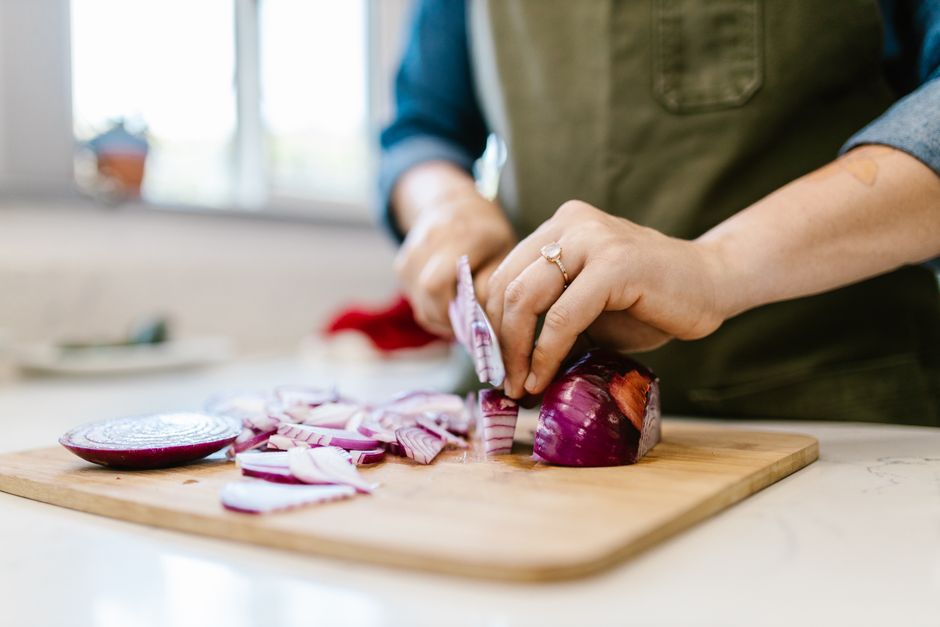
Yes, an onion is a vegetable. Botanically, it is the edible bulb of a flowering plant in the Allium family, which also includes garlic, leeks, and shallots. In everyday cooking and nutrition, onions are classified as a root vegetable because the part you eat grows underground. This is not a debated topic in botany or nutrition—the classification is consistent across both fields.
Is An Onion A Veg Botanically Speaking?
Botanists define a vegetable as any edible part of a plant that is not a fruit. This includes roots, stems, leaves, and bulbs. By this definition, an onion is a vegetable because the bulb is a modified underground stem that stores energy for the plant.
The confusion some people have comes from the botanical definition of a fruit. A fruit develops from the flower of a plant and contains seeds. Onions do not develop from flowers in the way that tomatoes, peppers, or cucumbers do. The part you eat is the bulb, not the seed-bearing structure.
Interestingly, the onion plant does produce a flower and seeds if left to grow for two seasons. But those seeds are not the part used in cooking. The bulb is. So botanically, the onion is a vegetable, not a fruit.
How Nutritionists Classify Onions
Nutritionists use a slightly different system than botanists. In nutrition, foods are grouped by their nutrient profiles and how they are used in meals. Onions fit clearly into the vegetable group in this system as well.
The USDA Food Patterns classify onions as part of the “Other Vegetables” subgroup. This category includes vegetables that do not fit neatly into darker green, red and orange, starchy, or legume groups. Onions are low in calories, contain no fat, and provide small amounts of fiber, vitamin C, and several antioxidants.
In practical terms, onions are used as a savory flavor base in cooking, which is a vegetable role. They are not sweet like fruits, and they are not a grain, protein, or dairy product. Both the botanical and nutritional systems agree: onions are vegetables.
Why Some People Think Onions Are Not Vegetables
There are a few reasons this question comes up. One is the distinction between culinary and botanical definitions of fruits and vegetables. Another is confusion about what a bulb actually is.
Some people hear that an onion is a bulb and assume that means it is not a vegetable. But bulbs are simply a type of plant structure. Other common vegetables are also bulbs or modified stems. Fennel is a bulb. Celery is a stem. Asparagus is a shoot. All are vegetables.
Another source of confusion is the paleo diet and some low-carb eating plans that restrict certain vegetables. Some of these diets limit onions because they contain carbohydrates. But limiting a food for dietary reasons does not change what it is. Onions are still vegetables, even if a specific eating plan suggests eating fewer of them.





Are Onions Root Vegetables?
Onions are commonly grouped with root vegetables, though technically they are bulbs. This is a minor distinction that matters mostly to botanists. For cooking and nutrition purposes, onions are treated as root vegetables because they grow underground and are harvested for their storage organ.
True root vegetables include carrots, beets, turnips, and radishes. These are the actual root of the plant. Onions, garlic, and shallots are bulbs—modified stems that store nutrients. Both types grow below the soil and are prepared and eaten in similar ways.
If a recipe calls for root vegetables, onions are typically included in that category. Most cooks and nutrition guides group them together. The botanical distinction between a true root and a bulb does not change how onions are used or classified in everyday life.
Nutritional Profile of Onions
Onions are a low-calorie vegetable with a modest nutrient profile. A medium onion contains about 44 calories, 10 grams of carbohydrates, and 1.5 grams of fiber. They provide small amounts of vitamin C, vitamin B6, potassium, and manganese.
Onions are best known for their flavonoid content, particularly a compound called quercetin. Quercetin is an antioxidant that has been studied for its anti-inflammatory properties. Red and yellow onions contain higher amounts of flavonoids than white onions.
Research published in the Journal of Agricultural and Food Chemistry has examined the antioxidant activity of different onion varieties. The studies found that shallots and red onions tend to have higher antioxidant capacity than milder white or sweet varieties. This does not mean other onions are unhealthy—all onions provide beneficial compounds, but the amounts vary by type.
Onions also contain prebiotic fiber, which feeds beneficial bacteria in the gut. The fiber in onions is mostly inulin and fructooligosaccharides. These compounds are not digested in the small intestine but are fermented by bacteria in the colon. This is why some people experience gas or bloating after eating large amounts of onions.
Onions in the Culinary World
In cooking, onions are classified as a vegetable without question. They are used as a base for soups, stews, sauces, and stir-fries. They can be eaten raw in salads and sandwiches, or cooked in countless ways.
Onions are one of the most widely used vegetables in the world. They are grown on every continent except Antarctica and are a staple in nearly every cuisine. The global production of onions exceeds 100 million tons per year, placing them among the most consumed vegetables worldwide.
The culinary classification matters for practical reasons. Meal planning, recipe development, and dietary guidance all treat onions as vegetables. The USDA MyPlate guidelines recommend filling half your plate with fruits and vegetables, and onions count toward that vegetable portion.
Common Onion Varieties and Their Uses
Different onion varieties are suited to different uses. Yellow onions are the most common all-purpose cooking onion. They have a strong flavor that mellows and sweetens when cooked.
Red onions are milder and often eaten raw in salads or on sandwiches. They have a slightly sweeter taste and add color to dishes. White onions are sharper and more pungent, commonly used in Mexican cuisine and salsas.
Sweet onions like Vidalia, Walla Walla, and Maui have higher sugar content and lower sulfur compounds. This makes them milder and less tear-inducing. They are often eaten raw or lightly cooked. Shallots are a smaller, milder relative of the onion with a more delicate flavor, frequently used in French cooking.
All of these varieties are vegetables. The differences between them are about flavor, texture, and cooking properties, not classification.
Potential Health Benefits of Onions
Research suggests that regular onion consumption may have health benefits, though the evidence is not definitive for any specific outcome. The antioxidant and anti-inflammatory properties of onion compounds are the most studied areas.
Some observational studies have found that people who eat more allium vegetables, including onions, have lower rates of certain cancers. However, observational studies cannot prove cause and effect. Other lifestyle factors may explain the association. No clinical trial has proven that eating onions prevents cancer.
Onions may support heart health through several mechanisms. The quercetin in onions has been shown in some studies to help relax blood vessels and reduce blood pressure. The prebiotic fiber may also help lower cholesterol levels. But the evidence for these effects in humans is limited and mixed.
Some research suggests onions may help with blood sugar control. The sulfur compounds in onions may improve insulin sensitivity. A small number of human studies have shown modest benefits, but larger trials are needed before any firm conclusions can be drawn.
It is important to note that onions are not a medicine. They are a nutritious vegetable that can be part of a healthy diet. No food, including onions, can prevent or cure disease on its own.
Are Onions Safe for Everyone to Eat?
Onions are safe for most people to eat. They are a common food allergen, but true onion allergies are rare. Some people experience digestive discomfort after eating onions because of the fermentable fibers they contain.
People with irritable bowel syndrome, or IBS, may need to limit onions. Onions are high in FODMAPs, which are short-chain carbohydrates that ferment in the gut and can cause bloating, gas, and pain in sensitive individuals. The low-FODMAP diet, developed for IBS management, restricts onions and garlic.
Onions are toxic to dogs and cats. They contain compounds called thiosulfates that can damage red blood cells in pets. If you have pets, keep onions and onion-containing foods away from them. This is a safety concern for animals, not for humans.
Frequently Asked Questions
Is an onion a vegetable or a fruit?
An onion is a vegetable. It is the edible bulb of the plant, not the seed-bearing structure, which is what defines a fruit botanically.
Are onions root vegetables?
Onions are commonly grouped with root vegetables, but technically they are bulbs. They grow underground and are used in cooking like root vegetables, so the grouping is practical even if botanically imprecise.
Can dogs eat onions?
No. Onions are toxic to dogs and cats because they contain compounds that can damage red blood cells. Keep onions away from pets entirely.
Are onions good for you?
Onions are a low-calorie vegetable that provides fiber, vitamin C, and antioxidant compounds like quercetin. They are a healthy addition to most diets, though people with IBS may need to limit them.
