
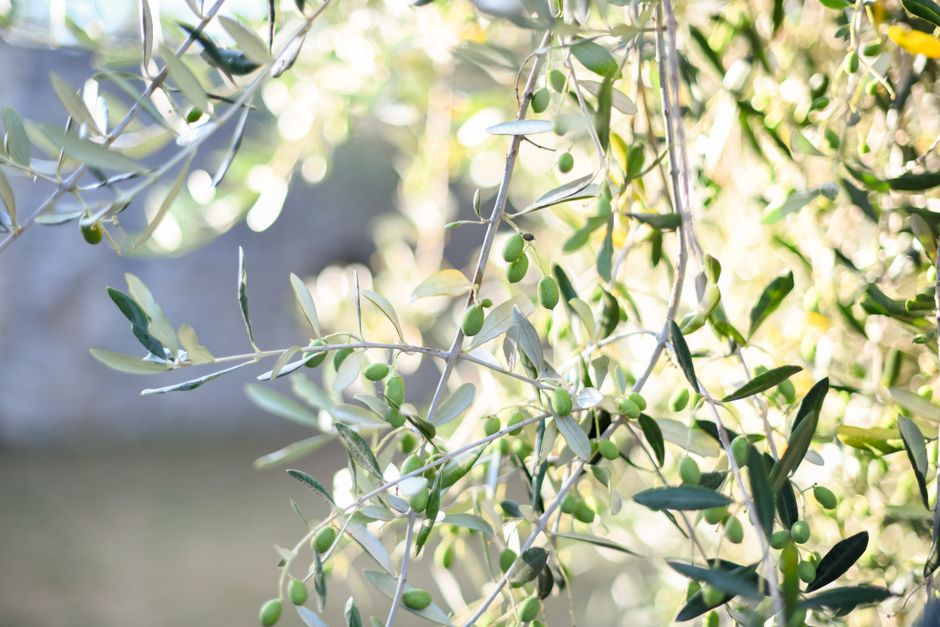
Yes, an olive is a fruit. Botanically speaking, olives are drupes, which are a type of fruit with a single hard pit or stone inside. This puts them in the same family as peaches, plums, mangoes, and dates. While we treat them like vegetables in cooking, their biology does not change.
What Exactly Makes an Olive a Fruit?
The definition of a fruit comes from botany, not the grocery store. A fruit is the mature ovary of a flowering plant. It develops from the flower and contains the seeds. An olive fits this definition perfectly. It grows from the olive flower and holds one seed inside its hard pit.
Vegetables, on the other hand, are other plant parts like roots, stems, and leaves. Carrots are roots. Lettuce is leaves. Celery is stems. An olive is none of these. It is the part of the plant that carries the seed for reproduction.
There is a common confusion between culinary and botanical terms. In the kitchen, we call things “vegetables” if they are savory. Olives are salty and bitter, so we treat them like vegetables. But nature does not care about our recipes. The scientific classification is clear. Olives are fruits.
Is An Olive A Fruit or a Vegetable in Nutrition?
Nutritionally, olives sit in a strange middle ground. They are fruits, but they do not have the sugar or vitamin C that most fruits have. A typical fruit like an orange is high in sugar and vitamin C. Olives are low in sugar and high in fat.
This fat is mostly monounsaturated, the same type found in avocados and nuts. The USDA classifies olives as a “fat” source in dietary guidelines, not a fruit serving. That does not change their botanical identity. It just means you should not count them as your daily fruit.
Olives also contain vitamin E, iron, and copper. They are high in sodium because of the brining process. So while they are fruits, they do not replace your apple or banana. They are a unique food that crosses categories depending on how you look at it.
How Do Olives Compare to Other Drupes?
Olives belong to the drupe family. Other drupes include peaches, cherries, almonds, and plums. The key feature is a fleshy outer part surrounding a hard shell with a seed inside. Here is how olives stack up against common drupes:
| Drupe | Flesh Type | Common Use | Fat Content |
|---|---|---|---|
| Peach | Sweet and juicy | Eaten raw, desserts | Very low |
| Cherry | Sweet or tart | Eaten raw, pies | Very low |
| Almond | Thin flesh, large seed | Seed eaten as nut | High |
| Olive | Fleshy, bitter | Cured, pressed for oil | High |
Olives stand out because their flesh is bitter when raw. Most drupes are sweet and edible straight from the tree. Olives require curing or fermentation to become palatable. That processing is what gives them their savory flavor.





Why Do People Argue About Is An Olive A Fruit?
The debate comes from two different systems of classification. Botanists use one system. Chefs and home cooks use another. A botanist looks at structure and reproduction. A cook looks at flavor and use in dishes.
Many people learn that fruits are sweet and vegetables are savory. Olives break that rule. They are savory, salty, and often paired with meats and cheeses. So it feels wrong to call them fruit. But the rule itself is wrong. Tomatoes, bell peppers, and cucumbers are also fruits botanically. People just do not argue about them as much.
Another reason is marketing and labeling. Olive oil is not called “fruit oil.” Olives are sold next to pickles and capers, not next to apples. This reinforces the idea that they are vegetables. It takes a deliberate effort to remember the botanical truth.
What Does the Curing Process Do to the Fruit?
Fresh olives are inedible due to a compound called oleuropein. This gives them an intensely bitter taste. Curing removes this compound and makes the olive edible. There are several methods, and each affects the final flavor and texture.
Water curing involves soaking olives in water for weeks, changing the water daily. Brine curing uses salt water and can take months. Lye curing uses a chemical solution and is faster, often done commercially. Dry curing packs olives in salt for weeks.
Fermentation also happens during some curing processes. This creates lactic acid, which acts as a preservative and adds tanginess. The end result is a fruit that tastes nothing like its raw form. This transformation is why olives are often mistaken for something other than fruit.
Some studies suggest that fermented olives may contain probiotics. The evidence is not strong enough to make health claims. What is clear is that the curing process changes the nutritional profile, lowering bitterness and increasing sodium.
Common Misconceptions About Olives
A widespread myth is that olives are pickled vegetables. Pickling is a preservation method, not a classification. Olives can be pickled, but that does not make them vegetables. Cucumbers are fruits too, yet pickles are not considered fruit.
Another misconception is that green and black olives are different fruits. They are the same fruit at different stages of ripeness. Green olives are picked before they are fully ripe. Black olives are left on the tree longer. The color difference is simply maturity, not variety.
Some people believe that olive oil is a vegetable oil. Technically, it is a fruit oil. Vegetable oil usually refers to oils from seeds like soybean or canola. Olive oil comes from the flesh of the fruit, not the seed. This is why extra virgin olive oil is called “fruit juice” by some producers.
What to Look for When Buying Olives
If you want the best quality olives, check the ingredient list. Quality olives are cured with salt and water. Avoid olives with added preservatives like ferrous gluconate, which is used to darken black olives artificially. This is common in canned black olives.
Look at the texture. Good olives are firm but not hard. They should not be mushy or slimy. The color should be even, not blotchy. For green olives, a slight yellowish tint is normal. For black olives, a deep purple-black is ideal.
Storage matters. Olives in brine last longer than dry-cured ones. Once opened, keep them refrigerated in their liquid. They can last for months this way. Dry-cured olives are more perishable and should be eaten within a few weeks.
There is no strong evidence that one type of olive is healthier than another. Green and black olives have similar nutrient profiles. The main difference is that black olives are riper and may have slightly more oil. Choose based on taste, not health claims.
Frequently Asked Questions
Is an olive a fruit or a nut?
An olive is a fruit, specifically a drupe. It is not a nut because the seed is inside a hard pit, not a hard shell that splits open.
Can you eat olives raw from the tree?
No, raw olives are extremely bitter and inedible due to oleuropein. They must be cured or fermented before eating.
Are olives good for you every day?
Olives are healthy in moderation due to their healthy fats and vitamin E. But they are high in sodium, so limit to a few servings per day.
Why do some people call olives a vegetable?
People call olives a vegetable because they are used in savory dishes. This is a culinary classification, not a botanical one.
