
Allergy testing can be worth it when a doctor needs to confirm what is triggering your symptoms, but it is not worth it as a random screening tool for people with no clear symptoms. The tests themselves range from a quick skin prick to a blood draw, and costs vary widely depending on the test type, where it is done, and whether insurance covers it. The real value comes from testing the right person for the right reason, then using the results to guide treatment.
What Does Allergy Testing Actually Measure?
Allergy tests do not measure “allergies” in a general sense. They measure a specific immune protein called immunoglobulin E, or IgE, that reacts to a specific substance.
When your immune system mistakenly flags something harmless, like peanut protein or cat dander, as a threat, it produces IgE antibodies tailored to that substance. Those antibodies attach to specialized cells in your skin and airways. The next time you meet that substance, the antibodies grab it and trigger those cells to release histamine and other chemicals. That release is what causes sneezing, hives, itching, swelling, or in severe cases, anaphylaxis.
Both skin and blood tests are essentially looking for the same thing: IgE that recognizes a particular allergen. Skin testing shows the reaction live on your skin. Blood testing measures the antibody level in a sample. Neither test tells you how severe a future reaction will be. A high result does not predict anaphylaxis, and a low result does not guarantee safety.
This is the single most misunderstood point about allergy testing. A positive result means your immune system has made IgE to that substance. It does not automatically mean that substance is causing your symptoms.
What Are the Main Types of Allergy Tests?
There are three tests used in routine clinical practice, plus a few others for specific situations. Each has real strengths and real limits.
Skin Prick Testing
A small drop of allergen extract is placed on your forearm or back, and the skin is pricked lightly so the extract enters the top layer. Results appear in about 15 to 20 minutes. A raised, red, itchy bump means a positive reaction. A saline control and a histamine control are included to confirm the test is working correctly.
Skin prick testing is fast, relatively inexpensive, and considered the standard first-line method for most airborne and food allergies. It must be done in a setting equipped to handle a rare severe reaction. Antihistamines need to be stopped before testing, since they block the response and can cause a false negative.
Specific IgE Blood Testing
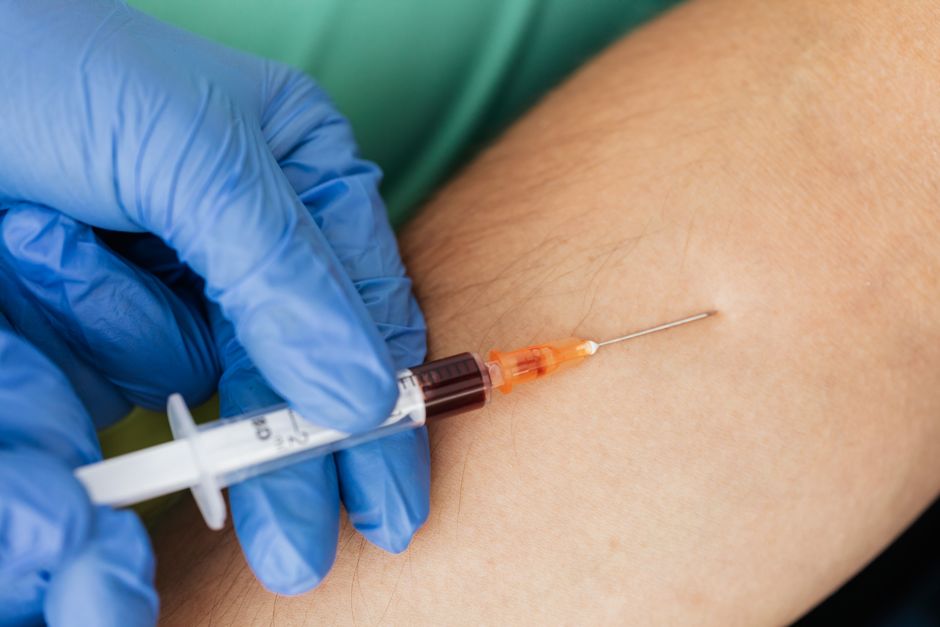
This test measures IgE antibodies to specific allergens in a blood sample. It is useful when skin testing is not practical — for example, if you have extensive eczema, take medications that cannot be stopped, or are at risk of a severe reaction.
Blood tests are not more accurate than skin tests. They are an alternative, and results are reported in a way that requires careful interpretation by a clinician. A positive blood test alone does not diagnose an allergy.
Patch Testing
Patch testing is used for contact dermatitis, not for food or airborne allergies. Small amounts of suspected substances are applied under patches on the back and left in place for about 48 hours, with a reading typically done again a day or two later. It identifies delayed reactions to things like nickel, fragrances, or preservatives.
Tests That Are Not Reliable
Several tests marketed directly to consumers have no established clinical value. These include hair analysis, applied kinesiology (muscle testing), and IgG food sensitivity panels. IgG is a normal antibody found in everyone, and its presence reflects exposure, not allergy. Major allergy organizations have advised against using IgG testing to diagnose food allergy or intolerance.
If a provider offers a test that claims to identify dozens or hundreds of sensitivities from a single sample, treat that claim with skepticism.
When Is Allergy Testing Worth It?
Testing is worth it when the result will change what you or your doctor do next. That is the practical test for whether any medical test earns its cost.
Testing tends to be worthwhile in these situations:
- You have clear symptoms — sneezing, itchy watery eyes, nasal congestion, hives, or wheezing — that follow a pattern linked to a season, a place, or a specific exposure.
- You had a reaction to a food, medication, or insect sting and the cause is unclear.
- You have asthma and a doctor wants to identify triggers that might be contributing.
- You have persistent eczema or a skin rash that may be contact dermatitis.
- You are considering allergy shots (immunotherapy), which require knowing exactly what you are allergic to.
In each case, the result feeds into a decision: avoid a trigger, start a medication, carry an epinephrine auto-injector, or begin immunotherapy.





When Is Allergy Testing Not Worth It?
Testing has little value when there is no clear symptom to explain. A positive result in someone with no symptoms usually creates confusion and unnecessary worry rather than useful information.
Broad panels that test for many allergens at once are a common source of this problem. The more substances you test, the more likely you are to get a positive result that has nothing to do with how you feel. This leads some people to avoid foods or environments they never needed to avoid.
Testing is also not useful for diagnosing food intolerance, such as lactose intolerance or sensitivity to food additives. Those are not IgE-mediated and will not show up on allergy tests.
A careful medical history is the foundation of allergy diagnosis. Testing confirms what the history already suggests. When testing is used to replace a good history rather than support it, the results are often misleading.
How Much Does Allergy Testing Cost?
Costs vary widely by test type, location, and insurance. The figures below are general ranges, not quotes, and prices change.
| Test Type | Typical Out-of-Pocket Range | Notes |
|---|---|---|
| Skin prick test | Often $60 to $300 per session | Price depends on number of allergens tested |
| Specific IgE blood test | Often $100 to $500 or more | Cost rises with each allergen panel ordered |
| Patch test | Often $200 to $500 | Includes multiple visits for readings |
| At-home or direct-to-consumer kits | Varies widely, often $50 to $300 | Reliability varies; many are not clinically validated |
Insurance coverage depends on your plan and the medical reason for testing. Testing ordered to investigate genuine symptoms is more likely to be covered than broad screening panels. Direct-to-consumer kits are usually paid for out of pocket and are not typically covered.
It is reasonable to ask your doctor or clinic for the cost before testing, and to ask whether a smaller, targeted panel would answer the question just as well as a large one. Fewer allergens tested usually means lower cost and fewer confusing results.
What Do the Results Actually Mean?
A positive result means IgE to that substance is present. It does not mean you are allergic in the sense of having symptoms.
Many people have positive allergy tests to substances they tolerate without any problem. The technical term for this is sensitization — the immune system is primed, but no symptoms occur. Sensitization and allergy are not the same thing, and confusing them is one of the most common sources of unnecessary food avoidance.
A negative result is generally more reliable for ruling an allergy out, though not perfectly so. Timing, medications, and the quality of the extract can all affect results.
The only way to interpret a test correctly is alongside your symptoms. If you test positive for cat dander but have no symptoms around cats, that result likely does not matter for you. If you test positive and you sneeze and wheeze every time you are near a cat, the result fits and is useful.
How to Decide If Testing Is Right for You
Start with your symptoms, not with a test. Write down what happens, when it happens, and what seems to trigger it. Bring that pattern to a doctor.
Ask three questions before agreeing to any test:
- What will we do differently based on the result?
- Is this the smallest panel that can answer the question?
- Is this test supported by clinical evidence, or is it a marketed panel?
If the answer to the first question is “nothing changes,” the test may not be worth the cost or the confusion. If the answer is “we will avoid a specific trigger, start a treatment, or begin immunotherapy,” testing is likely worth it.
Allergy testing is a tool. It works well in the hands of a clinician who uses it to confirm a suspicion. It works poorly as a standalone screening product sold without medical context.
Frequently Asked Questions
Is allergy testing worth it if I have no symptoms?
No. Testing people without symptoms often produces positive results that do not reflect a real allergy and can lead to unnecessary avoidance. Testing is most useful when it explains symptoms you actually have.
Are at-home allergy tests accurate?
Many direct-to-consumer kits, especially those using hair or IgG testing, are not supported by clinical evidence and are not recommended for diagnosing allergy. If you want reliable testing, see a clinician who can interpret results alongside your history.
Does a positive allergy test mean I am allergic?
Not necessarily. A positive test shows your immune system has made IgE to that substance, which is called sensitization. It only means you are allergic if you also have symptoms when exposed.
How much does allergy testing cost without insurance?
Skin prick testing often runs roughly $60 to $300 per session, and blood testing often runs $100 to $500 or more depending on how many allergens are tested. Actual prices vary by clinic and region.
