
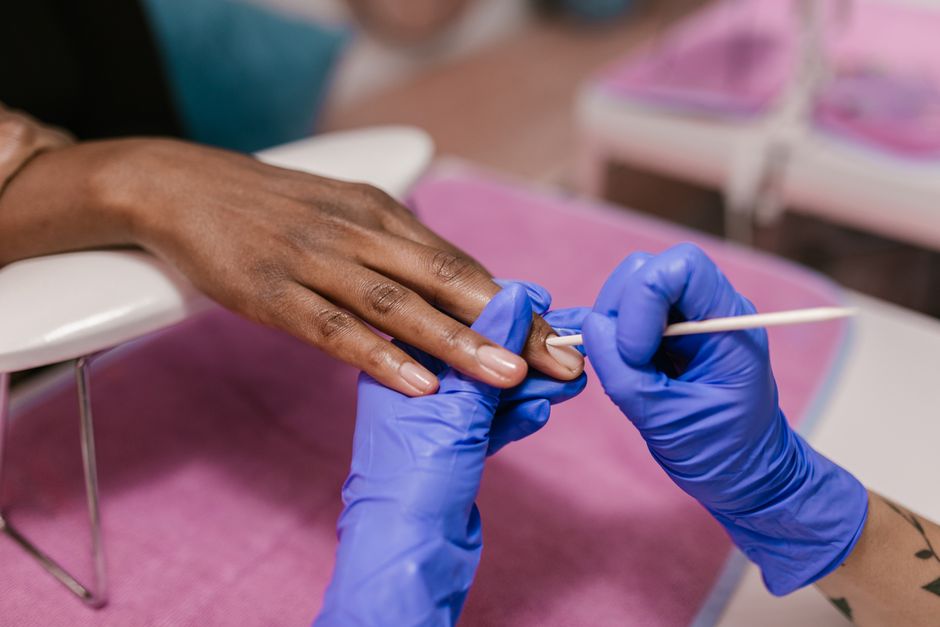
Acetone is the main ingredient in most nail polish removers, and it gets a bad reputation. The short answer is that acetone is not inherently bad for your nails, but it can dry them out and make them brittle if you use it often. The bigger risk is how you use it, not the acetone itself.
What Does Acetone Actually Do to Your Nails?
Acetone is a solvent. It breaks down the polymers in nail polish, which is why it removes polish so quickly and effectively. It does not dissolve your nail plate. Your nails are made of keratin, a protein that acetone does not break down.
What acetone does do is strip natural oils from the nail surface and the surrounding skin. Your nails need some moisture to stay flexible. When oils are removed, the nail plate can become dry, brittle, and prone to peeling or splitting. This effect is temporary for most people, but repeated exposure without any care can cause lasting damage.
Acetone also affects the skin around your nails. The cuticle and nail folds can become dry, red, or irritated. If the skin cracks, you open a doorway for infection. That is a real concern, not the acetone itself.
Is Acetone More Damaging Than Non-Acetone Removers?
Non-acetone removers use milder solvents like ethyl acetate. They are gentler on the nail and skin because they do not strip oils as aggressively. The trade-off is that they take longer to work. You have to soak or scrub more, which can also cause friction damage to the nail surface.
There is no strong evidence that non-acetone removers are meaningfully safer for the nail plate itself. Both types remove moisture. Acetone simply does it faster and more noticeably. If you only remove polish once or twice a week and you moisturize afterward, acetone is not going to ruin your nails.
Some research suggests that excessive acetone exposure can alter the nail surface at a microscopic level. The nail can look rougher or more porous. But this is not permanent damage. Nails grow continuously, and new healthy nail will replace the exposed area over time.
How Often Is Too Often?
There is no specific clinical guideline that says how many times per week you can safely use acetone. The evidence does not support a precise number. What matters is total exposure and how your nails respond.
If you change your polish every day and use acetone each time, your nails will likely become dry and brittle. If you remove polish once a week and apply cuticle oil afterward, you will probably see no issues at all. Watch your nails. If they start peeling or splitting, reduce frequency or switch to a gentler remover.
People with naturally dry or thin nails should be more cautious. The same applies to anyone with existing nail damage, such as peeling, ridges, or fungal infection. In those cases, acetone can make the problem visibly worse.
Does Acetone Cause Nail Fungus or Infections?
Acetone does not cause fungal infections. Fungi need moisture to grow, and acetone is drying. In fact, some clinicians have used acetone-based products as part of treatment protocols for certain nail conditions because of their drying effect.
The risk of infection comes from the skin around the nail. If acetone dries out your cuticles and they crack, bacteria can enter. That can lead to paronychia, an infection of the skin around the nail. This is a real risk with frequent acetone use, especially if you also cut your cuticles aggressively.
Another indirect risk is sharing tools. Acetone does not disinfect anything. If you use a shared nail file or pusher that is contaminated, you can transfer bacteria or fungus regardless of the remover you use.
How to Protect Your Nails When Using Acetone
You can use acetone without damaging your nails. The key is to limit exposure time and restore moisture afterward.
- Use a cotton ball or pad saturated with remover and hold it on the nail for a few seconds. Do not scrub vigorously.
- Do not soak your nails in acetone for extended periods. Some nail salons use acetone soaks for gel removal, which is more drying than a quick wipe.
- Wash your hands with mild soap after using acetone to remove any residue.
- Apply cuticle oil or a rich hand cream immediately after. This replaces some of the moisture and oils that were stripped.
- Give your nails breaks from polish entirely if they show signs of brittleness.
For gel polish removal, acetone is often necessary because gel polymers resist regular remover. The soak method used for gels is more aggressive. If you get gels regularly, consider taking a week off between appointments to let your nails recover.
Are There Safer Alternatives to Acetone?
Non-acetone removers are the main alternative. They work but require more rubbing. That friction can be just as damaging as the solvent itself if you are aggressive.
“Natural” removers that claim to be acetone-free and chemical-free are mostly marketing. They still need a solvent to break down polish. Many use plant-derived solvents, but those are still chemicals. Some are less drying, but none have strong clinical evidence showing they are safer for the nail plate.
Another option is to use a peel-off base coat. You apply this under your polish, and when you want to remove the color, you peel the entire layer off. This avoids solvents entirely. The downside is that peel-off base coats do not last as long as regular polish, and peeling can sometimes lift layers of the nail if done too forcefully.
For nail health, the best approach is not about which remover you choose. It is about how often you remove polish and how well you care for your nails in between.
What the Evidence Actually Shows
Clinical studies on acetone and nail health are limited. Most of what we know comes from dermatology practice and occupational exposure research. Workers who handle acetone daily, such as in industrial settings, can develop dry, cracked skin on their hands. This is well documented.
For cosmetic use on nails, the evidence shows that acetone is an effective solvent with temporary drying effects. There is no strong evidence that normal cosmetic use causes permanent nail damage in healthy individuals. Some studies suggest that repeated use can make nails more brittle, but the effect reverses when use stops.
One thing the evidence does not support is the claim that acetone weakens nails from the inside or that it penetrates into the nail bed. Acetone acts on the surface. It does not travel through the nail plate into the living tissue below.
When Should You See a Doctor About Your Nails?
If your nails become persistently painful, discolored, or separated from the nail bed, see a healthcare provider. These symptoms are not normal effects of acetone. They could indicate an infection, a fungal issue, or another underlying condition.
If your nails are simply dry and brittle, that is not a medical emergency. Reduce acetone use, moisturize, and wait for new nail growth. Fingernails grow about 3 millimeters per month on average. Toenails grow slower. If you notice changes, it takes time to grow out the affected area.
Yellowing, thickening, or crumbling nails are signs of a possible fungal infection. Acetone will not fix this and may make the nail more fragile while the infection is present. A doctor can diagnose the issue and recommend proper treatment.
Frequently Asked Questions
Does acetone permanently damage your nails?
No, acetone does not cause permanent damage to healthy nails. It strips moisture and oils, which can make nails brittle temporarily, but new nail growth replaces the affected area over time.
Is acetone or non-acetone remover better for your nails?
Non-acetone removers are gentler on the skin and cuticles, but neither type is proven safer for the nail plate itself. Acetone works faster, which means less rubbing and less friction damage.
Can you use acetone every day?
Using acetone daily will likely dry out your nails and cuticles, especially if you do not moisturize afterward. There is no established safe frequency, so watch your nails and reduce use if they become brittle or peel.
Does acetone cause nail fungus?
No, acetone does not cause nail fungus. Fungi need moisture to grow, and acetone has a drying effect. The real risk is cracked skin around the nail, which can allow bacteria to enter.
