
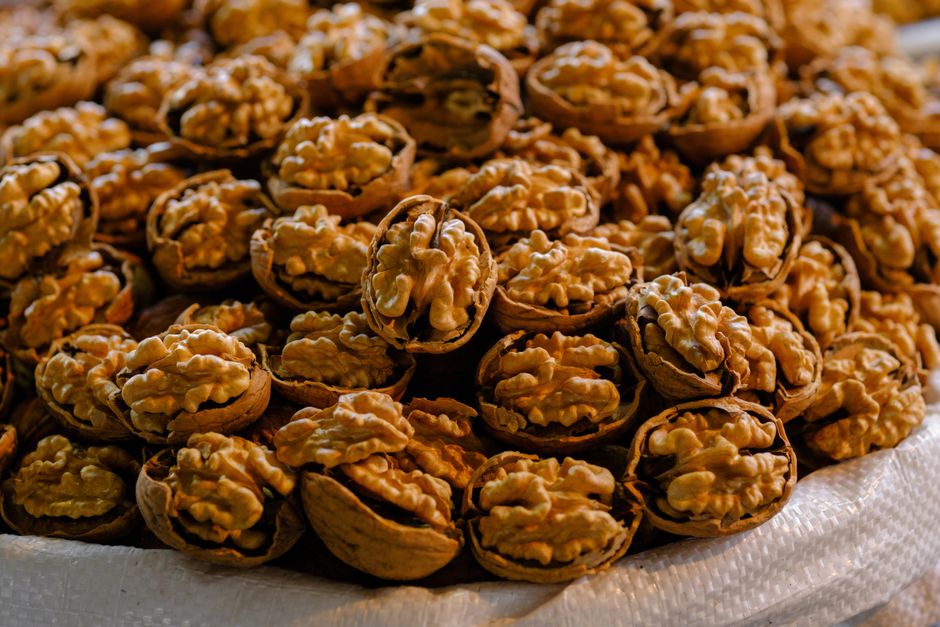
A walnut is not a true nut. It is the seed of a drupe — a fruit with a fleshy outer layer surrounding a hard shell. Botanically speaking, the walnut is a fruit, and the shell most people call a “nut” is actually the hardened pit of that fruit.
That answer surprises almost everyone. In everyday speech, walnuts sit on the shelf next to almonds and cashews, all labeled nuts. But botany uses a stricter definition. And by that definition, the walnut fails the test.
Is A Walnut A Fruit Or A Nut The Botanical Answer
Botanically, a walnut is a fruit. More precisely, it is a drupe — a type of fruit with a fleshy outer layer and a hard inner shell that surrounds a single seed.
Think of a peach. It has soft skin, fleshy fruit, and a hard pit in the middle. The walnut follows the same blueprint. The green husk on a walnut tree is the fleshy outer layer. The hard brown shell is the pit. The wrinkled kernel inside is the seed.
So when you crack a walnut, you are not opening a nut. You are opening the pit of a fruit and eating the seed inside.
What Makes Something A True Nut In Botany
A true nut is a dry fruit with a hard shell that does not split open to release its seed. The shell and the seed are fused together. The whole thing falls from the tree as one unit.
Hazelnuts and chestnuts fit this definition. So do acorns. The shell is the fruit wall itself, hardened into a protective coat, and the seed inside never separates from it on its own.
Walnuts do not work that way. Their shell is a pit, not a fruit wall. And that pit sits inside a husk that splits and peels away as the fruit matures. Two layers, not one. That single structural difference is why botanists classify walnuts as drupes rather than true nuts.
There is a useful detail here that most people never hear. The word “nut” in botany and the word “nut” in a grocery store mean two different things. One is a strict structural category. The other is a loose culinary label. Walnuts belong to the second group, not the first.
Why Walnuts Are Drupes And Not Nuts
A drupe has three layers. The outer skin, called the exocarp. The fleshy middle, called the mesocarp. And the hard inner stone, called the endocarp, which holds the seed.
The walnut fruit has all three. On the tree, a walnut starts as a green, rounded husk. That husk is the skin and flesh combined. Inside it, the familiar hard shell forms. That shell is the endocarp — the pit. And inside the pit sits the kernel you eat.
When the walnut ripens, the green husk splits open and falls away. What remains is the hard shell. This is the same process that leaves a bare peach pit after the flesh is gone. The structure is the same. Only the texture differs.
This is why a walnut is a drupe and not a nut. The seed is enclosed in a pit, and that pit is enclosed in a fruit. A true nut has no such fleshy outer layer.
Which “Nuts” Are Actually Fruits
Walnuts are not alone. Several foods sold as nuts are botanically fruits, seeds, or legumes.
- Almonds are seeds of a drupe, similar in structure to walnuts.
- Cashews grow from the bottom of a fleshy fruit called a cashew apple.
- Pecans are drupes, closely related to walnuts.
- Pistachios are seeds of a drupe as well.
- Peanuts are legumes, related to beans and peas, not nuts at all.
- Brazil nuts are seeds inside a large woody pod.
Only a small number of familiar “nuts” are true nuts. Hazelnuts and chestnuts are the clearest examples. Almost everything else in the nut aisle is something else entirely.
Does The Walnut Classification Matter For Health
The botanical label does not change what a walnut does in your body. Whatever you call it, the kernel has the same nutritional profile.
Walnuts are notably high in alpha-linolenic acid, or ALA, a plant-based omega-3 fat. They also provide protein, fiber, magnesium, and vitamin E. These are well-established nutrient facts, not marketing claims.
What about health outcomes? The evidence is more measured than headlines suggest. Some studies indicate that regular nut consumption, including walnuts, is associated with lower risk of heart disease. That association appears in large observational studies, which can show links but cannot prove cause and effect. Clinical trials on walnuts and specific health outcomes have produced mixed results, and the effects tend to be modest.
No single food, walnut or otherwise, has been shown to prevent or cure any disease. The botanical classification is interesting. The health claims often built on top of it are usually stronger than the evidence supports.
Why The Confusion Exists
The confusion comes from two different systems using the same word. Culinary language groups foods by how we use them — in cooking, baking, and snacking. Botany groups them by how they develop and what structures they contain.
In the kitchen, a walnut is a nut. In a botany textbook, it is a drupe. Both are correct within their own framework. The mistake is assuming the two frameworks describe the same thing.
This is not a case of one side being wrong. It is a case of a common word carrying two meanings. Once you see the structure — husk, shell, seed — the botanical answer becomes obvious. The walnut was never a nut in the strict sense. It just got grouped with them on the shelf.
Frequently Asked Questions
Is a walnut a fruit or a nut?
A walnut is botanically a fruit, specifically a drupe. The hard shell people call a nut is actually the pit of that fruit, and the kernel inside is the seed.
Why is a walnut classified as a drupe?
A drupe has a fleshy outer layer surrounding a hard pit that holds a seed. The walnut’s green husk, hard shell, and inner kernel follow that exact structure.
Are walnuts and almonds both drupes?
Yes, both are drupes. Almonds are the seeds of a drupe, just like walnuts, even though both are sold and used as nuts.
Which nuts are actually true nuts?
Hazelnuts and chestnuts are true nuts, along with acorns. Most other foods sold as nuts, including walnuts, almonds, and cashews, are botanically fruits or seeds.
