
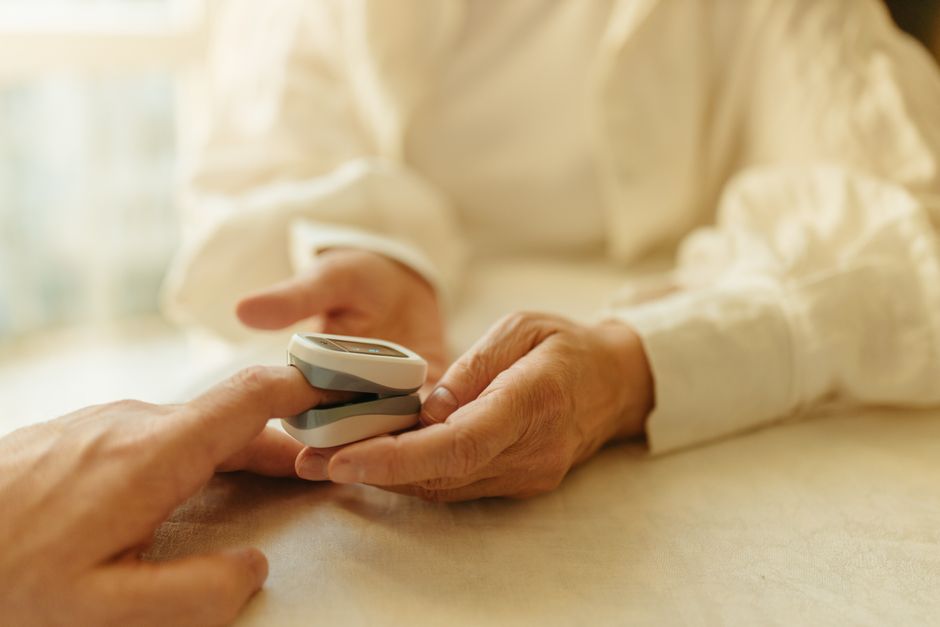
A blood oxygen level of 93% is below the normal range for a healthy adult. Normal readings typically fall between 95% and 100%. A reading of 93% indicates your blood is carrying less oxygen than it should, and it is a level that warrants attention and often a call to a healthcare provider.
What Do Blood Oxygen Numbers Actually Mean?
Your blood oxygen level, often called oxygen saturation or SpO2, measures the percentage of hemoglobin in your blood that is carrying oxygen. Hemoglobin is the protein in red blood cells responsible for transporting oxygen from your lungs to the rest of your body.
A pulse oximeter is the device used to measure this. It clips onto your finger and shines a light through your skin to estimate the oxygen saturation. It is a non-invasive and quick way to check how well your lungs are delivering oxygen to your blood.
For a healthy person at sea level, a normal SpO2 reading is 95% to 100%. Readings below 90% are considered critically low and require immediate medical attention. A reading of 93% sits in a gray zone between normal and dangerously low. It is not an emergency on its own, but it is a clear sign that something may be affecting your breathing or circulation.
Is 93 A Good Oxygen Level for Everyone?
No. A reading of 93% is not a good oxygen level for a generally healthy adult. However, context matters significantly. The same number can mean different things depending on your health status.
For someone with chronic obstructive pulmonary disease (COPD), a baseline oxygen level of 93% might be their normal. Many people with chronic lung conditions live with lower oxygen saturation levels. Their bodies have adapted over time, and their doctors may have established a different target range for them. If your doctor has told you that your target range is lower than the standard, then 93% may be acceptable for you.
For someone without any known lung condition, 93% is not normal. It suggests your lungs or heart are not working as efficiently as they should. This is not a level to ignore.
What Causes a Low Oxygen Level?
Several conditions can cause your blood oxygen level to drop. The most common causes fall into a few broad categories.
Lung conditions are the most frequent cause. Asthma, pneumonia, COPD, and pulmonary fibrosis all interfere with the lungs’ ability to move oxygen into the blood. When the air sacs in your lungs are inflamed, filled with fluid, or damaged, oxygen transfer becomes less efficient.
Heart conditions can also lower oxygen levels. If your heart is not pumping effectively, blood may not reach your lungs efficiently for oxygenation, or oxygenated blood may not circulate well through your body. Congenital heart defects and heart failure are examples.
Anemia is another cause. If you do not have enough healthy red blood cells, your blood simply cannot carry as much oxygen, even if your lungs are working perfectly.
High altitude is a temporary cause. At higher elevations, the air contains less oxygen, so your blood oxygen level naturally drops. It is common for people to read 92% to 94% at elevations above 8,000 feet. This is not a sign of illness but a normal physiological response to reduced oxygen in the air.





What Symptoms Should You Watch For?
A blood oxygen level of 93% may or may not produce noticeable symptoms. Some people feel fine at this level. Others experience clear signs that their body is not getting enough oxygen.
Symptoms of low blood oxygen include:
- Shortness of breath, especially with mild exertion
- Rapid breathing
- Rapid heartbeat
- Headache
- Confusion or difficulty concentrating
- Bluish or grayish tint to the lips, skin, or nail beds
If you experience any of these symptoms along with a 93% reading, you should contact a healthcare provider promptly. The combination of a low reading and symptoms is more concerning than the number alone. If your lips or nail beds turn blue, or if you have trouble breathing, seek emergency care immediately.
How Accurate Is a Pulse Oximeter?
Pulse oximeters are generally reliable, but they have limitations. They are accurate within about 2% to 3% of the true value in most cases. This means a reading of 93% could actually be anywhere from 90% to 96%.
Several factors can affect accuracy. Nail polish, especially dark colors, can interfere with the light sensor. Cold hands or poor circulation can cause inaccurate readings. Movement during the reading can also distort results. If you get a reading of 93%, it is wise to check again after warming your hands and sitting still for a few minutes.
A more significant limitation is skin pigmentation. Some research indicates that pulse oximeters may overestimate oxygen levels in people with darker skin. This means the device could show a reading of 93% when the true level is actually lower. If you have darker skin and receive a borderline reading, it is worth discussing with a healthcare provider.
If you are concerned about the accuracy of your home pulse oximeter, a clinical measurement called arterial blood gas analysis provides a definitive answer. This test draws blood from an artery and measures oxygen directly. It is the gold standard but is only performed in medical settings.
When Should You Contact a Doctor?
A single reading of 93% does not always mean there is a serious problem. If you took the reading after vigorous exercise or at high altitude, it might be a temporary and harmless finding. But if you are at rest, at a normal elevation, and not recovering from exertion, a 93% reading deserves a conversation with your doctor.
You should contact a healthcare provider if:
- Your oxygen level stays at 93% or lower for more than a few minutes
- You feel short of breath or have difficulty breathing
- You have a cough, fever, or chest pain
- You have a chronic condition like COPD, asthma, or heart disease
- Your oxygen level is dropping over time
If you have a known lung condition and your doctor has set a target range that includes 93%, you do not need to panic. But if your reading is lower than your usual baseline, that is a reason to reach out.
Seek emergency care immediately if your oxygen level drops below 90%, if you have severe trouble breathing, if your lips or face turn blue, or if you feel confused or disoriented. These are signs of a medical emergency.
Frequently Asked Questions
Is 93 a good oxygen level for a healthy person?
No, 93% is below the normal range of 95% to 100% for a healthy adult. You should contact a healthcare provider to determine the cause.
What oxygen level requires a hospital visit?
A reading below 90% is considered critically low and requires immediate emergency care. A reading of 93% warrants a call to your doctor but is not an emergency on its own.
Can anxiety cause low oxygen readings?
Anxiety can cause rapid breathing that may temporarily alter oxygen readings, but it rarely causes a true oxygen level of 93%. If you consistently read 93%, the cause is likely physical and should be evaluated.
Is 93 a good oxygen level for someone with COPD?
It may be normal for some people with COPD, depending on their baseline. Your doctor should establish your personal target range, and you should seek help if you drop below that range.
