
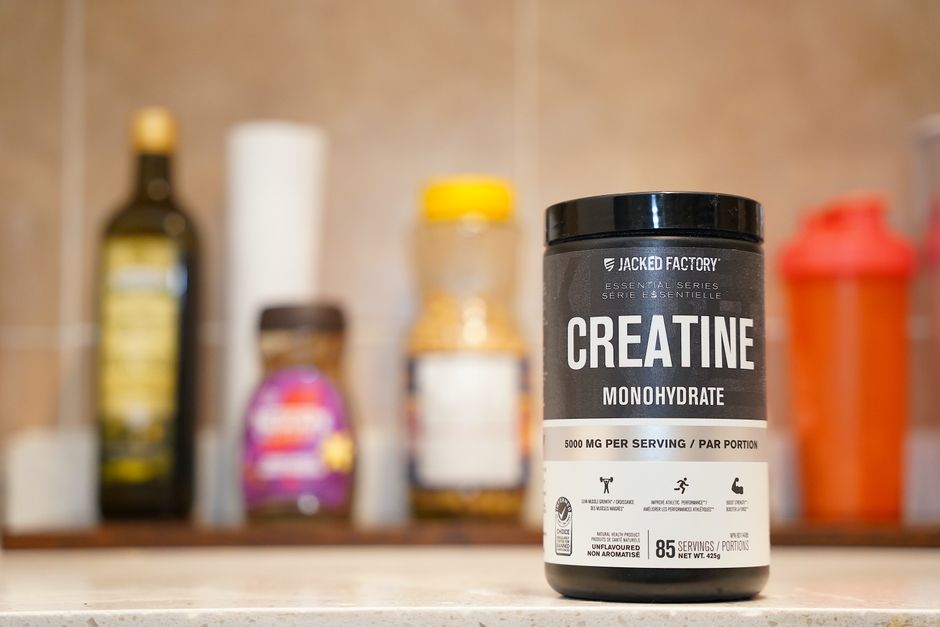
Creatine is one of the most studied sports supplements in the world, and 5 grams a day is the standard maintenance dose used in most research and recommended by major sports nutrition groups. For healthy adults, that amount has a long track record of safety in controlled trials. The main caveat is that “safe” depends on who is taking it and whether they have any underlying kidney or liver conditions.
This article looks at what the evidence actually shows about 5 grams of creatine, where the research is solid, and where genuine uncertainty remains.
What Does 5 Grams Of Creatine Actually Do?
Creatine is a compound your body makes and stores mostly in skeletal muscle. It helps regenerate adenosine triphosphate, or ATP, the basic energy currency your muscles use during short, intense efforts like sprinting or lifting a heavy weight.
Taking creatine increases the amount stored in muscle. That extra stored creatine can support more ATP regeneration during brief high-intensity activity. This is why it is popular among athletes in strength and power sports.
The 5-gram figure is not arbitrary. It reflects a maintenance dose — enough to keep muscle creatine elevated once it is loaded. Many studies use a loading phase of roughly 20 grams per day split into smaller doses for about a week, followed by 3 to 5 grams per day to maintain. Other research shows that simply taking around 3 to 5 grams daily without a loading phase will also raise muscle creatine over several weeks, just more slowly.
Beyond muscle, creatine is also involved in brain energy metabolism. Some research suggests it may play a role in cognitive function under conditions of stress or sleep deprivation. That area is still being studied and results vary. The muscle and performance evidence is much stronger than the brain evidence.
Is 5 Grams Of Creatine Safe For Healthy Adults?
For healthy adults, 5 grams daily has a strong safety record. Creatine is one of the most extensively researched supplements, and reviews of the available trials have not found consistent evidence of harm at typical doses in people without pre-existing kidney or liver disease.
The most commonly reported side effect is mild water retention, particularly in the early weeks. Some people notice a small increase in body weight, usually a pound or two, that comes from water drawn into muscle rather than fat gain.
Gastrointestinal discomfort is also reported by some users, including stomach cramping or loose stools. Taking creatine with food or splitting the dose can reduce this for some people, though this is based on practical experience more than large controlled trials.
One point that often gets lost: the notion that creatine harms the kidneys in healthy people is not supported by the evidence. The confusion comes from the fact that creatine raises creatinine levels on blood tests. Creatinine is a waste product used to estimate kidney function, so a higher number can look like declining kidney function when the kidneys are actually fine. This is a real issue for anyone getting routine blood work, and it is worth mentioning to a doctor before testing.
Does Creatine Affect The Kidneys Or Liver?
In people with healthy kidneys, studies have not shown that creatine supplementation at standard doses causes kidney damage. The evidence here is reasonably consistent across multiple trials and reviews.
The situation is different for people who already have kidney disease. Because creatine is processed into creatinine and cleared by the kidneys, anyone with reduced kidney function should talk to a doctor before using it. There is not enough research to say it is safe for this group, and the cautious position is to avoid it without medical guidance.
Liver concerns come up less often. The evidence linking creatine to liver problems in healthy people is weak and largely based on isolated case reports rather than controlled studies. Case reports cannot establish cause, and some have involved other factors like pre-existing conditions or additional supplements.
If you have any diagnosed kidney or liver condition, the honest answer is that the safety data does not cover you. That is a gap in the research, not a proven risk.





Who Should Be Careful With 5 Grams Of Creatine?
Certain groups have less safety data, which matters more than any theoretical concern.
- People with kidney disease — avoid unless a doctor says otherwise, because the evidence does not cover this group.
- People with liver disease — limited data, so medical guidance is appropriate.
- People taking medications that affect the kidneys — worth discussing with a prescriber, since the combination has not been well studied.
- Pregnant or breastfeeding women — no clinical guidelines currently exist for creatine use in this population, and long-term safety data is not available.
- Children and adolescents — creatine is used in some young athletes under supervision, but routine use is not established for this group, and guidance varies.
For these groups, the issue is not that harm has been proven. It is that the research has not been done, and absence of evidence is not the same as evidence of safety.
Is 5 Grams Better Than A Loading Phase?
Both work. The difference is speed, not outcome.
A loading phase of about 20 grams daily for roughly a week raises muscle creatine faster, often within days. Taking 3 to 5 grams daily without loading reaches a similar muscle level over several weeks. The end result is comparable; the loading approach just gets there sooner and may cause more stomach upset because of the higher daily amount.
For most people, 5 grams a day is simpler, easier on the stomach, and avoids the temporary water weight that loading can produce. There is no strong evidence that one approach produces better long-term results than the other.
| Approach | Daily amount | Time to raise muscle creatine |
|---|---|---|
| Loading then maintenance | ~20 g for about a week, then 3–5 g | Often within about a week |
| Maintenance only | 3–5 g | Several weeks |
What Form Of Creatine Should You Choose?
Creatine monohydrate is the form used in the vast majority of studies, and it is the one with the strongest evidence base. Other forms — creatine hydrochloride, creatine ethyl ester, buffered creatine — are marketed as superior, but the research comparing them head-to-head with monohydrate is limited.
No study has confirmed that these alternative forms work better than monohydrate. Some cost considerably more. If the goal is a well-studied option, monohydrate is the one the evidence supports.
Powder is the most common and usually the least expensive. It dissolves best in warm liquid, though many people simply mix it into a cold drink and accept some settling.
How Should You Take 5 Grams Of Creatine?
Timing appears to matter less than consistency. Taking creatine at roughly the same time each day helps keep muscle levels steady, but research has not shown a clear advantage for any specific time of day.
Taking it with a meal or a drink containing carbohydrates may improve absorption slightly, based on some studies, though the practical difference is small. The more important factor is taking it regularly rather than sporadically.
There is no established need to cycle creatine on and off. The evidence does not support cycling as a requirement, and continuous use at standard doses is what most long-term studies have examined.
One practical note: drink enough water. Creatine draws water into muscle cells, and staying hydrated is sensible, though the idea that creatine causes dangerous dehydration in healthy people is not supported by the evidence.
What Does The Evidence Not Show?
Creatine is often marketed for benefits that the research does not firmly support. Claims about improved mood, general brain performance in well-rested people, or broad anti-aging effects are not backed by strong human trials.
Some studies suggest creatine may help cognition under specific stressors like sleep deprivation, but the results are mixed and the effect is not established for everyday cognitive function.
Claims that creatine builds muscle without training, or that it works as a fat burner, are not supported. Creatine supports performance during intense activity; it does not replace training or nutrition.
It is also worth separating what is proven from what is plausible. Creatine clearly raises muscle creatine and can support high-intensity performance. Many other proposed benefits rest on biological reasoning rather than demonstrated clinical outcomes, and those two things are not the same.
Frequently Asked Questions
Is 5 grams of creatine a day safe?
For healthy adults, 5 grams daily has a strong safety record in controlled trials. People with kidney or liver disease should avoid it unless a doctor says otherwise, because the safety data does not cover those groups.
Can creatine damage your kidneys?
In people with healthy kidneys, studies have not shown that standard doses cause kidney damage. Creatine does raise creatinine on blood tests, which can look like a kidney problem even when kidney function is normal.
Do you need to load creatine or is 5 grams enough?
Five grams a day is enough to raise muscle creatine over several weeks. A loading phase of about 20 grams daily for roughly a week gets there faster, but the end result is similar.
Is creatine monohydrate the best form?
Creatine monohydrate is the form used in most studies and has the strongest evidence base. No study has confirmed that other forms work better, despite marketing claims.
