
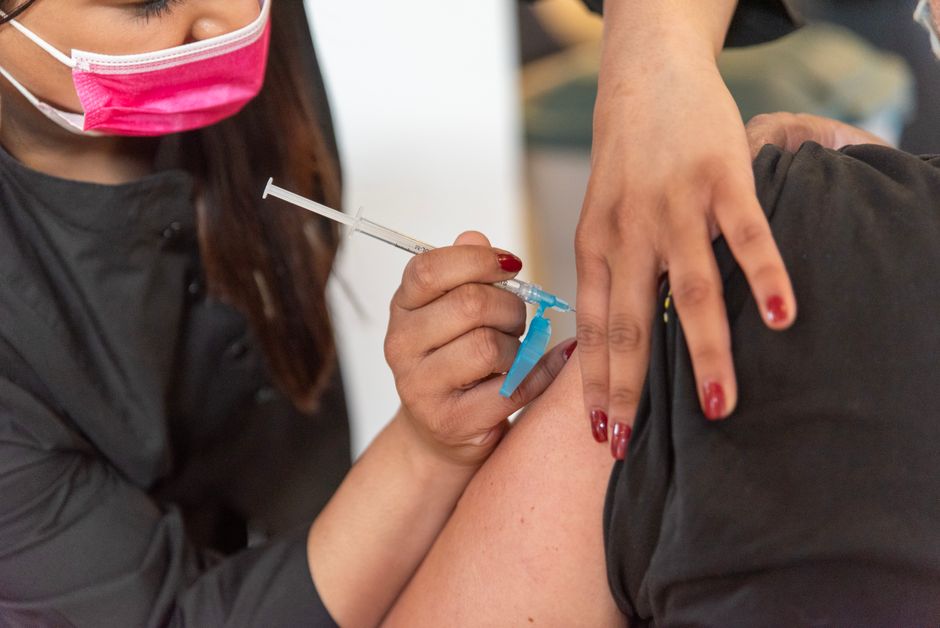
If you got the updated COVID-19 vaccine, you have decent protection against severe illness right now — but it is not a force field. The vaccine cuts your risk of hospitalization and death substantially, and that protection is strongest in the weeks and months right after the shot. It does much less to stop you from catching the virus in the first place, and that gap has widened as the virus has evolved.
That is the honest summary. The shot is still worth getting for most people, especially those at higher risk. But the way it protects you has changed since 2021, and understanding that change helps you make sense of what you keep hearing.
What does the updated COVID vaccine actually protect against?
The vaccine’s main job is to keep you out of the hospital. That has been true since the first shots and it remains true with the updated versions.
When researchers track large groups of people, the pattern is consistent. People who received an updated vaccine have lower rates of severe illness, hospitalization, and death from COVID-19 compared with people who did not. The protection is real and measurable across age groups.
What the vaccine does less well is block infection. Early in the pandemic, the original vaccines reduced your chance of catching the virus noticeably. As the virus mutated, that protection against any infection shrank. Today, a vaccinated person can still catch COVID-19, often more than once.
This is not a failure of the vaccine. It reflects how fast this virus changes and where the virus enters your body. The vaccines produce antibodies mostly in your blood and deep tissues. The virus lands first in your nose and throat, where those antibodies are thinner on the ground. So the virus can get a foothold before your immune system mounts a full response.
How long does protection last after the shot?
Protection against severe illness holds up longer than protection against infection. That is the key distinction.
Antibody levels in your blood rise sharply in the first couple of weeks after vaccination, then gradually decline over the following months. This decline is normal and expected. It happens after every vaccine and after every infection.
Protection against hospitalization tends to remain fairly strong for several months, then slowly weakens. Protection against mild infection fades faster — often within a few months. This is why breakthrough infections became common even among people who were up to date on their shots.
Your immune system also keeps a second line of defense: memory B cells and T cells. These do not stop the virus from entering, but they can respond quickly if it does, helping limit how sick you get. This memory response is part of why severe illness stays rare in vaccinated people even after antibody levels drop.
Because the virus keeps changing, health authorities periodically update the vaccine to better match circulating strains. The timing of when to get a booster is a moving target, and recommendations have shifted over time. If you want current guidance on who should get an updated dose and when, check with your doctor or a public health authority, since the specifics have changed more than once.
How well does it work against new variants?
The updated vaccines are reformulated to target recent versions of the virus, but the virus does not stand still.
By the time a vaccine is designed, tested, manufactured, and distributed, the dominant strain may have shifted. This is a structural problem, not a mistake. It is similar to how flu vaccines are updated each year based on predictions about which strains will circulate.
When a new variant appears that is quite different from the one the vaccine targets, protection against infection drops. Protection against severe disease tends to hold up better, because the parts of the virus that cause severe illness are more stable than the parts your antibodies recognize first.
Some research suggests that prior infection plus vaccination — sometimes called hybrid immunity — provides broader protection than either alone. The evidence here is generally supportive but not uniform, and it does not mean you should seek out an infection.



Does the vaccine reduce your chance of getting long COVID?
This is one of the more actively studied questions, and the answer is not fully settled.
Some studies suggest that people who were vaccinated before an infection are somewhat less likely to develop long COVID. Other studies find a smaller effect or none at all. The evidence is mixed, and the studies vary in how they define long COVID and which populations they follow.
What can be said with reasonable confidence: vaccination reduces your risk of severe initial illness, and severe initial illness is one factor linked to long COVID. Whether vaccination independently lowers long COVID risk beyond that is still being worked out. Anyone who tells you the answer is definitively yes or definitively no is going beyond what the data currently show.
Who benefits most from the updated vaccine?
The people who benefit most are those at highest risk of severe COVID-19. That group has been consistent throughout the pandemic.
- Adults over 65
- People with weakened immune systems
- People with chronic conditions such as heart disease, lung disease, diabetes, or obesity
- Pregnant people, who face higher risk of severe illness from COVID-19
- Residents of long-term care facilities
For younger, healthy adults, the absolute risk of severe COVID-19 is lower to begin with, so the vaccine’s benefit is smaller in absolute terms even though it still reduces risk. This is a normal feature of vaccines and medicines: the same intervention helps more when baseline risk is higher.
For children and infants, the picture is different again. Severe COVID-19 in healthy children is uncommon. Decisions about vaccination in this group should be made with a pediatrician who can weigh the child’s individual circumstances. No single recommendation fits every child, and the guidance in this area has evolved.
What the vaccine does not do
It helps to be clear about the limits, because overpromising has fueled a lot of confusion.
The vaccine does not prevent all infections. It does not create sterilizing immunity, meaning it does not stop the virus from entering your body or from being passed to others. It does not make you immune for life. And it does not eliminate the need for other precautions if you are in a high-risk situation.
Some people expect the vaccine to work like the measles vaccine, which blocks infection almost completely and provides decades of protection. COVID-19 vaccines do not work that way, and the reason is partly the virus itself. Coronaviruses that infect the nose and throat tend to produce shorter-lasting immunity, whether from a vaccine or from natural infection. That is why people get repeated common-cold coronavirus infections throughout their lives.
None of this makes the vaccine useless. It makes it a tool with a specific purpose: reducing the chance that a COVID-19 infection puts you in the hospital or kills you. On that measure, the evidence has been consistent.
How should you weigh the decision?
The decision to get an updated vaccine is a personal one, and the right answer depends on your health, your age, your exposure, and your own risk tolerance.
If you are older or have conditions that raise your risk, the case for staying up to date is stronger. If you are young and healthy, the benefit is smaller but not zero, and some people choose to get it anyway to reduce the chance of a rough illness or time off work.
What matters is making the choice with accurate information rather than hype in either direction. The vaccine is neither a miracle shield nor a worthless shot. It is a moderately effective tool that reduces your risk of the worst outcomes, with protection that fades and needs periodic updating as the virus changes.
If you are unsure how it fits your situation — especially if you are pregnant, immunocompromised, or managing a chronic illness — that is a conversation worth having with your doctor, who knows your history.
Frequently Asked Questions
How well does the updated COVID vaccine protect against hospitalization?
It substantially lowers your risk of hospitalization and death from COVID-19, and that protection is strongest in the months right after the shot. Protection against severe illness lasts longer than protection against catching the virus.
Can you still get COVID after being vaccinated?
Yes. The vaccine does not block infection, so vaccinated people can and do catch COVID-19, sometimes more than once. The vaccine mainly reduces how sick you get, not whether you get infected at all.
How long does the COVID vaccine protect you?
Protection against severe illness tends to stay fairly strong for several months, then slowly declines. Protection against mild infection fades faster, often within a few months, which is why periodic updates are recommended.
Does the vaccine lower your risk of long COVID?
Some studies suggest it may reduce the risk somewhat, but the evidence is mixed and not settled. What is clearer is that vaccination lowers your risk of severe initial illness, which is one factor linked to long COVID.
