
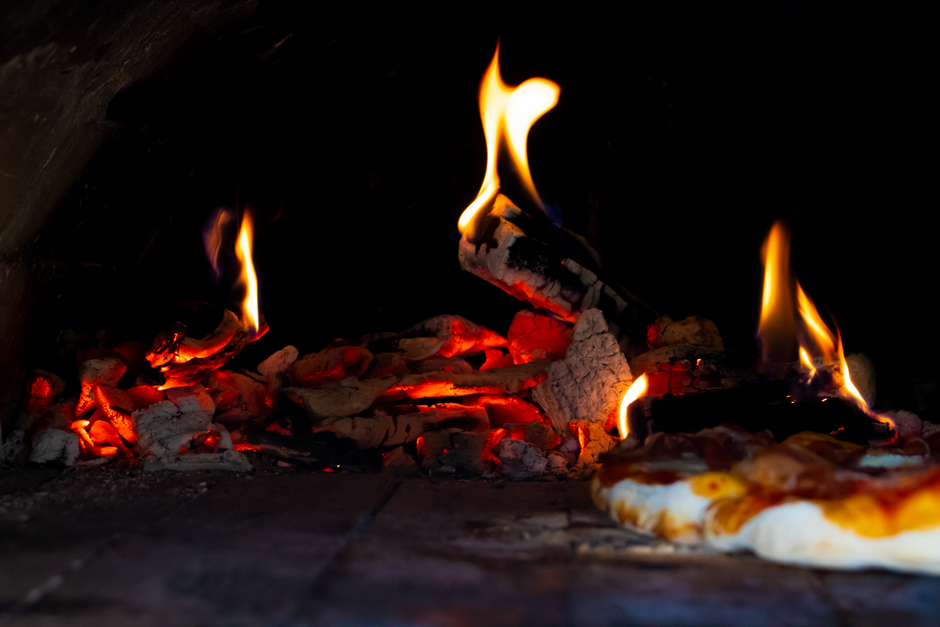
Every meal you eat is the end of a long story that starts with a spark. Cooking began with fire roughly 1.8 million to 2 million years ago, based on archaeological evidence of burned bones and plant remains at early human sites. From there, food production moved through grinding, fermenting, salting, canning, and freezing — each step solving a specific problem of survival. The factory is simply the most recent chapter in that same story.
How Did Cooking With Fire Change Food Forever?
Fire did something no raw ingredient could do on its own: it broke food down before it ever reached a human stomach.
Heat denatures proteins, which means it unfolds their tightly coiled structures. It gelatinizes starch, making it easier for digestive enzymes to reach. It softens tough plant fibers. The result is food that takes less chewing and less digestive energy to turn into usable calories.
Some researchers have argued that this energy savings helped early humans support larger brains, which are metabolically expensive organs. That idea is influential but still debated — the fossil record is sparse and hard to interpret. What is not debated is that cooking made many foods safer. Heat kills most disease-causing bacteria, parasites, and viruses when food reaches sufficient internal temperatures.
There’s a detail worth pausing on. Smoking and drying meat near a fire wasn’t just about cooking. It was one of the first preservation methods — smoke deposits compounds that slow microbial growth, and drying removes the water bacteria need to multiply. Early humans likely discovered this by accident, then repeated it on purpose.
What Came Before Farming?
For most of human history, food wasn’t made at all. It was found.
Hunter-gatherers ate what the landscape offered — wild game, fish, nuts, seeds, tubers, berries, and insects. Diets varied enormously by region and season. There was no single “ancestral diet.” Groups near coastlines ate very differently from groups in forests or grasslands.
Processing still happened. People cracked nuts with stones, pounded seeds into flour, and leached bitter compounds out of certain plants by soaking them in water. Some of the oldest known food-processing tools are grinding stones used to make flour from wild grains — long before anyone planted a field.
Agriculture emerged independently in multiple parts of the world, generally within the last 10,000 to 12,000 years. People began deliberately planting and harvesting grains, legumes, and root crops. This changed everything: food could be stored in bulk, populations could grow, and societies could support people who didn’t farm — soldiers, priests, craftsmen, and eventually factory workers.
How Did People Preserve Food Before Refrigeration?
Preservation was the central problem of pre-industrial food. Without it, a good harvest in September meant nothing in February.
Different cultures solved it in different ways, and most methods worked by removing or controlling the conditions that let microbes grow — water, warmth, oxygen, or acidity.
- Drying: Removing water slows bacterial and mold growth. Used for fish, meat, fruit, and grains worldwide.
- Salting: Salt draws water out of cells, creating an environment where many spoilage organisms cannot survive.
- Fermenting: Beneficial microbes produce acid or alcohol that crowd out harmful organisms. This gave us cheese, yogurt, sauerkraut, kimchi, soy sauce, beer, and wine.
- Smoking: Combines drying with antimicrobial compounds from smoke.
- Root cellaring: Cool, humid underground storage kept apples, potatoes, carrots, and cabbage edible for months.
- Canning: Sealing food in jars and heating them. Developed in the early 1800s in France, it was a genuine breakthrough for feeding armies and, later, cities.
Canning deserves a safety note. It works because heat kills Clostridium botulinum spores only at high temperatures. Low-acid foods like green beans and meat require pressure canning to reach those temperatures. Water-bath canning is only safe for high-acid foods like most fruits and pickled vegetables. This is established food safety guidance, not a preference.




When Did Food Move Into Factories?
Food processing industrialized in the 19th and early 20th centuries, driven by the same forces that industrialized everything else: steam power, railroads, and urban populations that couldn’t grow their own food.
Roller mills replaced stone mills and could produce fine white flour at scale. Mechanical refrigeration, developed in the late 1800s, let meat and produce travel long distances. Chicago’s stockyards became the model for the modern disassembly line. By the mid-20th century, freezing, dehydration, and chemical additives had turned food into a manufactured product with a shelf life measured in months or years.
Processing solved real problems. It reduced spoilage, lowered foodborne illness, made food cheaper, and freed enormous numbers of people from the daily labor of growing and preserving it. Those are not marketing claims — they are documented public health outcomes. Refrigeration and pasteurization, in particular, are among the most significant disease-prevention advances in modern history.
The tradeoff is equally real. Highly processed foods tend to be higher in added sugar, sodium, and refined starch, and lower in fiber. Large observational studies have linked diets high in ultra-processed foods to worse health outcomes, though observational research cannot prove cause and effect — people who eat more processed food may differ in other ways too. The evidence here is suggestive, not settled.
What Actually Happens Inside a Modern Food Factory?
A modern food plant is a controlled environment built around preventing contamination and extending shelf life.
Raw ingredients arrive and are tested for contaminants. They’re cleaned, sorted, and often heated, chilled, or pressurized. Mixing, shaping, and forming machines turn ingredients into products. Packaging happens in controlled atmospheres — sometimes with nitrogen instead of oxygen, which slows oxidation and spoilage. Metal detectors and X-ray systems scan for foreign objects. Finished products are held until lab tests confirm safety.
Regulation varies by country. In the United States, the FDA oversees most food products and the USDA oversees meat, poultry, and egg products. Facilities are subject to inspection, and many must follow documented food safety plans. This system is not perfect — outbreaks still happen — but it exists because the alternative, unregulated industrial food, was demonstrably deadly in the early 20th century.
Is Factory Food Worse Than Food Made by Hand?
Not automatically. The method of production doesn’t determine nutritional quality — the ingredients and the processing steps do.
Frozen vegetables, for example, are typically blanched and frozen shortly after harvest. In some cases they retain more vitamins than fresh produce that has spent days in transit and on a shelf. That’s a well-established finding, not a defense of all frozen food.
A can of plain beans contains beans, water, and salt. A packaged snack cake contains refined flour, sugar, palm oil, emulsifiers, and preservatives. Both are “factory food.” They are not equivalent.
The useful distinction isn’t factory versus handmade. It’s how much the food has been altered and what was added. A simple way to think about it: the longer the ingredient list and the more ingredients that don’t resemble food, the more processed the product tends to be.
Traditional preservation methods aren’t automatically healthier either. Salt-cured meats and smoked foods can contain compounds associated with health risks when eaten in large amounts over long periods. The evidence on this is fairly consistent.
How Did We Get From Fire to the Factory?
Each era solved the problem the previous one created.
Fire made food safer and easier to digest. Farming made it storable. Preservation made it last through winter. Canning and refrigeration made it transportable. Factories made it cheap and abundant enough to feed billions.
That last step is the one people argue about most, and reasonably so. Abundance solved hunger for many populations while creating new problems — overconsumption of calorie-dense, nutrient-poor food. Both things are true at once.
Understanding the path from fire to factory doesn’t tell you what to eat. It does explain why the food system looks the way it does, and why almost nothing on a grocery shelf is truly unprocessed. Even the raw chicken was chilled, inspected, and transported. The question was never whether food is processed. It’s how, and how much.
Frequently Asked Questions
When did humans first start cooking food with fire?
Archaeological evidence of controlled fire use and cooked food remains dates to roughly 1.8 million to 2 million years ago. The exact timeline is still debated among researchers because early evidence is fragmentary.
Why was canning such a big deal for food history?
Canning let food be stored safely for months or years without refrigeration, which made it possible to feed armies, ships, and growing cities. It was developed in the early 1800s in France and became a foundation of industrial food supply.
Is frozen food less nutritious than fresh food?
Often it is comparable or better, because frozen vegetables are typically processed soon after harvest and retain much of their vitamin content. Fresh produce can lose nutrients during days of shipping and storage.
What is the difference between processed and ultra-processed food?
Processed foods are altered from their natural state — canned beans, pasteurized milk, and whole grain bread are examples. Ultra-processed foods contain ingredients you wouldn’t find in a home kitchen, like emulsifiers, artificial flavors, and hydrogenated oils.
