
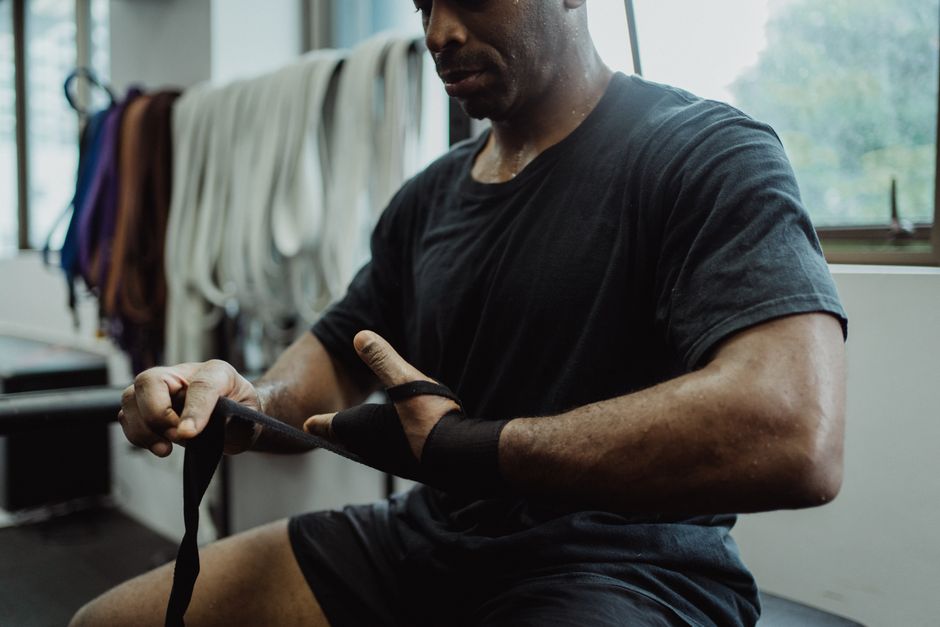
Wrapping your wrists before lifting heavy weights or putting on boxing gloves is one of the simplest ways to protect your hands and wrists from injury. The goal is the same for both sports: stabilize the wrist joint so it stays in a safe, neutral position under pressure. For lifting, you wrap to push against heavy barbells. For boxing, you wrap to support the wrist when you punch. The techniques differ, but the principle is identical — keep the wrist straight and supported.
Why Do You Need To Wrap Your Wrists At All?
The wrist is a small joint that connects two forearm bones to the small bones of the hand. It moves in many directions, which makes it flexible but also vulnerable. When you lift a heavy weight, the load can force your wrist to bend backward. That position puts stress on the ligaments and tendons.
Boxing is different. Your wrist absorbs the impact of each punch. A straight, supported wrist transfers force cleanly through the arm. A bent wrist takes that force on the ligaments and small bones. That is how boxers sprain wrists and even break small hand bones.
Wraps do not make your wrist stronger. They limit how far it can bend. That limitation is what protects you. Think of it as a seatbelt — it does not prevent the crash, but it keeps your body in the right position during it.
How To Wrap Your Wrists For Lifting?
For lifting, you want a wrap that is firm but not tight enough to cut off circulation. Most people use a cloth wrap that is about 18 to 24 inches long. Some prefer longer wraps for more support. The wrap should cover the wrist joint itself and extend slightly onto the hand and forearm.
Start with your hand flat and your thumb out to the side. Place the loop end of the wrap over your thumb if it has one. If not, just start at the wrist. Wrap around the wrist twice to anchor it. Then bring the wrap across the back of your hand, between your thumb and index finger. This creates a figure-eight pattern.
Continue around the wrist again, then back over the top of the hand. Repeat this pattern two or three times. Finish by wrapping around the wrist a few more times to lock everything in place. Secure the Velcro or tuck the end under the previous layer.
The key is tension. The wrap should feel snug. You should be able to move your wrist freely from side to side, but it should resist bending backward. If your fingers tingle or turn white, it is too tight. Loosen it and start again.
How To Wrap Your Wrists For Boxing?
Boxing wraps are longer — usually 120 to 180 inches. The extra length lets you cover the knuckles, the thumb, and the wrist in layers. The goal is to protect the small bones of the hand and keep the wrist stable inside the glove.
Start the same way. Put your thumb through the loop. Wrap around the wrist three or four times. Then wrap around the thumb once or twice. This supports the thumb joint, which takes a lot of force when you punch.
Next, bring the wrap across the back of your hand and start covering your knuckles. Wrap around the knuckles three times. This layer protects the metacarpal bones — the long bones that run from your wrist to your knuckles. They are the most commonly broken bones in boxing.
Now go back to the wrist for a couple of wraps. Then create the figure-eight between your thumb and index finger again. This locks the hand and wrist together as one unit. Finish with several wraps around the wrist and secure the Velcro.
Your knuckles should feel padded but not bulky. You should still be able to make a fist fully. If you cannot close your hand completely, the wrap is too thick or too tight.





What Length Of Wrap Should You Use?
For lifting, shorter wraps work fine. A 12 to 18 inch wrap is enough for most lifters. Powerlifters often use longer wraps — 24 to 36 inches — because they are lifting maximum weights and want extra stiffness. These heavier wraps are not meant for everyday training. They are for heavy squats and bench presses.
For boxing, the standard length is 120 inches for adults. Some people prefer 180 inches for extra knuckle padding. Beginners often start with 120 inches because it is easier to manage. Children and people with smaller hands can use 108 inches.
The length matters less than the technique. A properly applied 120-inch wrap is better than a sloppy 180-inch wrap. Focus on learning the pattern first, then adjust the length based on your needs.
Common Mistakes People Make When Wrapping
The most common mistake is wrapping too tight. People think tighter means more support. That is not true. A wrap that is too tight restricts blood flow and can cause numbness. It can also put pressure on nerves, which leads to tingling in the fingers.
Another mistake is leaving the thumb loose. The thumb needs support, especially in boxing. A loose thumb can get jammed during a punch, which is painful and can sideline you for weeks.
Some people skip the wrist entirely and just wrap the knuckles. That misses the point. The wrist is the joint that needs the most protection in both sports. If your wrist bends under load, the rest of the hand follows.
Wrinkles in the wrap are also a problem. A wrinkled wrap creates pressure points on the skin. Over time, that can cause blisters or bruising. Smooth each layer as you go.
Do Wraps Replace Wrist Straps Or Gloves?
No. Wraps are not the same as wrist straps used in lifting. Lifting straps loop around the bar and your wrist to help you hold heavy weights when your grip gives out. They do not support the wrist joint. Wraps support the joint. Some lifters use both — straps for grip and wraps for wrist stability.
Boxing wraps do not replace gloves either. Gloves add padding that absorbs impact. Wraps protect the bones and joint inside the glove. You need both. Training without wraps inside gloves is risky because the glove alone does not keep your wrist straight.
There are also hybrid products — gel pads, quick wraps, and compression sleeves. These are convenient but generally offer less support than traditional wraps. They are fine for light training but not ideal for heavy lifting or sparring.
How Tight Should The Wrap Be?
There is a simple test. After wrapping, make a fist and then open your hand. The wrap should feel secure but not painful. You should be able to slide one finger between the wrap and your skin at the wrist. If you cannot, it is too tight.
Your fingers should stay pink and warm. If they turn pale or feel cold, the wrap is cutting off circulation. Remove it and rewrap with less tension.
During a workout, the wrap will loosen slightly as the material stretches. That is normal. If it becomes too loose to provide support, rewrap. Do not train with a wrap that has slipped out of position.
When Should You Replace Your Wraps?
Cloth wraps wear out. The elastic loses its stretch, and the fabric gets thin. If your wrap feels flimsy or has holes, replace it. A worn wrap provides little support and can even tear mid-workout.
Wash your wraps regularly. They collect sweat and bacteria. Most cloth wraps can be machine washed on a gentle cycle. Air dry them — high heat can damage the elastic.
If you train multiple times a week, consider having two pairs. Rotate them so each pair dries fully between sessions. This also extends their lifespan.
Can Wrapping Prevent All Wrist Injuries?
No. Wraps reduce risk, but they do not eliminate it. A heavy barbell can still strain a wrist if the load is too much. A punch can still cause injury if the technique is poor or the impact is extreme.
Wraps are one part of injury prevention. Proper technique matters more. Learn how to hold your wrist in a neutral position during lifts. Learn how to punch with a straight wrist. Wraps support good form — they do not replace it.
If you have a history of wrist injuries, talk to a doctor or physical therapist. They can recommend specific supports or exercises to strengthen the area. Wraps are a tool, not a cure.
Frequently Asked Questions
Can I use boxing wraps for lifting weights?
Yes, but they are longer than needed and may feel bulky under a barbell. A shorter lifting wrap is more practical and provides similar wrist support.
How tight should wrist wraps be for lifting?
Snug enough to resist backward bending, but loose enough to slide one finger underneath. Your fingers should stay pink and warm.
Do wrist wraps help with wrist pain?
They can reduce pain caused by instability or overextension during activity. They do not treat the underlying injury, so persistent pain needs medical evaluation.
How long do wrist wraps last?
With regular use and proper washing, cloth wraps typically last several months. Replace them when the elastic feels weak or the fabric shows wear.
