
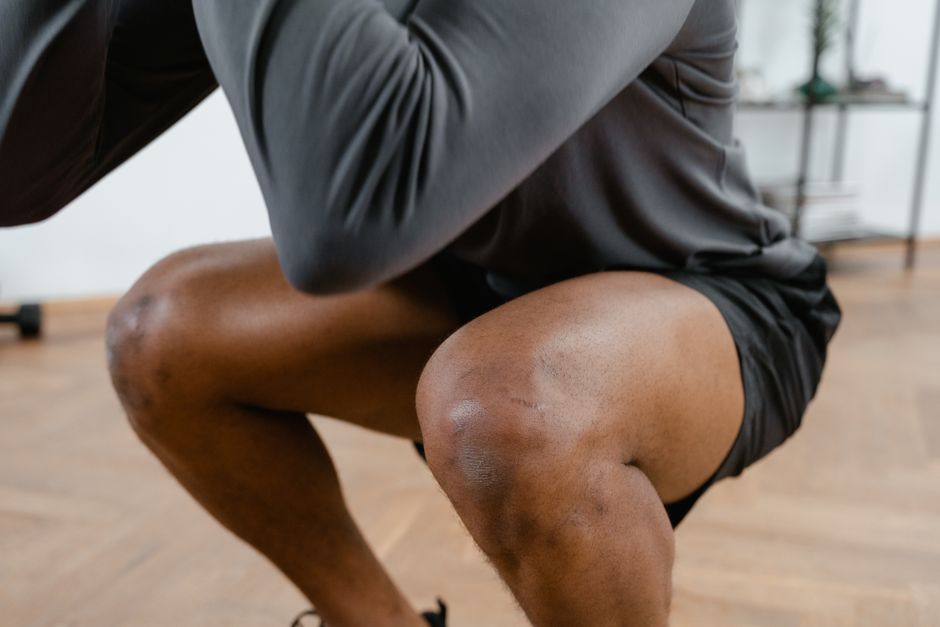
Wrapping your knees for squats means wrapping below the kneecap first, then crossing over the front of the knee, then spiraling above the kneecap — with the wrap snug enough to feel supportive but loose enough that you can still bend your knee through a full squat. The wrap should never cut off circulation, bunch behind the knee, or feel like it’s doing the work your muscles should do. Done right, it’s a temporary support tool, not a permanent fix and not a substitute for building strength.
What Does A Knee Wrap Actually Do During A Squat?
A knee wrap is a strip of elastic material — typically cotton, polyester, or a blend — that you wind around your knee joint to add compression and a sense of stability. It does not brace the joint the way a hinged knee brace does. It does not correct your squat mechanics. What it does is apply external pressure to the soft tissue around the kneecap and joint line, which some lifters find makes the knee feel more supported under load.
There is a real distinction between two common uses. Powerlifters wrap tightly for maximum compression on heavy single-rep attempts, and they often leave the wrap on for only a short time. Recreational lifters and people with knee discomfort often wrap more loosely for general support during training. These are not the same practice, and the tight powerlifting style is not something to copy casually.
What the research shows is more modest than the marketing suggests. Some studies suggest compression and proprioceptive feedback — the sense of where your knee is in space — can improve how stable a joint feels during movement. But feeling more stable is not the same as being protected from injury. No strong evidence shows that knee wraps prevent squat-related knee injuries in healthy lifters. That’s an important line to hold.
How To Wrap Knees For Squats The Right Way, Step By Step
Start with the wrap positioned below the kneecap, not on top of it. The kneecap needs to move; wrapping directly over it restricts that movement and can cause discomfort.
Here is a practical sequence that most people can follow:
- Start below the knee. Anchor the wrap a few inches below the kneecap, just under the joint line, with the tail end held in place.
- Wrap upward with moderate tension. Spiral the wrap upward, overlapping each pass by about half the width of the wrap. Keep tension even — snug, not tight.
- Cross over the front of the knee. As you pass the kneecap, angle the wrap so it crosses diagonally over the front of the joint rather than sitting flat across the kneecap.
- Continue above the knee. Finish with a couple of passes above the kneecap, then secure the fastener.
- Check the fit. Bend and straighten your knee fully. You should be able to move freely. The wrap should not bunch or dig in behind the knee.
The back of the knee is the spot people most often get wrong. The popliteal fossa — the soft hollow behind the knee — has nerves and blood vessels close to the surface. A wrap that bunches or tightens there is uncomfortable and can compress those structures. Keep the wrap slightly looser as it passes behind the knee, and never let it fold over on itself there.
If you feel tingling, numbness, or coldness in your lower leg or foot, the wrap is too tight. Take it off and rewrap.
How Tight Should A Knee Wrap Be?
Snug enough to stay in place and give feedback, loose enough that you forget it’s there after a few minutes. That’s the practical target for most recreational lifters.
A useful check: after wrapping, you should be able to slide a finger under the edge of the wrap with mild resistance. If you can’t get a finger under it at all, it’s too tight. If it slides around freely, it’s too loose to do anything useful.
Tight wrapping is a specific skill used in competitive powerlifting, and even there it carries tradeoffs. Very tight wraps can restrict blood flow and are typically worn only briefly around a heavy attempt. Some lifters report that heavy wrapping changes how the knee tracks and can make the squat feel different — sometimes helpful, sometimes not. There’s no universal rule here, and what works for a competitive lifter on a platform is not a template for everyday training.
For general gym use, err toward moderate. The wrap is there to support, not to immobilize.
Who Should Consider Wrapping And Who Probably Shouldn’t
Knee wraps are most often used by people who already squat regularly and want extra support under heavier loads, or by people returning to training after a period away and feeling some knee sensitivity. They’re also common among lifters who’ve been told by a clinician that additional compression may help during activity.
They’re less useful — and potentially a distraction — for people using them to mask pain. If your knee hurts during squats, a wrap might make the session feel better without addressing why it hurt. That’s a problem. Pain during a squat can come from many sources: patellofemoral issues, tendon irritation, meniscal problems, hip or ankle mobility restrictions, or simply a load your tissues aren’t ready for. A wrap doesn’t diagnose or fix any of these.
People with certain circulatory conditions, active skin infections around the knee, or a history of blood clots should talk to a clinician before using compression wraps. This isn’t a case where general advice covers everyone.
One clarification worth making: wrapping is not the same as taping. Kinesiology tape and rigid sports tape are applied differently and serve different purposes. Wraps are reusable, removable, and apply circumferential compression. Tape is applied directly to skin and often stays on for hours or days. Don’t treat them as interchangeable.
Mistakes That Make Knee Wraps Useless Or Risky
Wrapping directly over the kneecap is the most common error. It restricts the patella’s natural glide and often feels worse, not better, during a squat.
Bunching behind the knee is the second. This happens when the wrap twists or when you pull it too tight as it crosses the back of the joint. Smooth the wrap flat as you go, and ease tension slightly on the back passes.
Leaving a wrap on for a long time is a third. Compression that stays in place for extended periods — especially tight compression — can affect circulation and isn’t necessary for most training. Many lifters put wraps on right before their working sets and take them off between exercises.
Using a wrap to push through pain that would otherwise stop you is the most important one to avoid. If a squat hurts, the wrap is not the answer. The answer is figuring out why it hurts.
Do Knee Wraps Replace Strength Work?
No. This is the part that gets lost in gym culture. A wrap can support a joint during a lift, but it does not build the muscle, tendon, and ligament strength that protects the knee over time. That comes from progressive loading, adequate recovery, and good movement mechanics.
Some lifters worry that using wraps will “weaken” their knees by doing the work for them. There’s no strong evidence that occasional wrap use during heavy sets causes weakness. But there’s also no evidence that regular wrap use builds protective strength. The honest position is that wraps are a tool with a narrow, temporary role — and strength training is what actually changes the tissue.
If knee discomfort is a recurring issue, a physical therapist or sports medicine clinician can assess whether the problem is load management, technique, mobility, or something structural. That assessment is worth more than any wrap.
Frequently Asked Questions
Should I wrap my knees for every squat session?
No. Most recreational lifters don’t need wraps for every session. Use them when you want extra support under heavier loads or during a temporary period of knee sensitivity, not as a default part of every workout.
Can knee wraps prevent knee injuries?
No strong evidence shows that knee wraps prevent squat-related injuries in healthy lifters. They may improve how stable the knee feels, but that is not the same as protection from injury.
How do I know if my knee wrap is too tight?
If you feel tingling, numbness, or coldness in your lower leg or foot, or you can’t slide a finger under the edge of the wrap, it’s too tight. Take it off and rewrap with less tension.
Is it better to wrap above or below the knee first?
Start below the kneecap and wrap upward. This keeps the wrap anchored under the joint line and lets you control tension as you cross the front of the knee and finish above it.
