
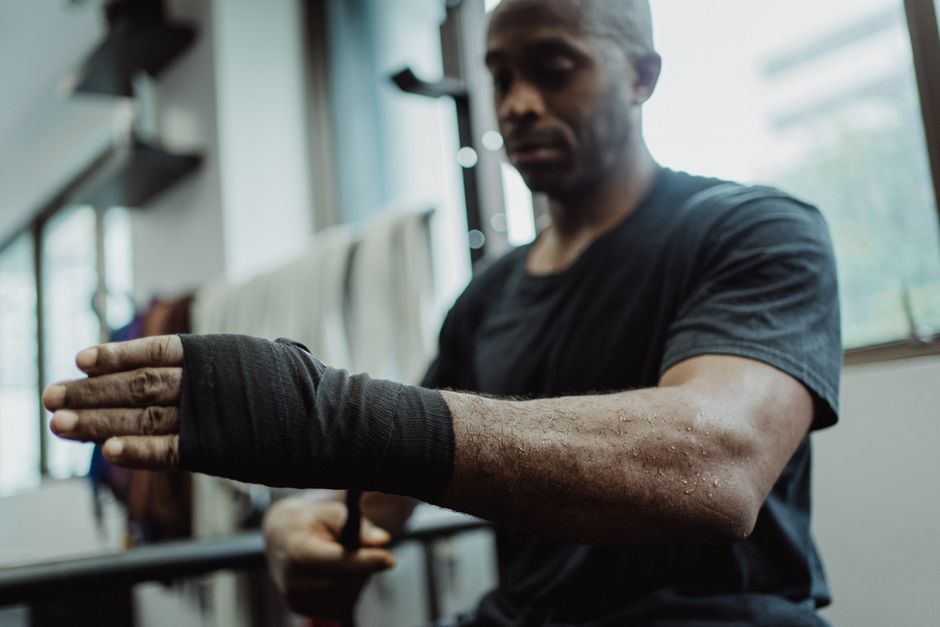
Golfer’s elbow is an overuse injury that causes pain on the inner side of the elbow, where the tendons that bend your wrist and fingers attach to bone. Wrapping the area with tape or a strap does not heal the tendon, but it can reduce the strain those tendons place on that attachment point during activity. The most common method is a simple strap or tape band placed about one to two finger widths below the bony bump on the inside of the elbow, wrapped snugly but not tight enough to cause numbness, tingling, or a change in skin color.
What Is Golfer’s Elbow and Why Does Wrapping Help?
Golfer’s elbow is the common name for medial epicondylitis. The medial epicondyle is the bony bump on the inside of your elbow. Several tendons — mainly the ones that let you flex your wrist and fingers — anchor there. Repeated gripping, lifting, or swinging can create small tears and inflammation in those tendon fibers.
The result is pain that often gets worse with gripping, squeezing, or lifting. It can also cause weakness in the hand and wrist. Despite the name, most people who develop it are not golfers. It shows up in carpenters, plumbers, cooks, and anyone who repeats forceful wrist and finger movements.
Wrapping does not repair the tendon. What it can do is change how force travels through the forearm. A strap placed just below the tendon’s attachment point may reduce the pull on the injured tissue and spread some of that load to the muscle belly instead. This is the leading explanation for why straps sometimes ease pain during activity. The evidence for how much this helps is limited and results vary between people.
How To Wrap Golfers Elbow Tape Straps Bandages
You do not need special skills to apply a counterforce strap or tape band. The key is placement and tension. Getting either wrong is the main reason wrapping fails to help.
Step-by-step application
- Find the spot. Bend your arm slightly and locate the bony bump on the inside of your elbow. Place the strap about one to two finger widths below that bump, on the fleshy part of the forearm.
- Position the arm. Keep your elbow slightly bent and your forearm relaxed. Wrapping a fully straight or fully flexed arm can shift where the strap sits once you move.
- Apply the strap. If using a pre-made counterforce strap, slide it up to the marked spot and tighten until it feels firm but comfortable.
- If using tape, wrap a strip around the forearm at that same spot. Overlap the ends so it holds. Some people add a second strip just above or below for more coverage.
- Check the tension. You should be able to slide one finger under the strap. It should not pinch, dig in, or restrict movement.
- Test it. Make a fist and squeeze. If pain drops and you feel no numbness, the placement is likely right.
Take the strap off when you are not using the arm for activity. Leaving it on for hours at a time is not necessary and can irritate the skin.
How Tight Should a Golfer’s Elbow Strap Be?
The strap should feel snug, not tight. A useful test is whether you can slip one finger underneath it without forcing it. If you cannot, it is too tight.
Warning signs that the strap is too tight include:
- Numbness or tingling in the fingers or hand
- Skin that turns pale, blue, or cold below the strap
- Swelling in the hand
- Increased pain rather than relief
Any of these means you should loosen or remove the strap right away. A strap that cuts off circulation or presses on a nerve can cause more harm than the original injury. The forearm has nerves and blood vessels running close to the surface, and too much pressure can affect them.




Where Exactly Should the Strap Sit?
Placement matters more than brand or material. The strap goes on the forearm, not directly over the painful bony bump. Sitting it too high puts pressure right on the inflamed tendon attachment, which often makes pain worse.
The correct zone is roughly one to two finger widths below the medial epicondyle. This is on the muscle and tendon bundle of the forearm, before it reaches the elbow. Some clinicians describe it as about 2 to 3 centimeters below the bony point, though exact distance varies with arm size.
If you are not sure you have the spot right, try the strap in two positions during a light activity and notice which one eases pain without numbness. A physical therapist or athletic trainer can mark the spot for you if you keep missing it.
Does Taping Actually Work for Golfer’s Elbow?
The evidence is mixed. Some studies suggest counterforce straps and elbow bands reduce pain during gripping and improve function in the short term. Other studies find little difference compared with a placebo strap or no strap at all.
What is fairly consistent is that taping and bracing are used as a support tool, not a treatment on their own. They may let you keep working or playing with less discomfort. They do not fix the underlying tendon problem.
This distinction matters. A strap that masks pain can let you keep overloading an injured tendon. If the pain keeps returning every time you take the strap off, the tendon is not healing — you are just covering the symptom.
What Else Helps Besides Wrapping?
Wrapping works best alongside other steps. On its own, it rarely resolves golfer’s elbow.
Rest and load management. Reducing the activity that caused the injury gives the tendon a chance to settle. This does not always mean complete rest. Many clinicians recommend relative rest — doing less of the aggravating motion rather than stopping everything.
Ice. Cold packs can ease pain in the short term. They do not speed healing of the tendon itself.
Physical therapy. A structured program of stretching and progressive strengthening is a mainstay of treatment for medial epicondylitis. Eccentric and isometric exercises for the forearm are commonly used. This is one area where the evidence is stronger than for taping alone.
Anti-inflammatory medications. Over-the-counter options such as ibuprofen or naproxen can reduce pain and swelling. They carry risks, including stomach and kidney effects, so check with a clinician before regular use, especially if you take other medications or have ongoing health conditions.
Activity changes. Adjusting your grip, using larger handles on tools, or changing how you lift can lower the load on the tendon.
If pain persists for weeks, gets worse, or comes with numbness or weakness, see a clinician. Golfer’s elbow usually improves with time and the right management, but some cases need more than self-care. Corticosteroid injections and surgery are options for stubborn cases, though both have tradeoffs and are not first-line for most people.
Can You Prevent Golfer’s Elbow?
You cannot always prevent it, but you can lower your risk. The main driver is repetitive forceful gripping and wrist motion, so reducing that load helps.
- Build forearm and grip strength gradually rather than in bursts
- Warm up before activities that stress the forearm
- Vary tasks so the same motion is not repeated for hours
- Use tools and grips that fit your hand
- Take breaks during repetitive work
Wearing a strap during high-risk activity may help some people, but it is not a substitute for managing the load. If you feel the familiar inner-elbow ache starting, backing off early tends to work better than pushing through.
Frequently Asked Questions
How tight should a golfer’s elbow strap be?
It should feel snug but allow you to slide one finger underneath it. If you feel numbness, tingling, or see color changes in your hand, it is too tight and should be loosened or removed.
Where do you place tape for golfer’s elbow?
Place the strap or tape about one to two finger widths below the bony bump on the inside of your elbow. Sitting it directly on the bump usually makes pain worse rather than better.
Does wrapping golfer’s elbow actually help it heal?
Wrapping does not heal the tendon, but it may reduce strain on the injured attachment point during activity. The evidence for how much it helps is mixed, and it works best alongside rest and strengthening.
How long should you wear a golfer’s elbow strap?
Wear it during activities that aggravate the elbow and remove it when you are resting. There is no established rule for how many weeks to use it, so let your pain level guide you.
