
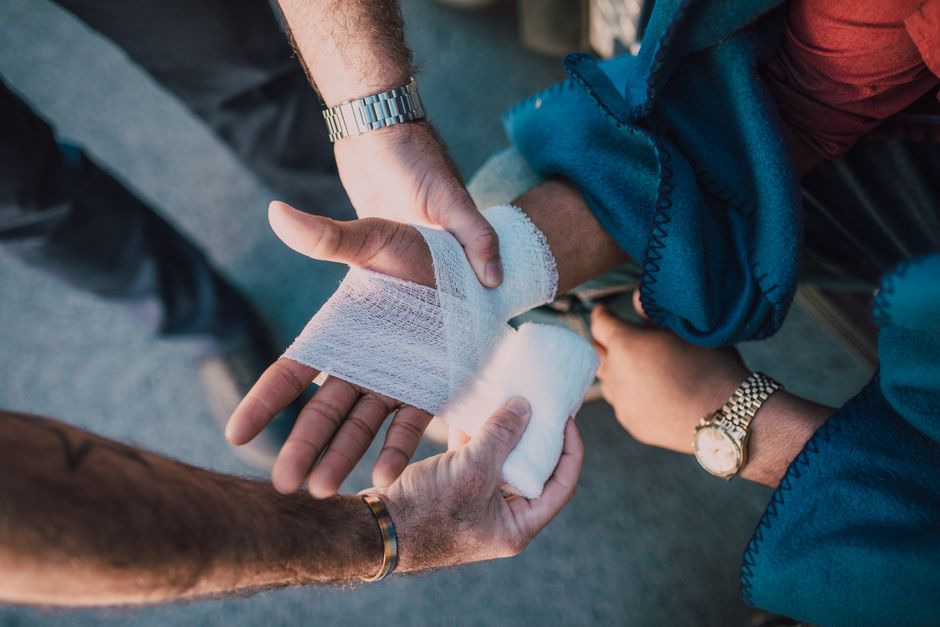
An ankle sprain happens when the ligaments that support the ankle stretch or tear, and wrapping the joint with an elastic bandage is one of the most common first-aid steps people take afterward. To wrap an ace bandage on an ankle, start with the foot flexed at a 90-degree angle, anchor the bandage near the base of the toes, and wrap in overlapping spirals — each turn covering about half of the previous one — moving up toward the calf. Keep the tension firm and even, then secure the end with the clips or tape and check that toes stay warm and pink.
That is the short version. The details matter, though — especially tension. A wrap that is too loose slides down and does nothing. A wrap that is too tight can restrict blood flow. Getting it right takes about a minute once you know the steps.
What You Need Before You Start
An elastic bandage — often sold as an ACE bandage — is a stretchy strip of woven fabric, usually 2 to 4 inches wide. For an adult ankle, a 3-inch or 4-inch width works well. A 2-inch bandage is better suited to a wrist or a child’s ankle.
You will also want the metal clips that come with most bandages, or medical tape if the clips are missing. Some people use self-adhering wrap instead, which sticks to itself and needs no clips.
Before wrapping, check the skin. Look for cuts, blisters, or areas that are already swollen and shiny. If there is an open wound, clean and cover it first. Do not wrap directly over an open wound without a dressing.
If you suspect a fracture rather than a sprain — severe pain, inability to bear weight, obvious deformity, or bone tenderness at specific points — do not rely on wrapping. Get the ankle evaluated. The Ottawa Ankle Rules are a set of clinical criteria healthcare providers use to decide whether an X-ray is needed, and they exist precisely because sprains and fractures can look similar at first.
How To Wrap Ace Bandage On Ankle Step By Step
Sit down and rest the foot on a stable surface. Let the ankle relax into a neutral position — roughly 90 degrees between the foot and the lower leg. Wrapping a pointed or flexed foot creates uneven pressure once the foot moves.
Follow these steps:
- Start at the base of the toes, on top of the foot. Hold the bandage so the roll is on the outside of the foot.
- Make one full turn around the foot to anchor the bandage. This first turn sets the tension for everything that follows.
- Wrap in a spiral, moving toward the ankle. Each new turn should overlap the previous one by about half its width.
- Angle the turns so they form a slight diagonal — this is called a figure-eight pattern and it helps the wrap stay put around the heel.
- Cross over the front of the ankle, then loop behind and under the heel, then back up.
- Continue spiraling up past the ankle joint and onto the lower calf.
- Stop a few inches above the ankle. Do not wrap all the way to the knee.
- Secure the end with the clips or tape. Smooth out any wrinkles — folds in the fabric can dig into the skin.
The whole wrap should take under two minutes. If it takes longer, you are probably overthinking the pattern. The goal is even compression, not a perfect weave.
How Tight Should An Ace Bandage Be?
Firm but not tight enough to cause numbness, tingling, or color changes. This is the single most important thing to get right, and it is also the thing people most often get wrong.
A good test: press on a toenail until it turns pale, then release. The color should return within about two to three seconds. If it takes longer, the wrap may be too tight. Also check that the toes are warm and pink, not cold, white, or blue.
Another sign of an overly tight wrap is pain that gets worse rather than better, or a throbbing sensation in the foot. Numbness and tingling are red flags. If any of these appear, remove the bandage and rewrap with less tension.
Looseness is a lesser problem but still worth fixing. If the bandage slides down when you stand or walk, it is not providing meaningful compression. Rewrap it.
One point that is easy to miss: compression wraps work best when combined with elevation. Wrapping without elevating the ankle does less than most people assume. The compression helps limit fluid buildup, and elevation uses gravity to help drain it. Together they do more than either one alone.
How Long Should You Keep The Bandage On?
For a mild sprain, many clinicians suggest wearing the wrap during the day for the first few days and removing it at night. The evidence on exact duration is not strong, and practice varies. What is clear is that the bandage should not stay on indefinitely without being checked.
Take it off at least once a day to look at the skin. Check for redness, indentations, or irritation. Rewrap if needed. If the skin looks damaged or the swelling has gone down enough that the wrap is loose, you may not need it anymore.
Some people keep wrapping for a week or more. Others stop after a couple of days. There is no single correct timeline that applies to everyone. If swelling and pain are improving, the wrap is doing its job. If they are not improving after a few days, or if they are getting worse, that is a reason to see a healthcare provider.
Common Mistakes That Make Things Worse
Wrapping in the wrong direction is a common error. Start at the toes and work up, not the other way around. Wrapping downward can push fluid toward the foot and increase swelling.
Wrapping too tightly is the mistake with the most potential for harm. A bandage that is too tight can compress blood vessels and nerves. This is not just uncomfortable — it can cause real damage if left in place.
Leaving wrinkles in the fabric is another frequent problem. A fold in the bandage creates a pressure point. Over hours, that pressure point can cause skin breakdown or nerve irritation.
Using an old, stretched-out bandage is also worth mentioning. Elastic bandages lose their stretch over time, especially if they have been washed in hot water or dried on high heat. A bandage that no longer snaps back is not providing useful compression.
Finally, wrapping and then going straight back to normal activity without any other care. Compression is one part of the standard approach to a sprain — rest, ice, compression, and elevation. It works best as part of that group, not on its own.
When To Stop Wrapping And See A Doctor
An ankle sprain that is improving steadily usually does not need medical attention. But some situations do.
See a healthcare provider if:
- You cannot put any weight on the foot at all
- The pain is severe or getting worse
- There is obvious deformity or the ankle looks out of place
- You feel numbness, tingling, or lose feeling in the foot
- The foot turns cold, pale, or blue
- Swelling is not improving after several days
- You heard or felt a pop at the time of injury and the ankle feels unstable
A fracture, a severe ligament tear, or a tendon injury can all produce symptoms that look like a sprain. Wrapping does not treat any of those. If something feels seriously wrong, get it checked.
Also worth noting: people with diabetes, poor circulation, or nerve damage in the feet should be especially careful with compression wraps and should check with a clinician before using one. Reduced sensation means you may not feel the warning signs of a wrap that is too tight.
Frequently Asked Questions
Can I sleep with an ace bandage on my ankle?
Many clinicians recommend removing the bandage at night, since swelling tends to decrease when you are lying down and the risk of a too-tight wrap going unnoticed is higher while you sleep. If you do keep it on, check the toes for warmth and color before bed and again in the morning.
How do I know if my ace bandage is too tight?
Check the toes: they should be warm and pink, and a pressed toenail should return to color within about two to three seconds. Numbness, tingling, coldness, or a blue or white color means the wrap is too tight and should be removed and reapplied.
Should I wrap my ankle for a sprain or leave it unwrapped?
Compression is a standard part of early sprain care and is generally recommended alongside rest, ice, and elevation. That said, the evidence for compression alone — without those other steps — is limited, so it works best as part of the full approach.
How often should I rewrap my ankle?
Check the wrap at least once a day, and rewrap if it has loosened or if the skin underneath looks irritated. There is no fixed schedule that applies to everyone; let the swelling and your comfort guide you.
