
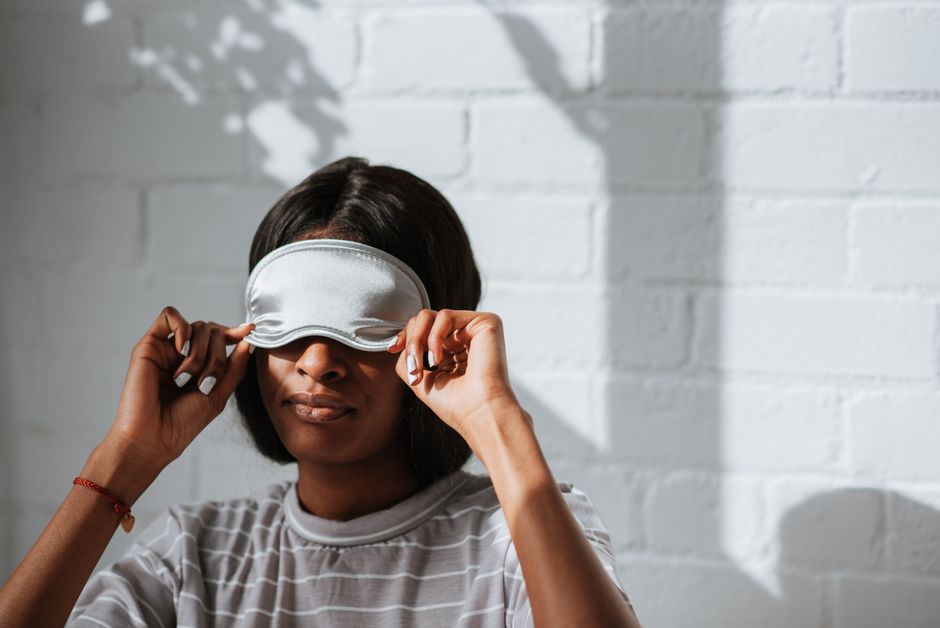
A sleep mask only works if it blocks light without pressing on your eyes or sliding off by 2 a.m. The key to a perfect fit is a mask that seals gently around the nose and cheekbones, sits loose enough to blink freely underneath, and stays put when you roll over. Adjust the strap so you can slide one finger under it, position the cushion below your brow and above your cheek, and fix light leaks at the nose before you lie down.
Most people blame the mask when the real problem is fit. A mask that rides up, digs into the bridge of your nose, or lets a sliver of light through the bottom edge will wake you just as surely as a bright room. Getting the fit right takes a few minutes and a little trial and error. Here is how to do it properly.
Why Does Light Matter So Much For Sleep?
Light is the strongest signal your body uses to decide whether it is day or night. Specialized cells in the retina detect light and send signals to a part of the brain called the suprachiasmatic nucleus, which acts as your internal clock. When light hits the eyes, that clock tells the body to suppress melatonin, the hormone that helps prepare you for sleep.
This happens even through closed eyelids. Eyelids block some light but are not opaque, which is why a bright bedroom can still affect you after you shut your eyes. That detail surprises many people. It is also the reason a sleep mask can help in situations you cannot otherwise control, like a room with early summer sunrise or a hotel with thin curtains.
What the evidence shows: light exposure at night can suppress melatonin and shift your body clock, and research consistently supports this. What the evidence does not strongly show is that a sleep mask alone will fix poor sleep. A mask removes one obstacle. It does not replace a consistent sleep schedule, a dark and cool room, or limiting screens before bed.
How To Wear A Sleep Mask Tips For A Perfect Fit
Fit comes down to three contact points: the bridge of the nose, the cheekbones, and the strap around the back of your head. Get those right and the mask does its job quietly all night.
- Seat the cushion first. Place the mask so the bottom edge rests just above your cheekbones and the top edge sits below your eyebrows. It should not cover your eyebrows or press on your eyelids.
- Check the nose seal. Most light leaks come from the gap beside the nose. If you feel a draft or see light, adjust the mask slightly higher or lower until the cushion follows the curve of your nose.
- Set the strap tension. You should be able to slide one finger under the strap. Tighter is not better. A strap that is too tight presses the mask into your eyes and can cause discomfort or headaches.
- Blink and test movement. With the mask on, open and close your eyes. Your lashes should not brush the fabric. Then turn your head side to side and roll onto your side to check the mask stays in place.
- Fix leaks in the dark. Turn off the lights and check for any light coming in around the edges. Adjust before you settle in, not at 3 a.m.
If you sleep on your side or stomach, a contoured mask with space over the eyes tends to hold its position better than a flat fabric mask. If you sleep on your back, strap placement matters more than shape. The strap should sit level around the back of your head, not angled up toward your crown, which lets the mask slide forward.
Which Type Of Sleep Mask Fits Best?
There is no single best mask. The right choice depends on your face shape, sleep position, and how sensitive your eyes are to pressure. The main types differ in ways that matter for fit.
| Type | How it fits | Best for |
|---|---|---|
| Flat fabric | Lightweight, rests directly on the eyelids | Back sleepers, light blocking on a budget |
| Contoured or molded | Rigid cup holds fabric away from the eyes | Side sleepers, people who dislike pressure on eyes |
| Wraparound | Wide band covers eyes and part of the face | People who move a lot in sleep |
| Weighted | Added weight rests gently across the eyes | Some people find gentle pressure calming |
A note on weighted masks: some people find the gentle pressure soothing, but the evidence for sleep benefits is limited, and no large trials have confirmed they improve sleep quality. Anyone with sleep apnea, breathing problems, or skin sensitivity should be cautious, and it is worth asking a clinician before using one.
Fabric choice affects comfort more than most people expect. Silk and satin feel smooth against the skin. Cotton breathes well. Foam cushions can mold to the face but may trap heat. If you run warm at night, a breathable fabric matters more than a fancy one.


What Mistakes Make A Sleep Mask Uncomfortable?
Most discomfort comes from a mask that is too tight or the wrong shape for your face. A strap pulled snug to block every sliver of light will press the mask into your eyes and can leave marks or cause headaches by morning.
Other common problems:
- Mask too small or too large. A mask that does not span the width of your face will leak light at the sides. One that is too big will shift and bunch.
- Strap slipping off. Smooth hair or a strap that is too loose lets the mask ride up during the night. Adjustable straps with a secure closure help.
- Pressure on the eyes. If you can feel the fabric against your lashes or eyelids, the mask is too tight or the wrong shape. Contoured masks solve this for many people.
- Heat and sweat. Non-breathable fabrics can make the eye area warm and damp. This is uncomfortable and can irritate skin.
- Skipping the dark test. Many people put a mask on in a lit room and never check for leaks once the lights are off.
If a mask leaves red marks or you wake with sore eyes, loosen the strap or try a different shape. Persistent eye irritation, pain, or skin reactions are worth mentioning to a doctor rather than pushing through.
How Do You Keep A Sleep Mask Clean And Safe?
A sleep mask sits against your eyes and skin every night, so cleanliness matters. Oils, sweat, and makeup build up in the fabric, and a dirty mask can irritate skin or contribute to eye discomfort.
Follow the manufacturer’s washing instructions. Many fabric masks can be hand washed in mild soap and air dried. Foam and contoured masks often need spot cleaning. Wash regularly, especially if you wear makeup or have oily skin, and replace a mask that has lost its shape or elasticity.
One safety point: do not wear a sleep mask if you have an active eye infection, recent eye surgery, or a condition your eye doctor has told you to avoid pressure on the eyes, unless a clinician says it is fine. For most healthy adults, a properly fitted mask is low risk. That said, if you have sleep apnea or a breathing condition, a mask does not treat it, and you should follow your clinician’s guidance on sleep aids.
Does A Sleep Mask Actually Improve Sleep?
The evidence is encouraging but not overwhelming. Some studies suggest sleep masks can improve sleep quality and increase time spent in deeper sleep stages, and small trials have reported benefits for people in bright environments. These findings are promising, but the research is limited and study sizes are often small.
What is well established is the biology: light suppresses melatonin and signals wakefulness, and blocking light supports the body’s natural sleep signals. A mask is one practical way to reduce light exposure. It works best as part of a broader routine that includes a consistent sleep schedule, a cool dark room, and limiting bright screens before bed.
If you have tried a well-fitted mask and still struggle with sleep, that is worth discussing with a clinician. Ongoing sleep problems can have causes a mask cannot address, including sleep apnea, anxiety, or other health conditions.
Frequently Asked Questions
Should a sleep mask be tight or loose?
It should be snug enough to stay in place but loose enough to slide one finger under the strap. A mask that is too tight presses on your eyes and can cause discomfort or headaches.
How do I stop light from coming in under my sleep mask?
Most leaks come from the gap around the nose, so adjust the mask slightly higher or lower until the cushion follows your nose curve. Test the fit with the lights off before you settle in.
Can you open your eyes under a sleep mask?
Yes, and you should be able to blink freely without your lashes touching the fabric. If you feel pressure on your eyelids, the mask is too tight or the wrong shape for your face.
Is it safe to wear a sleep mask every night?
For most healthy adults, a properly fitted, clean sleep mask is low risk. Avoid one if you have an active eye infection or recent eye surgery unless a clinician says it is fine.
