
A neck gaiter is a seamless tube of fabric that slides over your head and sits around your neck. To wear one, pull it up over your chin and nose for full face coverage, leave it bunched at your neck as a scarf, or fold it into a headband, beanie, or balaclava. There are at least eight practical ways to wear one, and the right choice depends on weather, activity, and how much of your face you want covered.
Gaiters have moved well past the ski slope. Runners wear them in cold air, cyclists use them against wind and dust, and plenty of people just like them as a lightweight scarf. The fabric is usually thin, stretchy, and quick-drying, which is exactly why it works in so many positions.
What Is a Neck Gaiter and How Does It Differ From a Scarf?
A neck gaiter is a continuous loop of fabric with no ends, no ties, and no fasteners. You pull it on over your head rather than wrapping it around your neck.
That design difference matters more than it sounds. A scarf has loose ends that can drag, tangle, or catch on equipment. A gaiter stays put because it grips your neck and head with stretch rather than knots. It also sits closer to the skin, which reduces gaps where cold air gets in.
Most gaiters are made from polyester, nylon, merino wool, or a blend. Thin synthetic versions are popular for running and cycling because they breathe and dry fast. Wool versions tend to be warmer and better at managing moisture, but they cost more and some people find them itchy.
One thing worth knowing: a single-layer gaiter is not the same as a face mask. It was never designed to filter particles, and how well any fabric blocks airborne droplets depends on the fabric, the number of layers, and how tightly it fits. If filtration matters for your situation, follow current public health guidance rather than assuming a gaiter does the job.
How To Wear A Neck Gaiter 8 Ways To Style It
Here are eight positions that cover most real-world uses. Each one takes a few seconds to adjust.
- Neck scarf. Pull the gaiter down and let it sit loosely around your neck. This is the base position and the starting point for every other style.
- Face covering. Pull the top edge up over your chin, mouth, and nose. Good for cold wind, dust, or light rain.
- Balaclava. Pull it over your head so it covers your head, ears, and neck, then tuck the front edge under your chin or pull it over your nose. This leaves only your eyes exposed.
- Beanie. Pull the whole tube up over your head and fold the bottom edge upward to form a brim. Works best with a longer gaiter.
- Headband. Fold the gaiter in half and wear it across your forehead and ears, leaving the top of your head open.
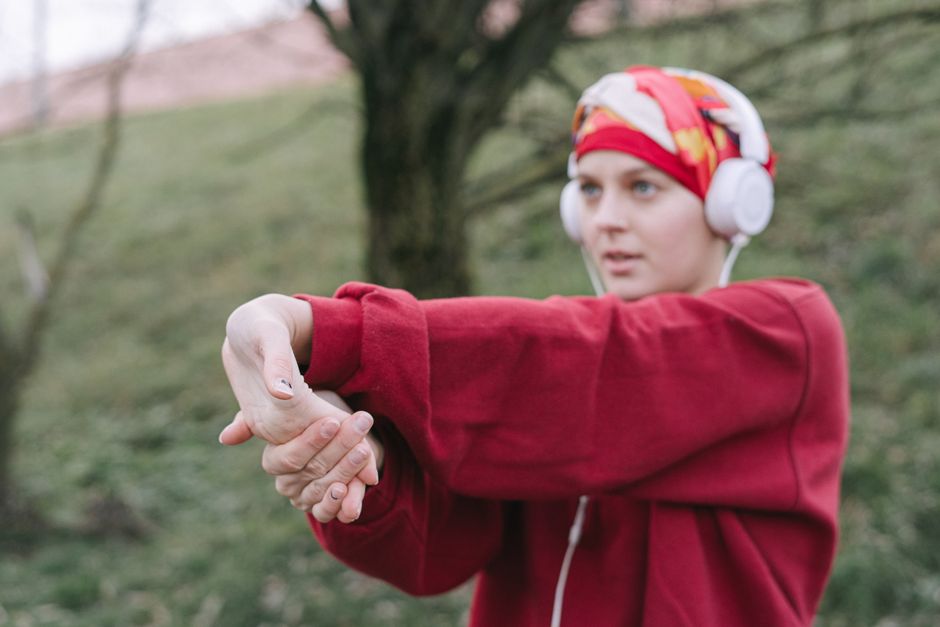
- Hair tie or head wrap. Twist the gaiter into a band and use it to hold hair back, or wear it wide across the hairline.
- Wristband. Slide it onto your wrist and fold it over. Handy for wiping sweat during a run or workout.
- Bandana or cap. Fold it into a triangle or flat band and wear it over the head, under a helmet, or around the forehead.
You can also double up. A gaiter worn as a beanie with a second one at the neck gives you full coverage without a hat and scarf combination.
Which Style Works Best for Cold Weather?
For cold weather, the balaclava position gives the most coverage. It seals the neck, ears, and most of the face in one piece, which cuts down on the gaps where cold air sneaks in.
Layer your clothing so the gaiter works with your jacket collar, not against it. If the gaiter sits under a zipped collar, you get a tighter seal. If it sits over the collar, it is easier to pull down when you warm up.
Breathability matters here. A gaiter that traps too much moisture from your breath can end up wet and cold against your face. Thin synthetic fabrics and merino wool both handle this better than thick cotton, which soaks up moisture and stays damp.
If you wear glasses, expect fogging when your face is covered. Pulling the gaiter down just below your nose while you breathe out, then back up, reduces it. Some people find a nose wire or a tighter fit around the bridge helps, but results vary by face shape and fabric.





How Do You Wear a Gaiter While Running or Cycling?
For running, most people start with the gaiter at the neck and pull it up only when the wind picks up or the temperature drops. That way you are not overheating in the first mile.
Cycling is different because of wind and helmets. A gaiter worn as a headband fits under most helmets and keeps ears warm without adding bulk on top. A full balaclava can work in cold weather but may interfere with helmet straps, so check the fit before you ride.
For dust or pollen, a gaiter over the mouth and nose can reduce how much you breathe in. It is not a substitute for a fitted respirator, and how much it filters depends on the fabric. Treat it as a comfort layer, not a protective device.
Are There Safety or Comfort Issues to Know About?
Yes, a few. The most common ones are moisture buildup, fogged glasses, and skin irritation from fabric rubbing against your face.
Moisture is the biggest issue for anyone active. When you breathe through fabric, some of that moisture stays in the material. A damp gaiter against your skin in cold air pulls heat away from your face, which is the opposite of what you want. Choosing a quick-drying fabric and taking the gaiter down to let it air out helps.
Skin irritation usually comes from friction or from detergent residue left in the fabric. Washing gaiters regularly and rinsing them well reduces this. If you have sensitive skin or a condition like eczema or rosacea, a gaiter rubbing against your face all day can make things worse. Take it off when you do not need it.
There is also a visibility and situational awareness point that gets overlooked. A balaclava that covers most of your face can make it harder for others to read your expression and for you to be recognized. In some settings, that matters. It is not a safety hazard in itself, but it is worth thinking about where you are and who is around you.
One more thing worth being clear about: no gaiter, regardless of fabric or how many layers, should be treated as medical-grade protection. If you need filtration for health reasons, use equipment designed and tested for that purpose.
How Should You Care for a Neck Gaiter?
Wash gaiters often, especially if you wear them against your face or while sweating. Most synthetic and wool gaiters can go in a washing machine on a gentle cycle, but check the label first.
Skip fabric softener. It coats the fibers and reduces breathability and moisture-wicking, which defeats the point of the fabric. Air drying is usually best, though many synthetics tolerate low heat.
If your gaiter stretches out and stops staying up, it is usually worn out rather than dirty. Elasticity fades over time with repeated washing and stretching, and once it goes, the gaiter will not hold any of the positions well.
Can You Use a Gaiter Instead of a Scarf or Hat?
In many situations, yes. A gaiter can replace a light scarf and, in the beanie position, a thin hat. It is lighter, packs smaller, and does not come untied.
Where it falls short is in serious cold. A gaiter is one layer of thin fabric. A heavy wool scarf and a lined hat provide more insulation because they trap more air and cover more surface area. For a mild winter commute or a fall run, a gaiter is often enough. For extended time outdoors in freezing conditions, it works best as part of a layered system rather than as your only protection.
Frequently Asked Questions
How do you wear a neck gaiter over your face?
Pull the top edge up over your chin, mouth, and nose so the fabric sits snug against your skin. Adjust the bottom so it stays tucked into your collar and does not ride up.
Can a neck gaiter be worn as a hat?
Yes, pull the tube up over your head and fold the bottom edge upward to create a brim. It works best with a longer gaiter that has enough fabric to cover your ears.
Is a neck gaiter as warm as a scarf?
Not usually, because a gaiter is a single thin layer rather than a thick wrapped one. It seals gaps better around the neck, but a heavy scarf provides more insulation in serious cold.
How often should you wash a neck gaiter?
Wash it after every few wears, or sooner if you have worn it against your face or while sweating. Regular washing reduces odor, skin irritation, and buildup that can cut down breathability.
