
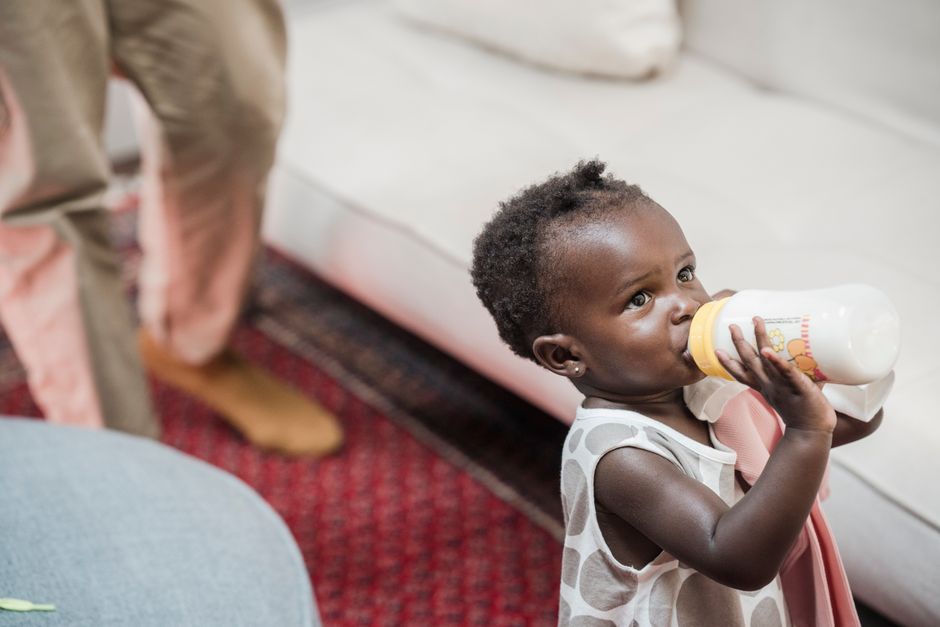
Weaning a 12-month-old off the bottle works best as a gradual transition, not a sudden stop. Most pediatric guidance recommends introducing a cup around 6 months and aiming to have the bottle gone by 12 to 18 months. At 12 months, your baby can drink whole milk from a cup, eat a wide range of solid foods, and no longer needs the bottle for nutrition. The transition usually takes a few weeks of steady, low-pressure practice.
Why Do Doctors Recommend Stopping the Bottle Around 12 Months?
The main reason is teeth. Prolonged bottle use, especially with milk or juice, keeps sugar sitting against the teeth for long stretches. That raises the risk of early childhood cavities, particularly in the upper front teeth.
There is also the nutrition side. A toddler who fills up on bottle milk may eat less at meals. By 12 months, solid food should be the main source of calories, with milk as a supplement rather than the foundation of the diet.
The American Academy of Pediatrics and other major pediatric bodies generally recommend phasing out the bottle between 12 and 18 months. That window is a guideline, not a deadline. A baby who is 14 months old and still taking one bedtime bottle is not in trouble. The direction matters more than the exact date.
One point that often gets lost: extended bottle use is linked to iron deficiency in some studies, largely because large volumes of cow’s milk can interfere with iron absorption and displace iron-rich foods. This is another reason the 12-to-18-month window exists.
How Do You Actually Start Weaning a 12-Month-Old Off the Bottle?
Start with the easiest bottle of the day, not the hardest. For most babies, that is the mid-morning or mid-afternoon bottle. The bedtime bottle is usually the last to go because it is tied to comfort and sleep, not hunger.
Here is a sequence that works for many families:
- Replace one bottle with a straw cup or open cup of milk at the same time of day.
- Wait several days to a week before dropping the next bottle.
- Keep the routine around the cup similar to the bottle routine so the change feels smaller.
- Drop the nap and nighttime bottles last.
Cold turkey can work for some babies, but it tends to produce more resistance and more tears. Gradual removal gives a toddler time to adjust without feeling like something was taken away.
A straw cup is often easier than a sippy cup for this age. Straw drinking uses different muscles than bottle drinking, which supports oral development. It also tends to be less associated with the bottle habit.
What If My Baby Refuses the Cup Entirely?
Refusing the cup at first is normal and rarely permanent. A 12-month-old has had a bottle every day of their life. A new drinking method is a real change.
Try these approaches:
- Offer the cup when your baby is thirsty but not starving or overtired.
- Let your baby hold and explore an empty cup before it ever contains milk.
- Model drinking from a cup yourself at meals.
- Try a few different cup styles. Some babies prefer straws, others prefer open cups.
- Keep offering without pressure. Repeated exposure matters more than any single attempt.
Some babies do better if the milk in the cup is slightly warmed at first, matching the bottle temperature. Once they accept it, you can shift to cold milk over time.
If your baby is drinking very little for more than a couple of days, watch for signs of dehydration. Fewer wet diapers, dry lips, or unusual sleepiness are reasons to call your pediatrician.




Should You Put Milk or Water in the Cup During the Transition?
At 12 months, whole cow’s milk is appropriate for most babies unless a pediatrician has advised otherwise. Water is fine with meals. Juice is not needed and adds sugar without much nutritional benefit.
One practical detail that helps: offer milk in the cup at meals and water between meals. This keeps milk tied to food, which mirrors how a toddler will eat long term.
If your baby has a dairy allergy or intolerance, or if there is a family history of allergy, talk to your pediatrician before introducing cow’s milk. Plant-based milks vary widely in protein, fat, and nutrient content, and most are not equivalent to cow’s milk for a toddler without careful planning.
How Do You Handle the Bedtime Bottle?
The bedtime bottle is the hardest one to remove because it is usually part of a sleep routine, not a hunger need. A 12-month-old who eats well during the day does not need a bottle overnight for nutrition.
A common approach is to keep the bedtime routine but change what happens in it. Bath, pajamas, book, then a cup of milk in a chair instead of a bottle in the crib. The order stays the same. Only the object changes.
If your baby has been falling asleep with a bottle in their mouth, expect some protest. That habit is strong. Give it one to two weeks of consistency before deciding it is not working.
Never put a baby to bed with a bottle of milk or juice. This is one of the clearest risk factors for early childhood cavities. It is also a choking risk if the baby is unattended.
What About Night Waking and Overnight Feeds?
Many 12-month-olds still wake at night, but waking and needing a feed are not the same thing. If your baby is eating well during the day and gaining weight normally, overnight milk feeds are usually not required for nutrition at this age.
Dropping overnight feeds is a separate process from dropping daytime bottles. Some families do both at once. Others keep the night feed longer and drop it last. Both are reasonable.
If your baby is waking and genuinely hungry, or if weight gain has been a concern, talk to your pediatrician before removing night feeds. There are medical reasons a baby may still need overnight calories, and those should be ruled out first.
How Long Should Weaning Take?
There is no standard timeline. Some babies transition in a week. Others take a month or more. Both are within normal range.
What tends to matter more than speed is consistency. A baby who gets a cup at breakfast on Monday and a bottle at breakfast on Tuesday learns that the bottle is still available if they push hard enough. Steady rules are easier for a toddler than rules that change.
If you have been at it for several weeks and your baby is still refusing all cups, or if weight gain or fluid intake is a concern, that is a good time to check in with your pediatrician. Some babies need a slower approach, and some have feeding or oral-motor issues that benefit from extra support.
One last thing worth saying plainly: there is no prize for finishing by 12 months exactly. The goal is a toddler who drinks from a cup, eats solid food well, and does not spend hours with milk pooling against their teeth. If that happens at 13 months or 15 months, you have still done the job.
Frequently Asked Questions
When should a baby stop using a bottle?
Most pediatric guidance recommends phasing out the bottle between 12 and 18 months. The exact timing matters less than making steady progress toward cup drinking.
Can a 12-month-old drink whole milk from a cup?
Yes. Whole cow’s milk is generally appropriate starting at 12 months for most babies. If your baby has a dairy allergy or your pediatrician has advised otherwise, follow that guidance instead.
Is it OK to go cold turkey off the bottle?
Some families do it successfully, but it often causes more resistance and tears than a gradual approach. Dropping one bottle at a time is usually easier on both baby and parent.
What if my 12-month-old refuses all cups?
Keep offering without pressure and try different cup styles, including straw cups. If refusal lasts more than a few days or you notice fewer wet diapers, call your pediatrician.
