
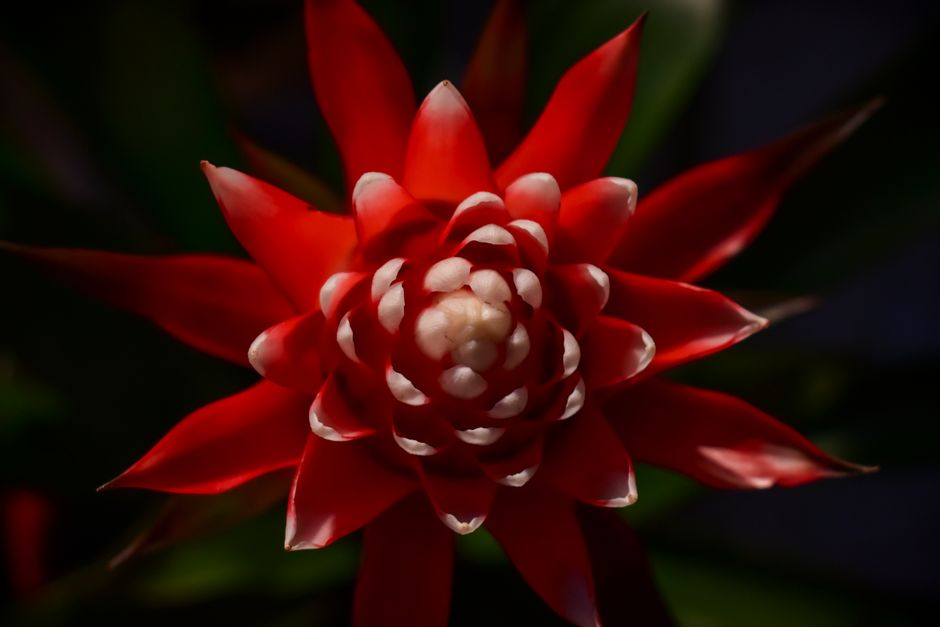
Water a Guzmania bromeliad by pouring water into the central cup formed by its leaves, not by soaking the soil. Keep that cup partly filled with clean, room-temperature water and refresh it regularly. Water the potting mix only lightly, and let it dry slightly between waterings. Guzmanias are epiphytes in the wild — plants that grow on trees rather than in soil — so their water needs differ from most houseplants.
Why Does a Guzmania Bromeliad Take Water Through Its Cup?
In nature, Guzmanias grow attached to tree bark in tropical forests. Rain and mist collect in the rosette of leaves, and the plant absorbs much of its water through specialized cells in that central reservoir.
The cup is not just a container. The leaf bases that form it have structures that take up water directly. This is why filling the cup is the primary way to water the plant, and why soil watering alone does not meet its needs.
The roots exist mainly to anchor the plant, not to drink. Guzmania roots are thin and prone to rot when kept constantly wet. This is the key difference from typical houseplants, where you water the soil and let the roots do the work.
One clarification worth knowing: the cup is sometimes called a tank or a rosette reservoir. All three terms mean the same thing — the water-holding hollow at the center of the plant.
How To Water A Guzmania Bromeliad Step by Step
Fill the cup first, then give the soil a light pass. That order keeps the plant’s main water source topped up without drowning the roots.
- Use room-temperature water. Cold water can shock a tropical plant. Let tap water sit out for a day, or use filtered water.
- Pour into the central cup. Fill it to roughly a quarter to half of its depth. Do not overflow it constantly.
- Water the soil lightly. Give the potting mix a small amount, enough to moisten but not soak it.
- Empty and refill the cup regularly. Stale water in the cup can grow bacteria and algae. Dump it out and refill every week or two.
- Keep water out of the cup during cold spells. In cool conditions, standing water in the cup increases rot risk.
The most common mistake is treating a Guzmania like a fern or a pothos and soaking the soil. That leads to root and crown rot. The second most common mistake is never refreshing the cup water, which allows it to stagnate.
How Often Should You Water a Guzmania Bromeliad?
Keep the cup from drying out completely, and refresh the water every week or two. The soil should be watered only when the top feels slightly dry.
There is no fixed schedule that fits every home. Humidity, temperature, and pot size all change how fast water is used. Instead of counting days, check the plant. If the cup is nearly empty, refill it. If the soil is still damp, wait.
Some sources suggest flushing the cup more often, but there is no single agreed interval in the horticultural literature. The reliable principle is that water should not sit stagnant for long periods. Fresh water is the goal, not a strict calendar.
In winter, when growth slows and indoor air is often cooler, water less. In summer, water more often. Guzmanias are not drought-tolerant, but they tolerate brief dryness better than prolonged soaking.
What Kind of Water Is Best for a Guzmania?
Room-temperature, low-mineral water works best. Filtered water or rainwater is a good choice, and letting tap water sit out overnight helps remove some chlorine.
Bromeliads in the wild receive soft rainwater. Many tap supplies contain minerals and additives that can build up in the cup over time. This buildup can leave white crusty deposits at the leaf bases.
Distilled water is an option some growers use, though it lacks the trace minerals plants get from other sources. There is no strong evidence that one type of water is clearly superior in home conditions. The practical rule is to avoid very hard water and very cold water.
Never use softened water. Water softeners replace calcium and magnesium with sodium, and sodium can harm bromeliads.
What Are the Signs You Are Watering Wrong?
Yellowing leaves, a mushy or foul-smelling center, and brown leaf tips each point to a different watering problem. Reading the signs early prevents losing the plant.
- Mushy, dark center: too much water sitting in the cup, often with poor airflow. This is rot and can be serious.
- Brown, crispy leaf tips: too little water or very low humidity.
- Yellowing lower leaves: often overwatering of the soil, or normal aging of older leaves.
- White crust at the leaf bases: mineral buildup from hard water.
- Foul smell from the cup: stagnant water that needs to be emptied and refreshed.
A Guzmania that flowers and then slowly declines over months is often simply at the end of its natural life cycle, not suffering from a watering error. These plants bloom once, then produce offsets called pups before the parent plant dies back. Do not assume every decline is your fault as a grower.
Does Humidity Matter More Than Watering?
Humidity matters a great deal. Guzmanias come from humid tropical forests and do best in higher humidity than most homes provide.
A bathroom with a window, a kitchen, or a spot near a humidifier can suit them. Grouping plants together also raises local humidity. Misting is often recommended, but its effect on humidity is brief, and constant wetting of the leaves can encourage rot if airflow is poor.
The cup itself helps the plant manage humidity. A partly filled cup provides a local source of moisture around the leaf bases. This is another reason the cup, not the soil, is the center of a Guzmania’s water strategy.
What About the Pot and Soil?
Use a loose, fast-draining potting mix and a pot with drainage holes. A bromeliad or orchid mix works well because it lets excess water escape quickly.
Ordinary potting soil holds too much water for a Guzmania’s thin roots. A chunky mix of bark, perlite, and coarse material keeps air around the roots, which is what they need.
Never let the pot sit in a saucer of standing water. Empty the saucer after watering. The goal is a mix that stays lightly moist but never waterlogged.
Common Watering Mistakes To Avoid
Most Guzmania problems trace back to a handful of repeated errors. Avoiding them is simpler than fixing the damage afterward.
- Soaking the soil like a regular houseplant instead of filling the cup.
- Letting water sit in the cup for weeks without refreshing it.
- Using cold water straight from the tap.
- Leaving the pot in standing water.
- Watering heavily in cool weather when the plant is not actively growing.
None of these are hard to correct. Once you shift your habit from “water the soil” to “keep the cup fresh and the soil lightly moist,” a Guzmania becomes a low-maintenance plant.
Frequently Asked Questions
Should I water a Guzmania bromeliad from the top or the bottom?
Water it from the top by pouring into the central cup, which is how the plant mainly takes up water. Bottom watering does not reach the cup and is not the right method for this plant.
How often should I change the water in the bromeliad cup?
Refresh the cup water every week or two to prevent stagnation and algae growth. Empty the old water fully and refill with clean, room-temperature water.
Can I use tap water on a Guzmania bromeliad?
Tap water is usually fine if it is not very hard, and letting it sit out overnight helps remove some chlorine. Filtered or rainwater is a better choice where tap water is mineral-heavy.
Why are my Guzmania leaves turning brown at the tips?
Brown, crispy tips usually point to too little water or low humidity. Check that the cup stays partly filled and consider raising the humidity around the plant.
