
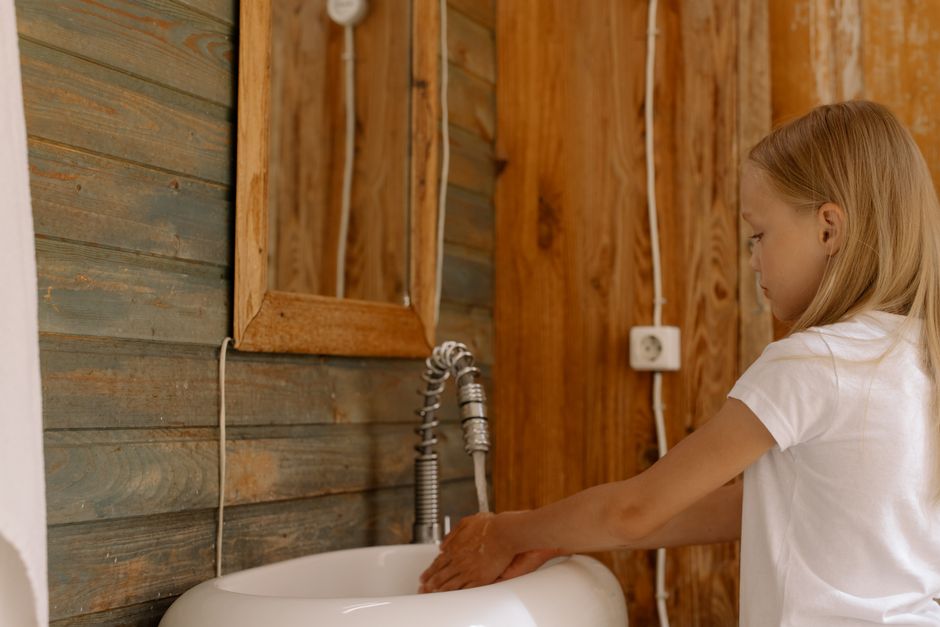
Handwashing is one of the most effective ways to keep kids from getting sick and spreading germs to others. The five steps are: wet hands with clean running water, apply soap, scrub all surfaces for at least 20 seconds, rinse well under running water, and dry with a clean towel or air dryer. That is the full method recommended by the Centers for Disease Control and Prevention, and it works for children of nearly every age with a little help at the start.
Why Is Handwashing So Important for Kids?
Kids touch everything. Then they touch their eyes, nose, and mouth. That is the main way respiratory and gastrointestinal germs get into the body.
Handwashing removes germs picked up from surfaces, other people, animals, and bathroom visits. Research consistently shows that handwashing with soap reduces the spread of diarrheal illness and respiratory infections in community settings, including schools and childcare centers. The soap does not need to be antibacterial. Plain soap and water work by physically lifting germs off the skin so running water can carry them away.
Children are especially vulnerable because their immune systems are still developing and because they spend time in close contact with other children. Daycares and classrooms are efficient places for germs to move from one child to another. Frequent handwashing at home and at school interrupts that chain.
One detail parents often miss: hand sanitizer is not a replacement for soap and water when hands are visibly dirty or greasy. Sanitizers with at least 60 percent alcohol can reduce germs when soap is not available, but they do not remove dirt, and they are less effective against some germs, including norovirus and Clostridioides difficile. Soap and water remain the standard.
How To Wash Your Hands For Kids: 5 Simple Steps
These five steps are the core of proper handwashing. Teach them in order so the routine becomes automatic.
- Wet hands with clean, running water. Warm or cold both work. Turn off the tap to save water if you like, then turn it back on to rinse.
- Soap up. Any plain bar or liquid soap is fine. Rub hands together to work up a lather.
- Scrub for at least 20 seconds. Cover the backs of the hands, between the fingers, under the nails, and the wrists. This is the step kids rush most.
- Rinse well under running water until no soap remains.
- Dry with a clean towel, paper towel, or air dryer. Wet hands transfer germs more easily than dry ones.
The 20-second timing is not arbitrary. Scrubbing is what loosens germs and oils from the skin, and it takes time to cover every surface of the hand. A common trick is to have kids sing “Happy Birthday” twice or the alphabet song once while scrubbing.
How Long Should Kids Actually Wash Their Hands?
At least 20 seconds of scrubbing is the standard recommendation from the CDC. That is roughly the time it takes to sing “Happy Birthday” twice.
Most kids stop after five or six seconds if no one is watching. The scrubbing phase is where the work happens, so extending it matters more than how much soap they use. A timer, a song, or counting out loud can help younger children stay with it.
There is no evidence that scrubbing for several minutes provides extra benefit for everyday handwashing. The 20-second mark is the practical target. Longer is not harmful, just unnecessary for routine use.
When Should Kids Wash Their Hands?
Timing matters as much as technique. The CDC recommends handwashing at specific moments when germ transfer is most likely.
- Before eating, and before preparing or handling food
- After using the toilet or helping someone else use it
- After blowing the nose, coughing, or sneezing
- After touching animals, animal food, or animal waste
- After handling garbage
- After coming home from school, daycare, or a public place
- Before and after treating a cut or wound
- After caring for someone who is sick
For young children, the most important moments are before eating and after bathroom use. Those two cover the highest-risk transfers. Adding a wash after school or daycare helps reduce what comes through the front door.
How Do You Teach Handwashing to Young Children?
Young children learn routines through repetition and imitation, not instruction. Modeling the behavior yourself is the single most effective teaching tool.
Wash your hands alongside your child and narrate what you are doing. Keep the steps the same every time so the sequence sticks. Make it part of a fixed routine — before meals, after bathroom trips — rather than something that happens randomly.
For toddlers and preschoolers, a step stool at the sink helps them reach the water and feel involved. A pump soap dispenser they can press themselves adds a sense of control. Songs and counting games work well for this age group because they give a concrete signal for when scrubbing is done.
School-age kids can be given more responsibility. Ask them to show you how they wash their hands and correct gently if they skip the backs of the hands or under the nails. Praise the behavior when you see it. Nagging tends to backfire with this age group.
Children with developmental differences or motor challenges may need extra support. Hand-over-hand guidance, visual step cards, or a picture chart by the sink can help. Occupational therapists often have specific strategies for building this skill.
What About Hand Sanitizer and Antibacterial Soap?
Hand sanitizer with at least 60 percent alcohol is a reasonable backup when soap and water are not available. It does not replace handwashing when hands are visibly dirty, greasy, or have been exposed to certain germs.
Norovirus, which causes a common and unpleasant stomach illness, is not well neutralized by alcohol sanitizers. C. difficile, a bacterium that can cause serious diarrhea, is also resistant to alcohol. Soap and water physically remove both from the hands, which is why they remain the preferred method in those situations.
Antibacterial soap offers no advantage over plain soap for everyday handwashing in household settings. The FDA reviewed the evidence and concluded that consumer antibacterial washes were not shown to be more effective than plain soap at preventing illness. Some ingredient concerns also led the agency to ban certain antibacterial chemicals from consumer wash products. Plain soap is the right choice.
Sanitizer should never be used on babies’ hands that may go in their mouths, because swallowing alcohol-based sanitizer can cause alcohol poisoning. For infants and toddlers, soap and water is the safer option.
Common Mistakes Parents Make
Rushing the scrub is the most common error. Twenty seconds feels long to a child and often to an adult. Setting a timer or singing a song fixes this more reliably than reminding kids to slow down.
Skipping the backs of the hands and between the fingers is the second most common miss. Those areas are easy to overlook, and germs live there just as readily as on the palms. Teaching kids to “wash the whole hand” — front, back, between, and under nails — covers the gaps.
Using hand sanitizer when soap and water are available is another frequent shortcut. Sanitizer has a role, but it is not equivalent to washing with soap.
Not drying properly is a quieter mistake. Wet hands transfer germs more easily than dry hands. A quick shake and wipe on pants is not the same as drying with a clean towel or air dryer.
Finally, many parents wash their own hands too quickly. Kids copy what they see. If the adult in the house scrubs for five seconds, the child will too.
Frequently Asked Questions
How long should kids wash their hands?
Kids should scrub with soap for at least 20 seconds before rinsing. That is about the time it takes to sing “Happy Birthday” twice.
Is hand sanitizer okay for kids instead of washing hands?
Hand sanitizer with at least 60 percent alcohol is a reasonable backup when soap and water are not available. It does not work well against norovirus or C. difficile, and it should not be used on babies’ hands because swallowing it can cause alcohol poisoning.
What temperature water should kids use to wash their hands?
Comfortable warm or cool water both work — the temperature does not affect how well germs are removed. What matters is soap, scrubbing time, and rinsing under running water.
Do kids need antibacterial soap to get clean hands?
No. Plain soap and water remove germs just as well for everyday handwashing. The FDA has concluded that consumer antibacterial washes are not shown to be more effective than plain soap at preventing illness.
