
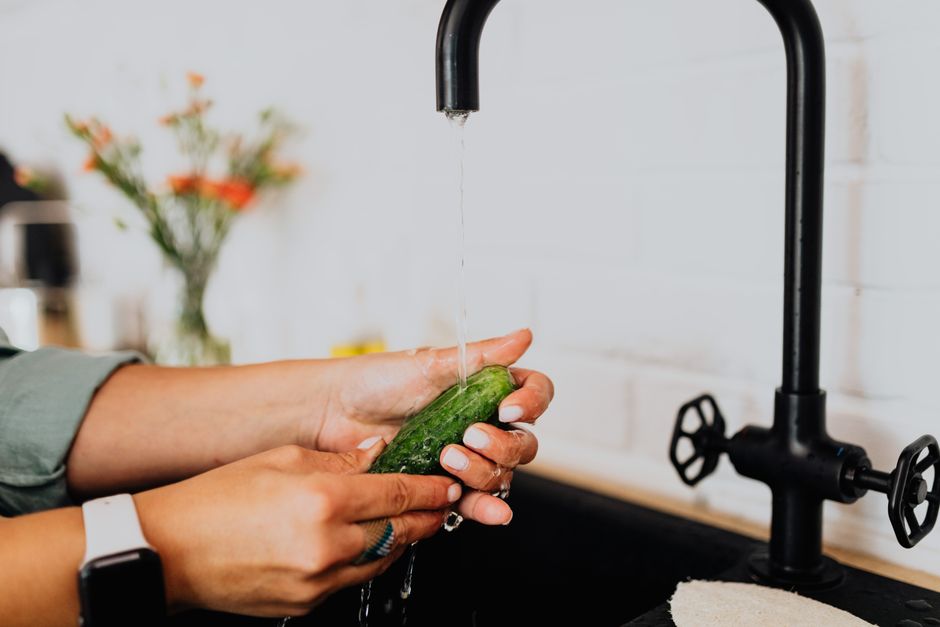
Washing your vegetables with plain running water is the most effective and practical first step to remove pesticide residues. Research consistently shows that rinsing produce under a stream of water removes more residues than dipping or soaking alone. While no home washing method removes 100% of all pesticide residues, the combination of running water and gentle friction removes the majority of what is present on the surface.
Does Washing Vegetables Actually Remove Pesticides?
Yes, but with an important limit. Most pesticide residues sit on the surface of the produce, not inside the flesh. Washing removes a significant portion of these surface residues. The key word is surface.
Some pesticides are absorbed by the plant as it grows. These systemic pesticides become part of the plant tissue itself. No amount of washing will remove these because they are inside the vegetable, not on it. For most conventionally grown produce, however, the majority of detectable residues are on the surface and can be reduced with proper washing.
What Is The Best Method To Wash Vegetables?
Plain cold running water is the evidence-backed standard. The mechanical action of water flowing over the surface dislodges dirt, microbes, and pesticide residues more effectively than soaking in a bowl of still water.
Here is the method that works best:
- Wash your hands first with soap and water.
- Hold the vegetable under cold running tap water.
- Rub the surface with your hands or a clean produce brush for firm-skinned items like potatoes, carrots, and cucumbers.
- Continue for at least 30 seconds per item.
- Dry with a clean cloth or paper towel after washing.
For leafy greens like lettuce and cabbage, remove the outer leaves first. Then rinse each leaf individually under running water. For broccoli and cauliflower, soak them head-down in a bowl of clean water for a couple of minutes, then rinse thoroughly under running water. This helps dislodge residues trapped in the florets.
Is Soaking In Water Effective?
Soaking alone is less effective than running water. When vegetables sit in a bowl of water, the water becomes contaminated with the residues that have been removed. The produce then sits in that contaminated water, and some residues can re-deposit onto the surface.
If you choose to soak, use a fresh bowl of water and do not soak for extended periods. A short soak followed by a thorough rinse under running water is more effective than soaking alone. Prolonged soaking can also cause water-soluble nutrients like vitamin C and B vitamins to leach out of the vegetables.





Does Baking Soda Remove Pesticides Better Than Water?
Some research suggests that a baking soda solution may be more effective than plain water for certain pesticides. Studies have tested soaking produce in a solution of baking soda and water and found it can break down some pesticide compounds more effectively than water alone.
The evidence here is limited to specific pesticides and specific conditions. What works for one type of pesticide may not work for another. Baking soda solutions have shown promise in laboratory settings, but the research does not clearly establish that this method is consistently superior to plain running water across the range of pesticides found on commercial produce.
If you want to use baking soda, a common approach is to mix one teaspoon of baking soda per two cups of water and soak produce for 12 to 15 minutes, followed by a thorough rinse. No clinical guidelines currently exist for this specific use, and the evidence base is not strong enough to declare this method definitively better than plain water.
Is Vinegar Or Salt Water Better For Washing Produce?
Vinegar solutions are popular, but the evidence does not show they remove pesticides better than plain water. Vinegar is effective at killing some bacteria, which is why it is often used as a produce wash. However, for pesticide removal specifically, the research does not demonstrate a clear advantage over running water.
Salt water has also been studied. Some research indicates that salt water solutions can remove certain pesticide residues more effectively than plain water. The evidence is mixed, and results vary depending on the pesticide and the produce type. Salt water does not appear to be consistently superior across different scenarios.
The practical takeaway: these solutions are not harmful, but they are not proven to be meaningfully better than plain running water. If you enjoy using them, there is no strong reason to stop, but do not expect dramatically better pesticide removal.
Do Commercial Produce Washes Work?
Commercial produce washes are not proven to be more effective than plain water. The FDA advises that washing produce with plain running water is sufficient and does not recommend using commercial washes, soaps, or detergents.
Soaps and detergents are particularly problematic. Produce is porous, and soap residues can be absorbed into the flesh. Soap can also irritate the digestive tract if enough is ingested. Commercial produce washes are generally safe, but they add cost without clear evidence of added benefit.
The honest position is that no study has confirmed that commercial washes outperform plain water for pesticide removal. Save your money and use running water.
Does Peeling Remove Pesticides?
Peeling is the single most effective way to remove surface pesticide residues. When you remove the skin or outer leaves, you remove the surface entirely. This is why peeled vegetables like bananas, avocados, and onions carry very low pesticide risk.
The tradeoff is nutritional. Many nutrients and fiber are concentrated in or just beneath the skin. Peeling removes those benefits. For vegetables where the skin is edible, like carrots, potatoes, and cucumbers, washing with running water and a brush is a reasonable compromise that preserves nutrition while removing most surface residues.
Does Cooking Reduce Pesticide Residues?
Cooking can reduce some pesticide residues, but the effect is inconsistent. Heat breaks down certain pesticide compounds, and water-based cooking methods like boiling can cause some residues to leach into the cooking water. The problem is that different pesticides respond differently to heat.
Some pesticides degrade quickly with heat, while others are heat-stable and survive cooking. Blanching, boiling, and steaming have all been shown to reduce residues in some studies, but the degree of reduction varies widely. Cooking should not be relied upon as a primary pesticide removal strategy, but it can provide an additional layer of reduction for those who cook their vegetables anyway.
Are Organic Vegetables Free Of Pesticides?
Organic vegetables are not pesticide-free. Organic farming uses approved pesticides from natural sources. These are generally less persistent in the environment than synthetic pesticides, but they are still pesticides.
Research consistently shows that organic produce has lower overall pesticide residue levels than conventionally grown produce. However, organic produce can still carry detectable residues, and washing is still recommended. The same washing methods apply to both organic and conventional vegetables.
Frequently Asked Questions
Is it safe to wash vegetables with dish soap?
No. Dish soap is not intended for human consumption and can leave residues that are absorbed into porous produce. Use plain running water instead.
How long should I rinse vegetables under water?
Rinse for at least 30 seconds while rubbing the surface with your hands. Firm vegetables benefit from a clean produce brush.
Does soaking vegetables in salt water remove more pesticides?
Some studies suggest salt water can remove certain pesticide residues better than plain water, but the evidence is mixed and results vary. Plain running water remains the most reliable method.
Are frozen vegetables washed before packaging?
Most frozen vegetables are blanched and washed during processing, which removes many surface residues. Rinsing them after thawing is not necessary for pesticide removal.
The bottom line: plain running water with gentle friction is your best home method for removing pesticide residues from vegetables. No method removes everything, but washing is always better than not washing. When possible, buy from sources you trust, and remember that the health benefits of eating vegetables far outweigh the risks from trace pesticide residues.
