
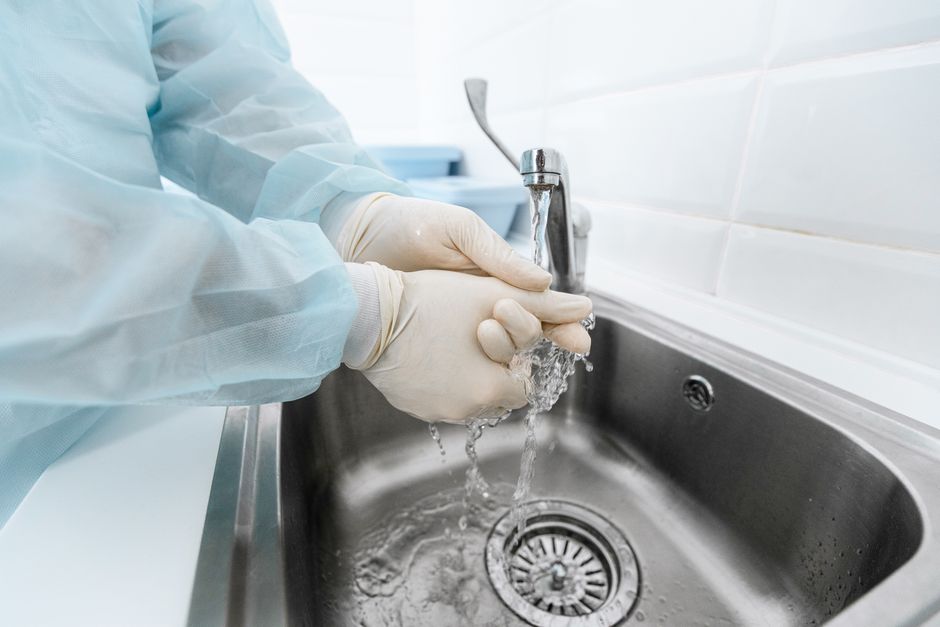
Wash your Momcozy breast pump by taking apart every piece that touches milk, rinsing it in cool water first, then washing in hot soapy water and scrubbing with a dedicated bottle brush. Sterilize the washable parts once a day by boiling, steaming, or using a microwave steam bag, then air-dry them fully on a clean surface before the next use. The motor unit and tubing never go in water — wipe the pump body with a damp cloth only.
That is the short version. The details matter more than most parents expect, because breast milk is a good medium for bacterial growth and a pump has several small parts where milk collects. Getting the routine right protects your baby and keeps the pump working. Getting it wrong is easy to do without realizing it.
Which Momcozy pump parts actually need washing?
Only the parts that contact breast milk need washing and sterilizing. Everything else gets a wipe-down or nothing at all.
The milk-contact parts are typically the breast shield (flange), the valve and membrane, the duckbill or silicone valve, the collection bottle or cup, and the bottle cap or nipple if you use one. These are the pieces that need a full wash after every session.
The motor unit is the pump itself — the part with the buttons, screen, and battery. It never goes in water and never goes in the dishwasher. Wipe it with a damp cloth and mild soap if milk splashes on it, then dry it right away.
Some Momcozy models use tubing that connects the motor to the collection cup. Tubing is not designed to be washed with water because moisture can get trapped inside and travel toward the motor. If milk gets into the tubing, check your model’s manual for the manufacturer’s instructions, because handling varies by design. In general, tubing that stays dry does not need routine washing.
Check your specific model’s manual first. Momcozy makes several pump styles — wearable cups, double pumps, and hospital-style setups — and the part list and cleaning instructions differ between them. The manufacturer’s guidance for your model always takes priority over general advice.
How To Wash And Sterilize Your Momcozy Breast Pump step by step
Wash the parts after every single pumping session. Milk residue left to sit becomes harder to remove and gives bacteria more time to multiply.
Start by taking the pump completely apart. Separate the shield from the valve, remove the membrane, and open anything that comes apart. Milk hides in the seams and threads, and a part that is still assembled will not get clean.
Rinse each piece in cool water first. This is a step many people skip. Cool water removes milk protein before hot water can set it onto the surface. Rinsing in hot water first can actually bake residue onto the plastic.
Then wash in hot water with dish soap. Use a clean basin or a dedicated wash bowl rather than the kitchen sink, which can harbor bacteria from raw food. Scrub with a bottle brush made for the job, and push the brush through valves and small openings. Squeeze soapy water through the valve and any narrow channels.
Rinse thoroughly under running water to remove all soap. Soap residue can affect milk taste and is not something you want your baby drinking.
Here is where a common shortcut causes problems. Do not put pump parts in the dishwasher unless the manufacturer says they are dishwasher-safe. Even then, small silicone pieces can be damaged by high heat, and dishwasher racks can trap water inside valves. Hand washing is the safer default.
After washing, shake off excess water and place the parts on a clean, dry surface to air-dry completely. Do not dry them with a dish towel. Cloth towels can transfer bacteria, and the CDC specifically recommends air-drying pump parts rather than towel-drying them. A clean dish rack or a dedicated drying mat works well. Make sure parts are fully dry before reassembly, because trapped moisture is where mold and bacteria grow.
How often should you sterilize breast pump parts?
Sterilize the washable parts once a day. That is the standard recommendation from public health agencies for healthy, full-term babies, and it applies to pump parts just as it does to bottles.
Washing removes milk and most germs. Sterilizing kills what washing leaves behind. You need both, but you do not need to sterilize after every session. Daily sterilization is sufficient for routine home use with a healthy baby.
There are exceptions. If your baby was born premature, has a weakened immune system, or is under medical care, ask your baby’s doctor how often to sterilize. Some clinicians recommend sterilizing more frequently in these situations. That guidance should come from your baby’s care team, not from general advice.
If your baby has been sick, or if the pump has been used by more than one person, sterilize more often. And if you are ever unsure whether a part got fully clean, sterilizing it again is a reasonable step.
What is the safest way to sterilize Momcozy pump parts?
There are four common methods, and all of them work. Choose based on what you have and what your parts can handle.
| Method | How it works | Things to know |
|---|---|---|
| Boiling | Submerge parts in water, bring to a rolling boil, and boil for about 5 minutes | Check the manual first — some plastic parts warp or degrade with repeated boiling |
| Steam sterilizer | Electric unit uses steam to sterilize, usually in a few minutes | Follow the unit’s instructions; let parts cool before handling |
| Microwave steam bags | Parts plus a small amount of water go in a sealed bag, heated per package directions | Convenient and fast; bags are typically reusable for a limited number of cycles |
| Chemical sterilizing solution | Parts soak in a diluted sterilizing solution for the time stated on the product | Rinse thoroughly with safe water afterward; follow label directions exactly |
Whichever method you use, check that the parts are rated for it. Silicone valves and thin plastic shields can be damaged by high heat over time, and warped parts lose their seal, which affects suction. If a part looks cloudy, cracked, or stretched, replace it.
After sterilizing, let parts air-dry completely on a clean surface before putting them back together. Do not sterilize and then store wet parts in a sealed bag. That creates exactly the moist environment you were trying to eliminate.
Can you skip sterilizing if you wash well?
No. Washing and sterilizing do different jobs, and one does not replace the other.
Washing physically removes milk and the germs living in it. Sterilizing kills germs that survive washing, including ones that may be in the water or on the drying surface. For a healthy baby, the risk from a well-washed but unsterilized part is low, but the daily sterilization step is simple and closes a gap that washing alone leaves open.
What you should not do is sterilize without washing first. Sterilizing a part that still has milk residue on it does not clean the residue, and the heat can set it in place. Wash first, then sterilize.
How do you keep pump parts clean between sessions?
Between sessions, keep parts dry, covered, and away from the kitchen sink, pets, and countertops where food is prepared.
If you pump at work or away from home, you have two options. Wash the parts right after pumping in a clean basin with soap and water, then air-dry. Or, if washing is not possible, store the parts in a sealed bag or container in a cool place and wash them as soon as you get home. Do not leave wet parts sealed in a bag for hours in a warm car or bag. Some guidance suggests refrigerating parts between sessions to slow bacterial growth, but this is a workaround, not a substitute for washing, and it should not become your routine.
Replace valves and membranes on the schedule your manual recommends. These small silicone parts wear out and stop sealing properly, which reduces suction and can let milk sit in places that are hard to clean. A pump that suddenly feels weaker is often telling you a valve needs replacing.
Frequently Asked Questions
Can I put my Momcozy pump parts in the dishwasher?
Only if your model’s manual says the parts are dishwasher-safe. Many small silicone valves and thin plastic shields can warp or degrade in a dishwasher, so hand washing is the safer default.
How often should I sterilize my breast pump parts?
Once a day is the standard recommendation for healthy, full-term babies. If your baby was premature or has a weakened immune system, ask your baby’s doctor for guidance, since some clinicians recommend sterilizing more often.
Can I wash pump parts in the kitchen sink?
It is better to use a clean, dedicated basin rather than the kitchen sink, which can harbor bacteria from raw food. If you do use the sink, clean and sanitize it first.
Do I need to sterilize the tubing on my Momcozy pump?
Most tubing is not designed to be washed with water because moisture can get trapped inside. Check your model’s manual for the manufacturer’s instructions, since handling varies by design.
