
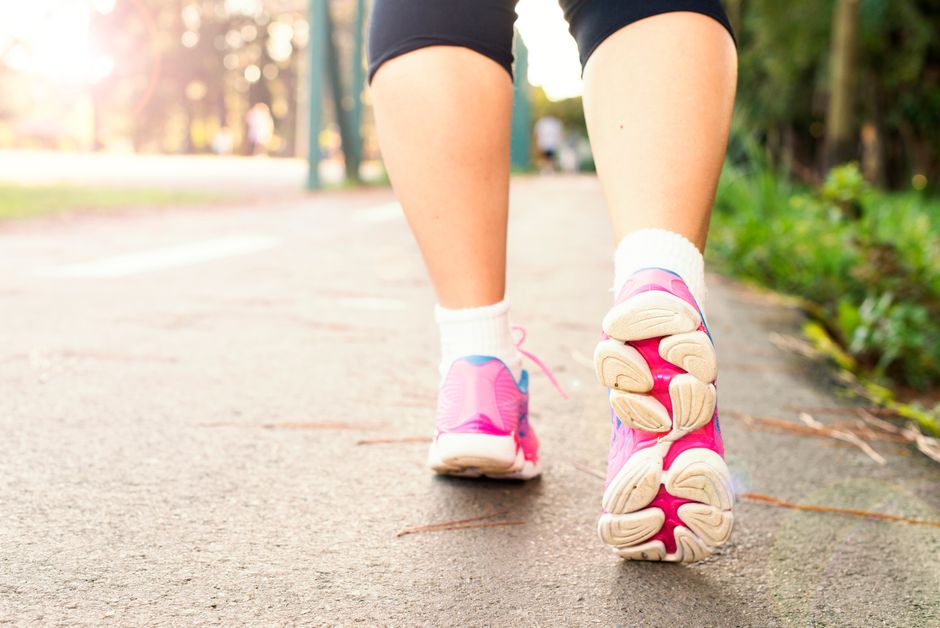
Walking correctly means landing on your heel, rolling through the middle of your foot, and pushing off with your toes while your head stays level and your shoulders stay relaxed. Your steps should be quiet and even, with your feet pointing roughly straight ahead. Most people can improve their walking form in a few days by fixing three things: posture, foot strike, and arm swing.
Walking is the most common form of exercise in the United States, and it is also one of the most studied. Research consistently links regular walking to lower risk of heart disease, type 2 diabetes, and depression. But form matters more than most people realize. Poor walking mechanics can contribute to knee pain, shin splints, and low back strain over time.
What Does Correct Walking Posture Look Like?
Correct posture while walking keeps your body stacked over your feet so gravity works with you instead of against you. Your ear, shoulder, hip, and ankle should line up in a roughly vertical column when viewed from the side.
Here is what that looks like in practice:
- Head: Level and facing forward, not tilted down at your phone. Your chin stays parallel to the ground.
- Shoulders: Relaxed and back, not hunched forward or pulled up toward your ears.
- Spine: Tall but not rigid. A slight natural curve in your lower back is normal and healthy.
- Core: Gently engaged, not clenched. Think of it as steadying your trunk rather than doing a sit-up.
- Hips: Facing forward, not rotating side to side with each step.
One common mistake is overcorrecting into a stiff military posture. That creates tension in the neck and lower back. Good posture should feel tall and easy, not braced.
Looking down at a phone while walking changes your center of gravity and puts extra load on your neck and upper back. If you walk with your phone, glance at it briefly and return your gaze to the path ahead.
How To Walk Correctly: Foot Strike, Stride, and Push-Off
The walking gait cycle has two phases: stance, when your foot is on the ground, and swing, when it moves through the air. During stance, your foot should land on the heel, roll through the arch, and push off from the ball of the foot and toes.
This heel-to-toe pattern is how the foot is built to absorb and transfer force. The arch acts like a spring. Landing flat-footed or on the toes skips part of that natural cushioning.
Stride length matters too. A comfortable walking stride is shorter than most people assume. Overstriding, reaching your front leg too far ahead, sends a braking force up through your knee and hip with every step. A good test: your steps should feel quiet. If you can hear yourself slapping the ground, your stride is probably too long or your foot is landing flat.
Push-off is the part people skip. Pushing through the toes engages the calf muscles and adds power to your stride. It also helps propel you forward efficiently rather than dragging yourself along.
Your feet should point roughly straight ahead. A slight outward angle is normal for many people and reflects hip anatomy. A pronounced duck walk or pigeon-toed gait is worth mentioning to a clinician if it causes pain.
What Should Your Arms Do While Walking?
Your arms should swing naturally from the shoulder, opposite to your legs. When your right leg steps forward, your left arm swings forward. This counter-rotation helps keep your trunk stable and your gait balanced.
Keep your elbows bent at a comfortable angle, roughly 90 degrees if you are walking briskly. Your hands stay loose, not clenched into fists. Clenched fists create tension that travels up the forearm and shoulder.
A common error is swinging the arms across the midline of the body. That rotation wastes energy and can stress the lower back. Arms should swing forward and back, not side to side.
If you are walking for fitness, pumping the arms a little more actively can help you pick up speed without overstriding. Some research suggests arm swing contributes meaningfully to walking speed and stability, though the effect is modest.
How Fast and How Long Should You Walk?
Health authorities generally recommend at least 150 minutes of moderate-intensity aerobic activity per week for adults. Walking briskly counts toward that total. Moderate intensity means you can talk but not sing.
That is a practical gauge rather than a precise number. Heart rate targets vary by age and fitness, and no single pace fits everyone. The talk test is a reasonable guide for most healthy adults.
Walking speed is a useful marker of health. Gait speed is measured in clinical settings because it correlates with overall function and independence in older adults. A typical comfortable walking speed for adults is around 1.4 meters per second, though normal range is broad.
For most people, the goal is consistency rather than speed. Short walks throughout the day count. So does walking to the store or taking the stairs. The best walking routine is one you will actually repeat.
What Are the Most Common Walking Mistakes?
Most walking problems come down to a handful of habits. Fixing them takes awareness more than effort.
- Overstriding: Reaching too far with each step. Shorten your stride and let your cadence increase instead.
- Looking down: Strains the neck and throws off balance. Keep your gaze about 10 to 20 feet ahead.
- Slouching: Rounds the shoulders and compresses the chest. Stand tall and let your arms swing freely.
- Flat-footed landing: Skips the heel roll. Practice landing heel-first at a slower pace until it feels natural.
- Carrying heavy bags on one side: Tilts your posture and loads one hip. Use a backpack or split the load.
One non-obvious point: walking on a treadmill and walking outdoors use slightly different mechanics. On a treadmill, the belt moves under you, which can encourage a shorter, flatter stride. If you train mostly indoors, add some outdoor walks to keep your gait natural.
Do You Need Special Shoes or Gear to Walk Correctly?
You do not need special equipment to walk correctly. Comfortable shoes with a flexible sole and a low, stable heel are enough for most people. Running shoes work fine for walking.
The evidence on shoe features is more mixed than marketing suggests. No large trials confirm that specific shoe designs prevent injury in recreational walkers. What matters most is fit and comfort.
Barefoot walking on safe surfaces, like grass or sand, can strengthen the small muscles of the foot. Some clinicians recommend it in moderation for people without foot problems. It is not appropriate for everyone, especially people with diabetes or neuropathy, where foot protection matters for safety.
Orthotic inserts are widely used, but evidence for their benefit in people without foot pain is limited. If you have persistent foot, knee, or hip pain while walking, a physical therapist or podiatrist can assess your gait directly. That is more useful than guessing from an article.
When Should Walking Form Be Checked by a Professional?
Most walking form issues are harmless and fixable on your own. Some signs warrant a professional look.
See a clinician if you notice a sudden change in how you walk, dragging one foot, or frequent stumbling. These can reflect nerve, muscle, or joint problems that need proper assessment. Persistent pain in the shin, knee, hip, or lower back that worsens with walking is another reason to get checked.
Gait changes are also worth mentioning at routine visits, especially for adults over 65. Falls are a leading cause of injury in older adults, and gait and balance problems are often treatable when identified early.
For everyone else, walking form is a skill you can refine with attention. Land on your heel, roll through your foot, push off with your toes, keep your head up, and let your arms swing. Small corrections add up over thousands of steps.
Frequently Asked Questions
Should you land on your heel or your toes when walking?
Land on your heel first, then roll through the middle of your foot and push off with your toes. This heel-to-toe pattern lets your arch absorb impact the way it is built to.
How many steps should you take per day?
There is no single correct step count, and the widely cited 10,000 figure originated as a marketing number rather than a clinical guideline. Some research suggests health benefits increase with more steps up to a point, but the exact threshold varies by age and health status.
Is it bad to walk with your feet pointing outward?
A slight outward angle is normal for many people and reflects hip anatomy. A pronounced outward turn that causes pain or feels unstable is worth discussing with a clinician.
Can walking form cause knee pain?
Yes, poor walking mechanics such as overstriding or flat-footed landing can contribute to knee pain over time. Persistent knee pain while walking should be evaluated by a professional rather than self-treated.
