
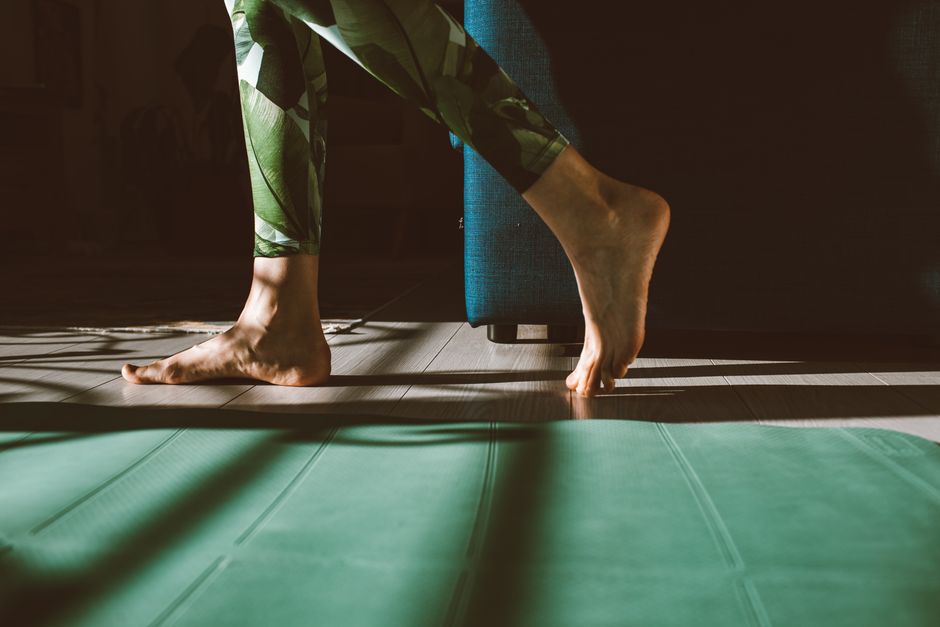
Walking barefoot looks simple, but it asks your feet to do work that shoes have been doing for them. The main job of a barefoot transition is not toughening your soles. It is letting muscles, tendons, and skin adapt slowly to new loads. Start with short sessions on safe, familiar ground. Add time and texture gradually over weeks to months. Stop and reassess if pain develops, especially pain that lingers past the next day.
What Actually Changes When You Take Off Your Shoes?
Shoes change how your foot meets the ground. A cushioned heel and a stiff sole reduce the work your foot muscles do. They also change the angle of your ankle and the way load travels up your leg.
When you go barefoot, several things shift at once:
- The small muscles inside your foot work harder to stabilize each step.
- Your calf and Achilles tendon stretch slightly more because there is no raised heel.
- The skin on your soles takes direct pressure and friction it may not be used to.
- Your toes can spread and push off rather than being held in a fixed shape.
These are normal mechanical changes. They are not automatically improvements. A muscle that works more can get stronger, but it can also get overloaded. The same load that builds tissue can injure it if it arrives faster than the tissue can adapt.
This is the core idea behind the whole transition. Adaptation is a process, not a switch.
Why Is a Slow Transition So Important?
Bone, tendon, and skin adapt to load at different speeds. This mismatch is where most barefoot injuries come from.
Muscle can respond to new training in a matter of weeks. Tendons and the tough tissue in the sole of the foot adapt more slowly. Bone remodels slowest of all. When you jump straight into long barefoot walks, the muscles may feel fine while the tendon and bone are still catching up. Pain often shows up later, once the tissue is already irritated.
The plantar fascia is a band of tissue along the bottom of the foot. It helps support your arch and absorbs force with each step. It is a common site of trouble when barefoot load increases too fast. The Achilles tendon and the bones of the foot are other areas that can become sore.
There is no single schedule that fits everyone. Age, weight, foot shape, prior injuries, and how much you already walk all change how fast you can progress. Anyone with a history of foot or ankle problems should be more cautious and may want to check with a clinician before starting.
How Do You Start a Barefoot Transition Safely?
Begin indoors, where the ground is clean, flat, and predictable. Walk around your home for a few minutes at a time. This lets your feet feel new sensations without much risk.
Once indoor walking feels comfortable, move to safe outdoor surfaces. Grass, smooth sand, and firm packed dirt are reasonable starting points. Avoid hot pavement, sharp gravel, broken glass, and any surface you cannot see clearly.
Keep early sessions short. The goal is to finish feeling like you could have done a little more, not to test your limit. A common mistake is doing too much on the first day because it feels easy at the time.
Watch for these signs that you are moving too fast:
- Soreness that is still there the next morning
- Sharp pain anywhere in the foot, heel, or ankle
- Swelling or warmth in a specific spot
- Pain that gets worse as you walk rather than easing
Mild, diffuse soreness that fades within a day is usually a sign of new activity. Sharp or localized pain is not. When in doubt, back off and give it more time.




How Long Does the Transition Take?
There is no fixed timeline, and anyone who gives you an exact number is guessing. Tissue adaptation depends on the person and the starting point.
For most healthy adults, a gradual build over several weeks to a few months is reasonable. Someone who already walks a lot and has strong feet may progress faster. Someone who has worn supportive shoes for years, or who has a prior foot injury, should expect it to take longer.
Progress is not linear. It is normal to have good days and days when your feet feel tired. The useful measure is the trend over weeks, not any single day.
If you also want to change your footwear to more minimal shoes, treat that as a separate adjustment. Changing shoes and going barefoot at the same time stacks two new loads on the same tissues.
How To Walk Barefoot Form Transition Foot Care
Form and foot care are the two things you control directly. Getting them right reduces the chance of overload.
On form, the key points are straightforward:
- Land with your foot closer to under your body rather than reaching far ahead.
- Let your heel and the ball of your foot share the landing rather than slamming one down.
- Keep steps shorter and lighter than you might with cushioned shoes.
- Stay relaxed through the ankles and let your toes spread on push-off.
- Look ahead, not down at your feet, so your posture stays upright.
On foot care, the basics matter more than any product:
- Keep feet clean and dry, and check the soles for cuts, blisters, or hot spots.
- Let any blister or sore heal before adding more barefoot time.
- Trim toenails straight across to reduce pressure and ingrown nails.
- Moisturize dry skin, but avoid softening the sole so much that it becomes tender.
One point worth being clear about: you cannot harden your soles into armor. Skin thickens somewhat with use, but thick callus does not prevent deeper injury. It can also crack and become painful. The real protection comes from gradual adaptation and sensible surfaces, not from tough skin.
What Are the Risks and Who Should Be Careful?
Barefoot walking is not risk-free, and the risks are mostly about load and environment.
Overload injuries are the most common. These include irritation of the plantar fascia, Achilles tendon problems, and stress injuries to the bones of the foot. These tend to build up over days or weeks rather than happening in one moment. That makes them easy to miss until they are already significant.
Environmental risks are separate. Cuts, puncture wounds, burns from hot ground, and infections are all possible. People with diabetes or any condition that reduces feeling in the feet face higher risk, because they may not notice a wound. For anyone with neuropathy, poor circulation, or a compromised immune system, barefoot walking outdoors carries real danger and should be discussed with a clinician first.
Some people should be especially cautious or avoid it:
- Anyone with diabetes or loss of sensation in the feet
- People with current foot, ankle, or heel pain
- Those recovering from a foot injury or surgery
- People with balance problems or a high fall risk
None of this means barefoot walking is bad. It means the decision depends on your feet, your health, and your environment.
Does Barefoot Walking Have Proven Benefits?
This is where honesty matters. The evidence is limited and mixed.
Some studies suggest that walking barefoot or in minimal footwear can change how the foot muscles work and how a person walks. Whether those changes translate into fewer injuries or better long-term foot health is not established. No large, high-quality trials have confirmed that barefoot walking prevents common foot problems or improves overall health in adults.
Claims that barefoot walking fixes flat feet, cures knee pain, or corrects posture are not supported by strong evidence. Some people report feeling better. That is a real experience, but it is not the same as proof.
The reasonable position is this: for a healthy person who progresses slowly, walking barefoot on safe surfaces is unlikely to cause harm and may feel good. It is not a treatment, and it is not necessary for foot health.
Frequently Asked Questions
How long should I walk barefoot when I first start?
Start with just a few minutes indoors and keep sessions short enough that your feet feel fine the next day. Add time slowly over weeks rather than jumping to long walks.
Can walking barefoot hurt my feet?
Yes, doing too much too soon can irritate the plantar fascia, Achilles tendon, or bones of the foot. Gradual increases in time and surface reduce that risk.
Is barefoot walking good for flat feet?
No strong evidence shows that barefoot walking corrects flat feet. Some people with flat feet do fine barefoot, but anyone with pain should get individual advice.
Who should not walk barefoot?
People with diabetes, loss of foot sensation, poor circulation, current foot pain, or balance problems should be cautious and check with a clinician first.
