
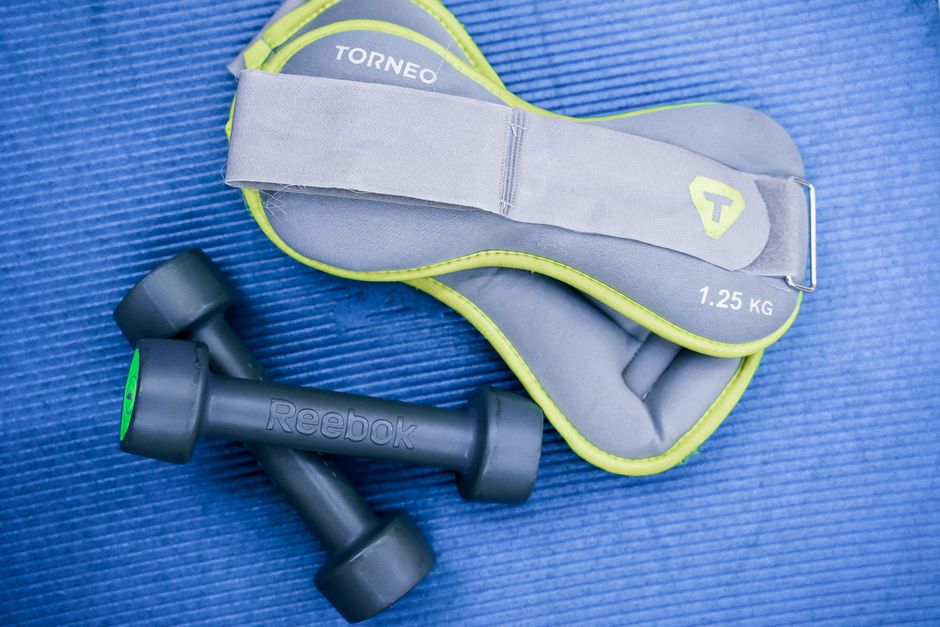
Wrist weights are small sand- or metal-filled cuffs that strap around the forearm just below the wrist. You wear them during walking, arm movements, or light strength work to add a small amount of resistance. They are not a shortcut to big muscle gains, and they are not a good match for every exercise. Used correctly, they can add a modest challenge to specific movements.
What Are Wrist Weights And What Do They Actually Do?
Wrist weights are adjustable cuffs, usually ranging from about 1 to 5 pounds each. You fasten them around the forearm so the weight sits near the wrist. The added load makes the arm work slightly harder during movement.
That is the honest summary. The resistance is small. A 2-pound cuff on each wrist adds 4 pounds of total load to your body. For a 180-pound adult, that is a tiny fraction of what the legs and core already move during a walk. The heart and lungs barely register the difference.
Where wrist weights do matter is at the end of the lever. The farther a weight sits from the joint doing the work, the more torque it creates. The wrist is the far end of the arm, so even a light cuff increases demand on the shoulder and elbow during arm raises or curls. That is the real mechanism behind most of their benefits and most of their risks.
How To Use Wrist Weights Safely During Walking
Walking with wrist weights is one of the most common uses, and it is also one of the most misunderstood. Adding 1 to 3 pounds per wrist does not meaningfully increase calorie burn. Research on light hand and wrist weights during walking has generally found small or no measurable effect on energy expenditure compared with walking alone.
The load can add a bit of upper-body work if you pump your arms deliberately. It can also change your natural arm swing, which some people find throws off their gait. If your stride starts to feel forced, the weight is working against you, not for you.
Practical points if you walk with them:
- Start light. One pound per wrist is enough to test how your shoulders and gait respond.
- Keep your arm swing relaxed. Do not grip or tense the hands.
- Watch for shoulder or elbow soreness that lasts past the next day.
- Skip them on long or fast walks. Save them for shorter, controlled sessions.
People with shoulder problems, elbow tendinopathy, or balance issues should be cautious. The extra load at the end of the arm can aggravate existing joint irritation.
Which Exercises Work Well With Wrist Weights?
Wrist weights fit best with slow, controlled arm movements where a small load adds resistance without stressing joints at speed. Controlled tempo matters more than the amount of weight.
Movements that tend to work well:
- Lateral arm raises to the side, kept below shoulder height.
- Front arm raises with a slow lift and slow lower.
- Bicep curls and tricep extensions using the cuff as light resistance.
- Seated arm circles for shoulder mobility work.
- Punching or shadow boxing at a controlled pace, not full speed.
The key is tempo. A 2-pound cuff moved slowly for 12 to 15 reps creates more useful work than the same cuff swung quickly. Speed turns light resistance into joint stress with little added benefit.
Why Wrist Weights Are A Poor Fit For Running And Fast Cardio
This is where wrist weights get people hurt. Running, jogging, or fast aerobic dance with weighted wrists or hands increases the load on the shoulder, elbow, and wrist with every stride or swing. The repetitive motion amplifies stress at those joints.
There is a second problem. Adding weight to the extremities during running does not meaningfully increase cardiovascular training effect. The heart and lungs are already working to move your body weight. A few extra pounds at the wrists does not change that demand enough to matter.
Some clinicians advise against hand and wrist weights for any high-impact or fast-paced activity. The trade-off is poor: more joint stress, minimal fitness gain. If you want more challenge during cardio, incline, pace, or duration will do more than a wrist cuff.
Do Wrist Weights Help With Bone Density And Muscle?
The evidence here is limited and often overstated. Bone responds to load, but the load needs to be meaningful and progressive. Light wrist cuffs generally do not provide enough stimulus to drive measurable bone density changes on their own.
For muscle, the picture is similar. Muscles grow when they are challenged beyond what they are used to, and that challenge needs to increase over time. A fixed 2-pound cuff becomes easy within weeks. Without progression, the muscle adapts and stops responding.
Wrist weights can play a supporting role in rehabilitation or mobility work, where the goal is gentle resistance rather than strength gains. Some physical therapists use very light wrist and ankle weights during recovery from injury or surgery. That is a clinical decision, not a general fitness strategy, and it should be guided by a professional.
For building bone or muscle, heavier resistance training with dumbbells, bands, or bodyweight progressions is the better-supported approach. No study has shown that light wrist weights build bone density the way loaded strength training does.
Who Should Avoid Wrist Weights?
Wrist weights are not appropriate for everyone. The extra load at the end of the arm can aggravate several common conditions.
People who should generally avoid them or check with a clinician first:
- Anyone with shoulder impingement, rotator cuff issues, or recent shoulder injury.
- People with elbow tendinopathy (tennis or golfer’s elbow).
- Those with wrist arthritis, carpal tunnel symptoms, or wrist instability.
- People with balance problems or a history of falls.
- Anyone recovering from arm, shoulder, or wrist surgery.
Pregnancy is a separate case. No clinical guidelines currently exist for using wrist weights during pregnancy. Balance shifts and joint laxity change through pregnancy, so the risk-benefit picture is different. Ask a clinician before adding them.
How To Choose And Use Wrist Weights
Start lighter than you think you need. Most adults get more from a 1- to 2-pound cuff used with control than a 5-pound cuff used carelessly. Adjustable cuffs let you add weight in small steps, which matters because the jump from 1 to 3 pounds is a big relative change at the wrist.
Check the fit. The cuff should sit snugly on the forearm without pinching or sliding. If it rotates or shifts during movement, it is either too loose or the exercise is too fast for it.
A reasonable way to use them:
- Use them for one or two arm-focused sessions per week, not every workout.
- Keep reps slow and controlled, in the 10 to 15 range.
- Stop if you feel joint pain, not just muscle fatigue.
- Progress by adding reps or a small amount of weight, not by speeding up.
Wrist weights are a tool with a narrow job. They add light resistance to slow arm movements. They do not replace strength training, they do not boost cardio, and they do not build bone on their own. Used within those limits, they are a reasonable option. Pushed beyond them, they mostly add joint stress.
Frequently Asked Questions
Do wrist weights actually help you lose weight?
No. Light wrist weights add very little to calorie burn during walking or cardio, and studies have generally found small or no measurable effect on energy expenditure. Weight loss depends far more on overall activity, diet, and total energy balance.
Are wrist weights bad for your joints?
They can be, especially during running or fast movements that stress the shoulder, elbow, and wrist repeatedly. Used slowly with light weight for controlled arm exercises, the risk is lower, but anyone with existing joint problems should check with a clinician first.
How heavy should wrist weights be for walking?
Most adults do best starting at 1 to 2 pounds per wrist. Anything heavier tends to change your gait and add joint stress without meaningful fitness benefit.
Can you build muscle with wrist weights?
Only in a very limited way. A fixed light cuff becomes easy within weeks, and muscle needs progressive challenge to grow. For real muscle gain, heavier resistance training is the better-supported method.
