
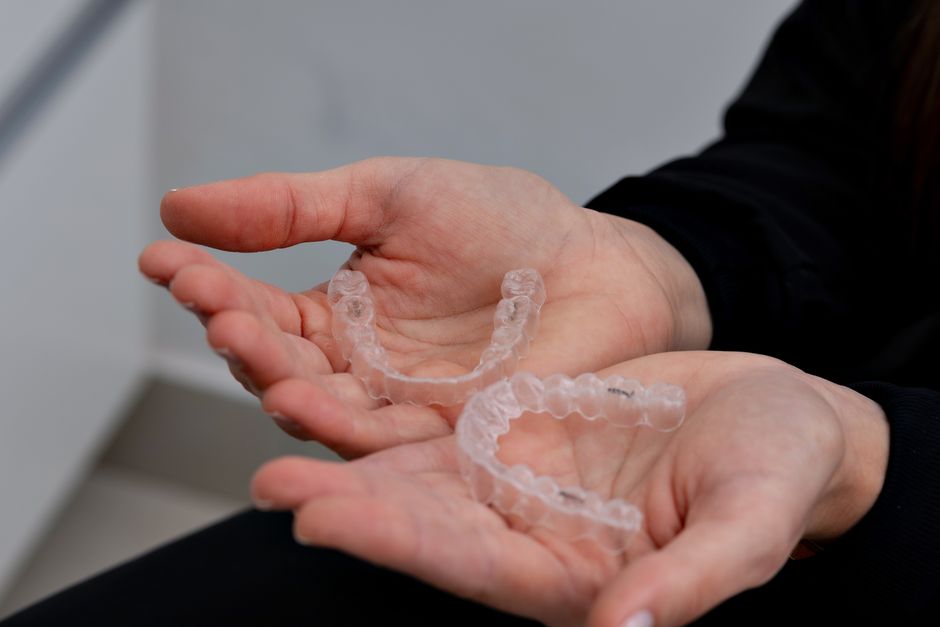
Vpro is a high-frequency oral cleaning device sold as a way to clean clear aligners and teeth. Using it with Invisalign means cleaning your aligners with Vpro when you take them out, then brushing and flossing your teeth before putting the aligners back in. The device does not replace your normal dental routine or your Invisalign treatment schedule.
Below is a step-by-step walkthrough of how people combine the two, what the device can and cannot do, and where the evidence is thinner than the marketing suggests.
What Is Vpro and How Does It Relate to Invisalign?
Vpro is a brand of portable ultrasonic cleaning device. You fill its chamber with water, place an object inside, and it uses high-frequency vibration to shake loose debris from the surface. The same category of device is sold for jewelry, dentures, and retainers.
Invisalign aligners are removable clear plastic trays. They sit against your teeth for most of the day, which means saliva, plaque, and bacteria collect on both the aligner surface and your teeth underneath. That buildup is the problem Vpro is marketed to address.
It is worth separating two jobs here, because the marketing often blurs them:
- Cleaning the aligner itself — removing biofilm, food residue, and odor from the plastic tray.
- Cleaning your teeth — removing plaque and food from the tooth surfaces before the aligner goes back in.
Vpro is designed for the first job. It cannot do the second. An ultrasonic cleaner does not brush, floss, or reach between teeth the way a toothbrush and floss do.
How To Use Vpro With Invisalign Step By Step
The sequence matters more than the device. Aligners trap whatever is on your teeth against the enamel for hours, so the order below is built around that fact.
- Take the aligners out. Remove them gently, working from the back molars forward. Rinse them under lukewarm water right away so saliva does not dry on the plastic.
- Fill the Vpro chamber with cool or lukewarm water. Follow the manufacturer’s fill line. Hot water can warp aligner plastic — this is true of Invisalign trays and of most clear retainers.
- Place one aligner in the chamber. If your device fits both trays, check the manufacturer’s instructions before loading both at once.
- Run a cleaning cycle. Use the cycle length your device specifies. There is no established clinical standard for how long an ultrasonic cycle should run for aligners specifically, so the manufacturer’s guidance is the practical reference point.
- Remove the aligner and rinse it thoroughly under lukewarm running water to clear any loosened debris.
- Brush and floss your teeth. This step is not optional and Vpro does not substitute for it. Clean the tooth surfaces the aligner will sit against.
- Put the aligners back in. Ideally within the wear time your orthodontist has set for your case.
Most people run the Vpro cycle while they are brushing their teeth, which keeps the total routine time roughly the same as brushing alone.
How Often Should You Clean Aligners With Vpro?
Daily cleaning is the common approach, and many people run a cycle each time they remove the aligners to eat. That frequency is reasonable but it is not backed by aligner-specific clinical trials.
What is well established is that aligners need to be cleaned regularly. Plaque biofilm builds on plastic surfaces the same way it builds on teeth. Left alone, that biofilm can contribute to bad breath, visible cloudiness on the tray, and — more importantly — it sits against your enamel for the many hours a day you wear the aligner.
Some clinicians advise a deeper clean once a day and a simple rinse at other removal points. Others suggest running the device every time. Both are common in practice. No head-to-head study has established that one schedule produces better dental outcomes than the other.
If your aligners develop a smell or visible film between cleanings, that is a practical signal to clean more often.





What Vpro Cannot Do for Your Invisalign Treatment
An ultrasonic cleaner is a cleaning aid. It is not a treatment device, and it does not affect how your teeth move.
Things Vpro does not do:
- It does not replace toothbrushing or flossing.
- It does not disinfect in a clinical sense. Ultrasonic vibration loosens debris; it is not the same as sterilization, and no ultrasonic cleaner should be described as making an aligner sterile.
- It does not whiten aligners or reverse yellowing that has already set into the plastic.
- It does not extend aligner wear time or change how often you switch trays.
- It does not correct a poorly fitting aligner. If a tray will not seat, that is a conversation with your orthodontist, not a cleaning problem.
There is also a durability question that gets overlooked. Aligner plastic is not designed to last forever, and aggressive cleaning — very hot water, harsh chemicals, abrasive scrubbing — can degrade it. Whether repeated ultrasonic cycling shortens aligner life is not well studied. Following the device instructions and using cool or lukewarm water is the conservative approach.
Common Mistakes When Combining Vpro and Invisalign
Most problems come from the routine around the device, not the device itself.
Using hot water. This is the single most common way people damage clear aligners. Heat deforms the plastic, and a warped aligner will not fit correctly. Cool or lukewarm only.
Skipping the toothbrush because the aligner was cleaned. These are two separate surfaces. A clean aligner over unbrushed teeth still holds plaque against enamel.
Cleaning the aligner but not the case. The storage case collects bacteria. If you clean the aligner and drop it back into a dirty case, you undo part of the work.
Eating or drinking with aligners in. Sugary drinks and food trapped under an aligner are a bigger risk to your teeth than a missed cleaning cycle. This applies whether or not you own a Vpro.
Assuming the device sanitizes. It loosens debris. It does not sterilize. If you have a cold sore, an infection, or a compromised immune system, ask your dentist about appropriate cleaning for your situation rather than relying on a consumer cleaner.
Does Vpro Work Better Than Other Aligner Cleaning Methods?
There is no strong evidence that ultrasonic cleaning outperforms simpler methods for aligners. That is an honest statement about the state of the research, not a knock on the device.
What people commonly use:
- Ultrasonic cleaner (like Vpro): mechanical vibration loosens debris. Convenient, hands-off, no chemicals.
- Invisalign cleaning crystals or retainer tablets: dissolving cleaners designed for aligners, widely recommended by orthodontists.
- Soft toothbrush and mild soap or clear dish soap: low cost, effective at physically scrubbing the surface.
- Plain lukewarm water rinse: the minimum, useful for quick removal during meals.
Which one a person picks often comes down to convenience and habit. A method you actually do every day is more useful than a better method you skip.
Two things are well established regardless of method: don’t use hot water, and don’t use abrasive or harsh chemical cleaners that are not intended for dental appliances.
When to Talk to Your Orthodontist
Contact your orthodontist if an aligner will not seat properly, if it cracks or warps, if you notice white spots or discoloration on your teeth, or if your gums become sore or bleed. These are clinical issues, not cleaning issues, and a cleaning device will not resolve them.
If you have gum disease, a history of decay, or a medical condition affecting your mouth, ask your dentist whether your cleaning routine needs adjusting. General aligner cleaning advice does not account for individual clinical situations.
Frequently Asked Questions
Can I clean Invisalign aligners with Vpro every day?
Yes, daily use is the common approach and matches how the device is marketed for dental appliances. There is no aligner-specific clinical trial establishing an ideal frequency, so the manufacturer’s instructions are the practical reference.
Does Vpro replace brushing my teeth with Invisalign?
No. Vpro cleans the aligner surface, while brushing and flossing clean your teeth. Both are needed because the aligner holds whatever is on your teeth against the enamel for hours.
Can I use hot water in a Vpro cleaner for aligners?
No. Hot water can warp clear aligner plastic and cause the tray to stop fitting correctly. Use cool or lukewarm water only.
Is Vpro better than Invisalign cleaning crystals?
No study has shown that ultrasonic cleaning produces better dental outcomes than dissolving aligner cleaners. Both are widely used, and convenience often decides which one a person sticks with.
