
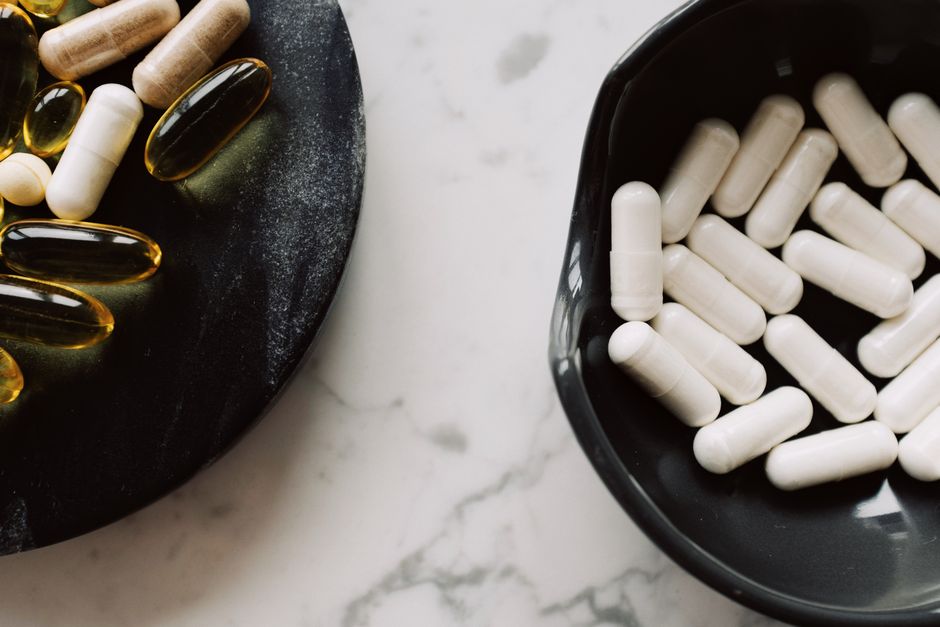
Opening a vitamin C capsule and smoothing the powder onto your face is a popular DIY skincare trend, and it can be done safely if you understand a few basics. The short version: cleanse your face, empty one capsule into a small bowl, mix the powder with a little water or a plain moisturizer, apply a thin layer, wait, then rinse or leave it on depending on your skin. The longer version matters more, because vitamin C is unstable, the dose in a capsule is not designed for skin, and how you handle it changes whether it helps or irritates.
How To Use Vitamin C Capsules On Your Face Step By Step
The method is simple, but each step has a reason behind it. Skipping the reasoning is how people end up with orange-stained skin or a red, stinging face.
- Wash your hands and face. Use a gentle cleanser and lukewarm water. Pat dry. Vitamin C absorbs better on clean skin without a barrier of oil or makeup.
- Open one capsule. Twist or pull it apart over a small non-metal bowl. Use a ceramic or glass dish if you have one.
- Empty the powder out. If the capsule is a liquid-filled gel cap, pierce it and squeeze the contents instead.
- Mix it. Add a few drops of water, aloe vera gel, or a plain fragrance-free moisturizer. Stir into a smooth paste. Do not use tap water if your water is hard — it can affect how the powder dissolves.
- Patch test first. Apply a small amount to your inner forearm or behind your ear. Wait 24 hours. If you see redness, itching, or swelling, do not put it on your face.
- Apply a thin layer. Spread it evenly, avoiding the eyelids and the corners of your eyes. More is not better here.
- Wait 10 to 15 minutes. Let it sit. If it starts to sting or burn, rinse it off right away.
- Rinse or leave on. Many people rinse after 15 minutes. Some leave a light layer on. If your skin is sensitive, rinse.
- Follow with moisturizer and sunscreen. In the morning, sunscreen is not optional. Vitamin C does not replace sun protection.
Use it once a day at most when you are starting out. Some people use it every other day. There is no established clinical guideline that says how often a DIY vitamin C capsule mask should be applied, because this is not a studied skincare protocol — it is a home method. That means you are your own test subject, and slow is safer than enthusiastic.
Does Vitamin C Actually Help Your Skin?
Yes, when it is formulated and delivered properly. Vitamin C is a cofactor your body needs to build collagen, and it is an antioxidant that can help limit damage from UV exposure and pollution. Topical vitamin C has been studied for years in cosmetic science, and the evidence supports that it can brighten skin tone and reduce the appearance of dark spots when used consistently.
Here is the part most DIY guides leave out. The research that supports topical vitamin C is largely based on stabilized, properly formulated serums — not on powder emptied from a dietary supplement capsule. Those are two different products. A serum is designed with a specific concentration, a pH that lets the vitamin C penetrate skin, and preservatives that keep it from breaking down. A capsule is designed to survive your stomach acid. The two goals are not the same.
That does not mean the capsule method cannot work at all. It means the evidence for it specifically is thin. No large human trials have confirmed that applying supplement powder to your face delivers the same benefits as a formulated serum. Be skeptical of anyone who tells you it is identical.
Why Vitamin C Is So Hard to Get Right on Skin
Vitamin C is fragile. It breaks down when exposed to air, light, heat, and water. That is why so much cosmetic chemistry is spent on keeping it stable.
The moment you open a capsule and mix it with water, you start a clock. The powder begins to oxidize. Oxidized vitamin C turns yellow, then orange, then brown — and at that point it is not doing the job you wanted. It may even irritate your skin.
There is also a penetration problem. Your outermost skin layer is built to keep things out. For vitamin C to reach the deeper layers where it can influence collagen, it generally needs to be in a form and concentration that can cross that barrier. A plain powder mixed with water may sit mostly on the surface.
One more thing worth knowing: the form of vitamin C matters. L-ascorbic acid is the most studied form. Some capsules contain it. Others contain sodium ascorbate or ascorbyl palmitate, which behave differently on skin. Check your label before you assume you know what you are applying.





What Are the Risks of Putting Capsules on Your Face?
Irritation is the most common problem. Vitamin C in high concentrations can sting, redden, or dry out skin, especially if you have sensitive skin, rosacea, or eczema. Starting with too much, too often, is the usual mistake.
Some people develop contact dermatitis — a red, itchy, sometimes bumpy reaction where the product touched the skin. If that happens, stop using it. It usually settles once you stop, but if it does not, see a doctor.
There is also a staining issue. Oxidized vitamin C can leave a yellow-orange tint on skin and sometimes on fabric. Rinsing thoroughly helps.
Do not use vitamin C capsules on broken skin, open cuts, or right after waxing, shaving, or a chemical peel. And if you are using prescription retinoids or strong acids like glycolic acid, layering a DIY vitamin C mask on top can push your skin past its tolerance. Space them out, or skip the DIY version entirely.
Should You Use a Serum Instead?
For most people, a well-formulated vitamin C serum is the more reliable choice. It is designed for skin, tested for stability, and dosed at concentrations that have actually been studied. You also avoid the guesswork of how much powder you are applying and what pH you have created.
The capsule method has real appeal — it is cheap, and you probably already have the capsules. If you want to try it, treat it as an experiment, patch test first, and pay attention to how your skin responds. If your skin likes it, fine. If it stings, reddens, or does nothing after several weeks, that is useful information too.
What you should not do is assume the capsule is a free upgrade. It is a different product with a different delivery system, and the evidence for it is much weaker than the marketing around vitamin C in general.
How Should You Store Vitamin C Capsules?
Keep them in the original bottle, tightly closed, away from light and heat. A cool, dark cabinet is better than a bathroom shelf, where steam and warmth speed up breakdown. Do not pre-mix a batch to use later — mix only what you will use right away, because the mixture degrades quickly.
If your capsules have changed color, smell odd, or clumped together, throw them out. The same goes for any paste you mixed and left sitting.
Frequently Asked Questions
Can I use vitamin C capsules on my face every day?
Some people do, but there is no established guideline for how often to apply supplement powder to skin. Start every other day and see how your skin responds before increasing.
Should I rinse vitamin C off my face or leave it on?
Rinsing after about 15 minutes is the safer choice, especially for sensitive skin. Leaving it on is common in DIY routines, but it raises the chance of irritation and staining.
Does vitamin C capsule powder work as well as a serum?
No clinical evidence currently confirms that it does. The research supporting topical vitamin C is based mainly on stabilized, formulated serums, not on powder from dietary capsules.
Can vitamin C capsules lighten dark spots on my face?
Topical vitamin C has been studied for brightening skin tone and fading dark spots, but that evidence comes from formulated products. Results from capsule powder are not well studied.
