
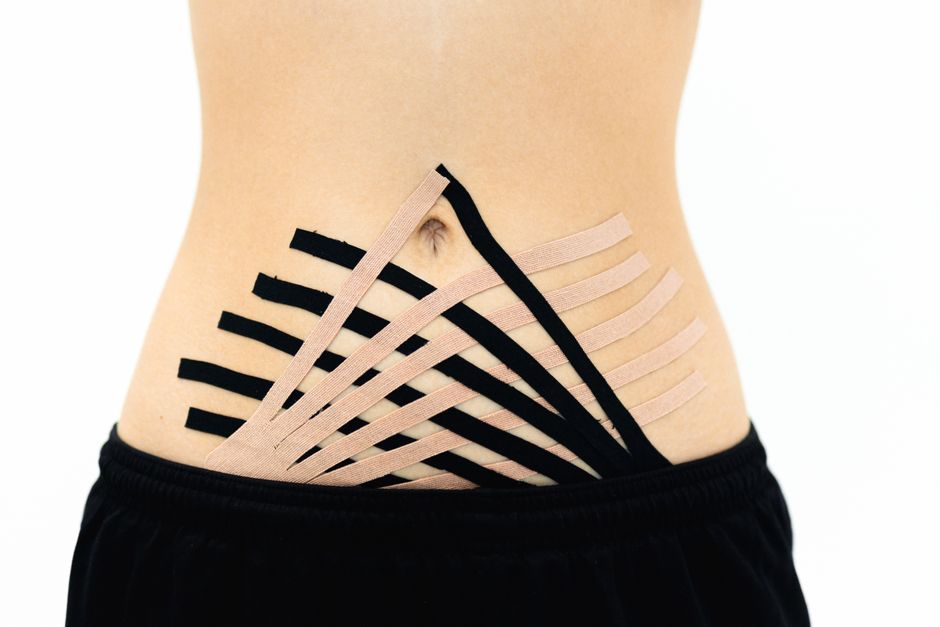
Diastasis recti is the separation of the two large bands of muscle that run down the middle of your abdomen. Taping, specifically using kinesiology tape, is a supportive technique that some physical therapists use alongside core exercises to help manage this condition. It does not close the gap permanently, but it can provide sensory feedback and support to your abdominal wall during daily movement and rehabilitation.
What Is Diastasis Recti and How Does Taping Help?
Diastasis recti happens when the connective tissue (the linea alba) between your abdominal muscles stretches and thins. This is very common during pregnancy and can also affect men and women who lift heavy weights improperly or have chronic abdominal pressure.
The separation itself is not a tear. The muscles are still attached, but the tissue between them has lost tension. Taping does not pull the muscles back together like a corset. Instead, it works on a neurological level. The tape lifts the skin slightly, which changes the sensory input your brain receives from that area. This can help your brain activate the deep core muscles more effectively when you move.
Research on taping for diastasis recti is limited. Some studies suggest it improves posture awareness and reduces discomfort during activity. However, no large clinical trials confirm that taping alone reduces the inter-recti distance (the actual gap measurement). The strongest evidence supports combining taping with a structured exercise program that focuses on the transverse abdominis muscle.
What Type of Tape Should You Use?
Kinesiology tape is the standard choice for diastasis recti. It is stretchy, breathable, and designed to move with your skin. Athletic tape and rigid sports tape do not work the same way because they restrict movement rather than provide sensory feedback.
You can buy kinesiology tape online or at most drugstores. Look for tape that is latex-free if you have sensitive skin. Width matters. Standard 2-inch tape is easiest to work with for abdominal applications. Some brands sell precut strips, but cutting your own from a roll gives you more control over length and shape.
Skin preparation is important. Apply the tape to clean, dry skin without lotion or oil. If you have just showered, wait until your skin is completely dry. Avoid applying tape over open wounds, rashes, or irritated skin.
How To Apply Taping For Diastasis Recti Correctly
Application technique matters more than the brand of tape you choose. The goal is not to squeeze your waist but to support the midline and cue your muscles to engage.
Here is a general approach that most physical therapists use. Always consult a professional for a personalized assessment before starting.
- Position: Lie on your back with your knees bent and feet flat on the floor. This takes tension off the abdominal wall.
- Measure: Cut two or three strips of tape long enough to reach from one side of your abdomen to the other, crossing your belly button area.
- Anchor: Tear the paper backing off one end of the strip. Place this anchor on one side of your abdomen, about two inches away from the midline, without any stretch on that end.
- Apply: Gently pull the tape across your midline with about 25 to 50 percent stretch. Press the tape down as you go. Do not stretch the last two inches of the tape at the other end. Leave this end unstretched as your second anchor.
- Finish: Rub the tape firmly with your hand. The heat from friction activates the adhesive.
Some therapists apply the tape horizontally across the gap. Others use a fan shape or vertical strips. The horizontal application across the linea alba is the most common method because it directly supports the area of separation.
Do not apply tape with high tension. You should not feel like you are being squeezed. If the tape feels tight or uncomfortable, you are stretching it too much. The tape should feel like a second skin that you almost forget is there.
How Long Should You Wear The Tape?
Kinesiology tape can stay on for several days. Many brands are water-resistant, so you can shower and exercise while wearing it. Pat the tape dry gently after bathing. Do not rub it with a towel.
Most therapists recommend wearing the tape during waking hours and removing it at night. This gives your skin a break and lets you check for irritation. If you have sensitive skin, start with four to six hours per day to see how you react.
Remove the tape slowly. Pull it off in the direction of hair growth while pressing down on the skin next to the tape with your other hand. Use oil or adhesive remover if the tape is difficult to remove. Never rip it off quickly, as this can damage the skin.
If you notice redness, itching, blistering, or a rash under the tape, remove it immediately. Skin reactions to kinesiology tape are not common but they do happen. Do not reapply tape to the same area until the skin has fully healed.
What Exercises Should You Pair With Taping?
Taping is a tool, not a treatment by itself. The muscles still need to be trained to work correctly. The transverse abdominis is the deepest abdominal muscle. It acts like a natural corset that wraps around your torso. Training this muscle is the foundation of diastasis recti rehabilitation.
A basic exercise to start with is the abdominal draw-in. Lie on your back with knees bent. Breathe in. As you breathe out, gently pull your belly button toward your spine without moving your ribcage or pelvis. Hold for five to ten seconds while breathing normally. Repeat ten times.
Once the draw-in feels easy, progress to exercises that challenge your core while keeping the midline stable. These include heel slides, leg slides, and bridges. Avoid exercises that cause your abdomen to bulge outward. If you see a dome or a bulge forming down the middle of your belly during any exercise, stop and regress to an easier version.
Traditional crunches, sit-ups, and planks are typically not recommended during early rehabilitation. These exercises increase intra-abdominal pressure, which can worsen the separation. As your core strength improves, some people can safely return to these movements, but this decision should be made with a physical therapist based on your individual healing.
When Should You See A Professional?
Diastasis recti is a medical condition that deserves professional assessment. If you are postpartum and notice a gap in your abdominal muscles, a bulge, or low back pain, ask your healthcare provider for a referral to a physical therapist who specializes in women’s health or pelvic floor rehabilitation.
A physical therapist can measure your separation accurately with ultrasound or calipers. They can also assess for other conditions that often occur alongside diastasis recti, such as pelvic floor dysfunction or a hernia. These conditions require different treatment approaches.
If you feel a painful bulge that does not go away when you lie down, or if you have severe abdominal pain, nausea, or vomiting, seek medical care promptly. These could be signs of a hernia that requires surgical evaluation.
Frequently Asked Questions
Can taping permanently fix diastasis recti?
No, taping does not permanently fix diastasis recti. It provides temporary support and sensory feedback, but permanent improvement requires consistent core strengthening exercises over time.
Is it safe to wear kinesiology tape during pregnancy?
Some physical therapists use kinesiology tape during pregnancy for abdominal support, but research on its safety and effectiveness in pregnant women is limited. Always consult your obstetric provider before using any taping technique during pregnancy.
How long does it take to see results from taping and exercise?
Results vary widely depending on the severity of the separation, your age, and how consistently you exercise. Some women notice improved core control within a few weeks, while closing the gap itself can take several months of dedicated rehabilitation.
Can I exercise with the tape on?
Yes, you can exercise with kinesiology tape on. Many people find the tape helpful during exercise because it reminds them to keep their core engaged and their midline stable.
