
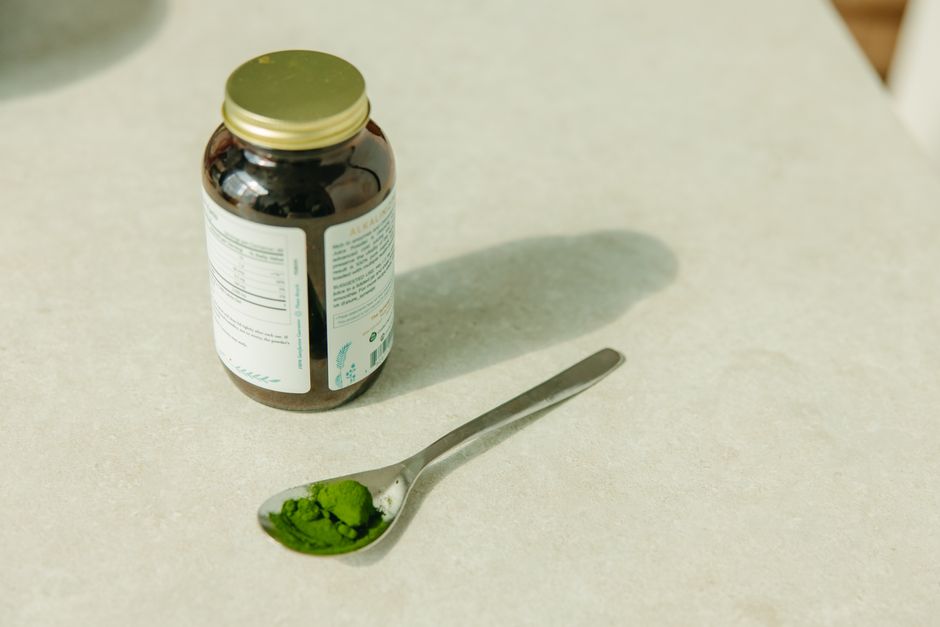
Spirulina is a blue-green algae sold as a bright green powder, and it has become one of the most searched “natural weight loss” supplements in the United States. The short answer: there is no established evidence that spirulina powder causes weight loss on its own, and no clinical guideline recommends it for that purpose. Its main documented value is as a concentrated source of protein, iron, and certain B vitamins — not as a fat-burning agent.
What Is Spirulina Powder and How Is It Used?
Spirulina is a type of cyanobacteria that grows naturally in warm, alkaline water. It has been eaten as food for centuries, particularly in parts of Africa and Central America, and is now grown commercially in controlled ponds and dried into powder, flakes, or tablets.
As a food, it is dense. A typical serving of dried spirulina powder is about one tablespoon, or roughly 7 grams. That amount supplies around 4 grams of protein, along with iron, vitamin B1, vitamin B2, copper, and a pigment called phycocyanin. It contains very little fat and almost no carbohydrates.
People use it in several ways:
- Stirred into water, juice, or smoothies
- Blended into yogurt or oatmeal
- Sprinkled over salads or soups
- Swallowed as tablets or capsules
It has a strong seaweed-like taste. Many people mix it with fruit or citrus to mask it. There is no standard “correct” way to take it — it is treated as a food, not a dosed medication.
Does Spirulina Powder Actually Cause Weight Loss?
No well-designed human trials have shown that spirulina powder causes meaningful weight loss. That is the honest position, and it has not changed despite years of marketing claims.
Some small studies have reported modest changes in body weight or body fat among people taking spirulina. These studies were generally small, short, and sometimes not blinded, which means the results are weak. When studies are small, a few participants losing or gaining a little weight can shift the average noticeably. That is not the same as a real effect.
A few researchers have proposed mechanisms — spirulina may affect appetite, blood sugar, or inflammation in ways that could theoretically influence body weight. Biological plausibility is not the same as demonstrated benefit. A supplement can plausibly do something and still fail to do it in real people over real time.
What spirulina can do is add protein and nutrients to your diet. Protein tends to increase fullness, and a food that helps you feel full may indirectly reduce how much you eat. That is a general property of protein-containing foods, not a special property of spirulina.
How To Use Spirulina Powder For Weight Loss
If you choose to use spirulina powder while trying to lose weight, treat it as a food ingredient inside a larger plan — not as the plan itself. Weight loss comes from eating fewer calories than you burn over time. No powder changes that arithmetic.
A reasonable way to use it:
- Add it to a meal or snack you already eat. A tablespoon in a morning smoothie is a common approach.
- Use it to boost protein at a meal that is low in protein. This is where it fits most logically.
- Do not skip meals or replace real food with it. It is not a meal replacement.
- Do not expect the scale to move because of spirulina. If weight comes off, it is coming from your overall eating and activity.
There is no established dose of spirulina for weight loss, because there is no established weight-loss effect. Manufacturers often suggest 1 to 3 grams per day, and some studies have used higher amounts, but these are not clinical recommendations for weight loss.



What Nutrients Does Spirulina Powder Actually Provide?
The nutrient content is the most defensible reason to eat spirulina. The table below uses approximate values for dried spirulina powder.
| Nutrient | Approx. per 7 g (1 tbsp) |
|---|---|
| Calories | ~20 |
| Protein | ~4 g |
| Fat | ~0.5 g |
| Carbohydrate | ~1.7 g |
| Iron | ~2 mg |
| Vitamin B1 (thiamine) | ~0.16 mg |
| Vitamin B2 (riboflavin) | ~0.25 mg |
| Copper | ~0.4 mg |
These values are approximate and vary by product and harvest. Spirulina is also a source of phycocyanin, the blue pigment it contains. Phycocyanin is studied for antioxidant activity, but antioxidant activity in a lab dish does not automatically translate into a health benefit in a person.
One practical point: spirulina’s protein is complete, meaning it contains all nine essential amino acids. That makes it unusual among plant foods. It is still a small amount of protein per serving compared with eggs, meat, or legumes.
Are There Risks or Side Effects?
Spirulina is generally tolerated, but it is not risk-free. The main concern is not the algae itself — it is what can come with it.
Because spirulina is grown in water, it can be contaminated with heavy metals, harmful bacteria, or other algae that produce toxins. Quality control varies widely between products and between countries. Some products have been found to contain lead, mercury, or microcystins, which are toxins produced by certain cyanobacteria.
Other reported issues include:
- Digestive upset, nausea, or diarrhea in some people
- Allergic reactions, particularly in people allergic to other algae or seafood
- Interactions with medications that affect the immune system or blood clotting
Spirulina contains phenylalanine, so people with phenylketonuria (PKU) should be cautious. People who are pregnant or breastfeeding, people with autoimmune conditions, and people taking blood thinners or immunosuppressants should talk to a clinician before using it. No clinical guidelines currently exist for spirulina use in pregnancy or breastfeeding, so the safe position is to avoid it unless a clinician says otherwise.
Buying from a brand that publishes third-party testing results is one way to reduce — not eliminate — the contamination risk.
Why Weight Loss Supplements Rarely Work
The spirulina story is a small version of a much larger pattern. Weight loss supplements as a category have a poor track record in rigorous testing. Most show little to no effect when compared with a placebo, and the ones that do show effects tend to be studied in small, short trials that are hard to trust.
This is not because the ingredients are worthless. It is because body weight is regulated by many systems — appetite hormones, energy expenditure, sleep, stress, medication, and genetics — and a single powder rarely moves any of them enough to matter.
What does reliably matter is total calorie intake, the quality of the diet, physical activity, and sleep. Those are less exciting to sell. They are also what the evidence supports.
If you enjoy spirulina and it helps you eat a better breakfast or drink more water, that is a fine reason to use it. Just do not expect it to do the work for you.
Frequently Asked Questions
Does spirulina powder burn belly fat?
No. No clinical evidence confirms that spirulina powder targets belly fat or fat anywhere else.
How much spirulina powder should I take daily for weight loss?
There is no established dose of spirulina for weight loss, because no weight-loss effect has been confirmed. Manufacturers often suggest 1 to 3 grams per day, but that is a product suggestion, not a clinical recommendation.
Can I take spirulina powder on an empty stomach?
You can, but some people find it causes nausea or stomach upset that way. Taking it with food is generally easier to tolerate.
Is spirulina safe to take every day?
For most healthy adults, daily use of a tested, reputable product appears to be tolerated. Because contamination and medication interactions are real concerns, check with a clinician if you take prescription drugs or have a health condition.
