
Rosemary oil has become one of the most talked-about natural remedies for thinning hair, and the interest is not entirely without basis. Some research suggests rosemary may support hair growth, though the evidence is far from settled. How you use it matters enormously — the type of oil, the dilution, and how long you keep it on your scalp all affect both safety and results.
How To Use Rosemary Oil For Hair Growth
There is no single official protocol for using rosemary oil on hair. What follows reflects the methods used in published research and the general approach some dermatologists and trichologists describe in clinical practice. It is not a prescription.
A typical approach looks like this:
- Dilute first. Never apply undiluted essential oil to your scalp. Mix a few drops of rosemary essential oil into a carrier oil such as jojoba, coconut, or argan oil. A common ratio cited in aromatherapy guidance is roughly 1 to 2 drops of essential oil per teaspoon of carrier oil. This is general dilution guidance, not a proven hair-growth dose.
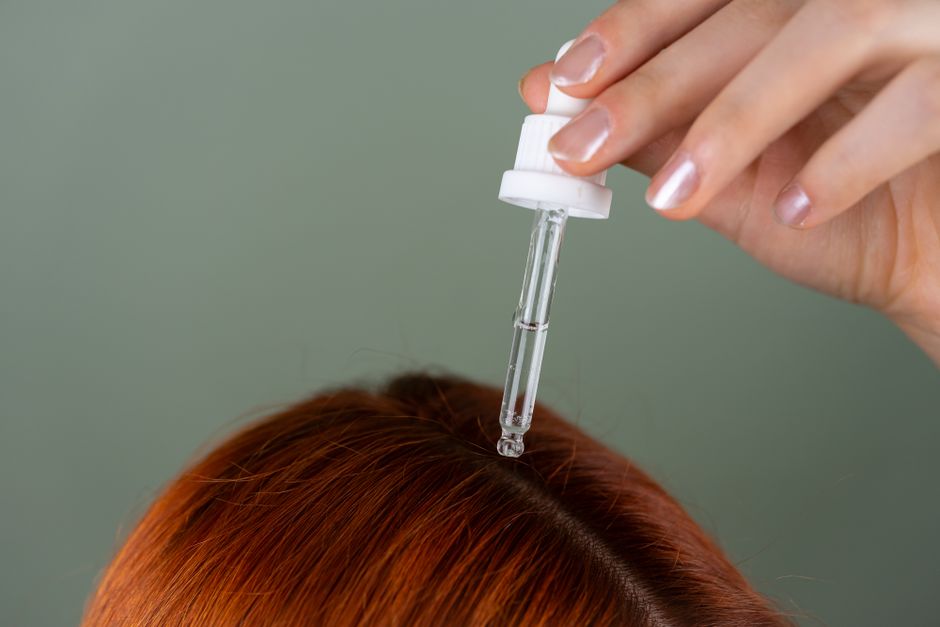
- Apply to the scalp, not the hair. Part your hair in sections and use a dropper or fingertips to work the oil into the scalp. The hair shaft itself does not need coating.
- Massage gently. Use circular motions with your fingertips for a few minutes. Scalp massage on its own has been studied for hair thickness, and it may add a modest benefit. It also helps distribute the oil.
- Leave it on. In one commonly cited study, participants massaged rosemary oil into the scalp and left it for a period before washing. There is no strong evidence establishing an ideal contact time. Many people leave it on for 30 minutes to a few hours, or overnight.
- Wash it out. Use your normal shampoo. You may need to shampoo twice to remove the oil completely.
- Repeat consistently. In the research that showed a benefit, participants used it regularly over several months. Hair grows slowly. Any change takes time.
The word consistently matters more than any specific technique detail. Hair follicles cycle through growth, transition, and rest phases, and meaningful visible change generally takes months, not weeks.
Does Rosemary Oil Actually Help Hair Growth?
The evidence is limited but not empty. One of the most frequently referenced studies compared rosemary oil to minoxidil 2% in people with androgenetic alopecia — the common pattern hair loss that affects both men and women. After six months, both groups showed increased hair count, and the rosemary group reported less scalp itching. That study is often cited as proof that rosemary oil “works as well as minoxidil.”
That conclusion goes further than the data supports. The study was relatively small. Minoxidil 2% is a lower concentration than the 5% formulation commonly used today. And a single trial is not the same as a body of replicated evidence.
What the research does suggest is that rosemary oil may have some effect on hair growth, possibly through improved circulation to the scalp or through anti-inflammatory activity. The mechanism is not fully understood. Rosemary contains compounds including rosmarinic acid and carnosic acid, which have shown antioxidant and anti-inflammatory properties in laboratory studies. Whether those properties translate into measurable hair growth in people is the part that remains unclear.
What is clear: rosemary oil is not a treatment for hair loss caused by medical conditions, nutritional deficiencies, thyroid disorders, or scarring alopecia. If you are losing hair, the cause matters more than the remedy.
Which Type of Rosemary Oil Should You Use?
Not all rosemary products are the same, and this is where many people go wrong.
Rosemary essential oil is the concentrated, distilled oil. It is potent and must be diluted. This is the form used in most of the hair research.
Carrier oils infused with rosemary — sometimes labeled “rosemary-infused oil” — are milder. They contain rosemary extract in a base oil and are generally ready to use. They are not the same concentration as essential oil.
Rosemary water or hydrosol is a byproduct of distillation. It is far less concentrated than essential oil and there is no meaningful research on it for hair growth.
If you are choosing an essential oil, look for a product labeled as pure Rosmarinus officinalis. Be aware that the chemical composition of rosemary oil varies by the plant’s origin and growing conditions. Some sources distinguish between “chemotypes” — different chemical profiles of the same plant. The research does not clearly establish that one chemotype is superior for hair. Anyone claiming certainty on this is likely overstating what is known.





What Are the Risks and Side Effects?
Rosemary oil is generally considered low-risk when diluted and used on the skin, but “natural” does not mean “harmless.”
Essential oils can cause skin irritation, redness, and contact dermatitis. Some people are allergic to rosemary specifically. Before applying it to your scalp, do a patch test on a small area of skin, such as the inner forearm, and wait 24 hours to see how your skin reacts.
Do not apply undiluted essential oil to your scalp. This is one of the most common mistakes and a leading cause of irritation.
Do not get rosemary oil in your eyes. If you do, rinse thoroughly with water.
Rosemary oil should not be swallowed. Ingesting essential oils can be dangerous. Keep bottles out of reach of children and pets.
If you are pregnant or breastfeeding, there are no clinical guidelines establishing safe use of rosemary essential oil for hair growth in these populations. Some sources advise caution with rosemary oil during pregnancy. Talk to your doctor before using it.
If you have a scalp condition such as psoriasis, seborrheic dermatitis, or an active infection, do not apply oils without checking with a clinician first. Oils can worsen some scalp conditions.
Rosemary Oil vs. Minoxidil: What the Comparison Shows
Minoxidil is one of the few treatments approved by the FDA for pattern hair loss, and it has a much larger body of evidence behind it than rosemary oil does. It is available over the counter in 2% and 5% formulations.
The comparison people most often make comes from that single six-month study mentioned earlier. It is a useful starting point for discussion but a weak basis for a firm conclusion. Larger, longer, and independently replicated trials would be needed to say rosemary oil is comparable to minoxidil. Those trials do not currently exist in any substantial form.
This does not mean rosemary oil is useless. It means the honest position is: rosemary oil may have a modest effect, minoxidil has more evidence, and neither is a cure. Both are generally used as ongoing treatments — if you stop, any benefit tends to fade.
What Else Matters for Hair Growth
Hair growth depends on far more than what you put on your scalp.
Nutritional status matters. Iron deficiency, low vitamin D, and inadequate protein intake can all affect hair. So can thyroid problems. If you are losing hair and have not had basic bloodwork, that is a reasonable place to start with a doctor.
Stress, certain medications, and hormonal changes — including those around menopause and postpartum — can trigger shedding. So can tight hairstyles that pull on the follicles over time.
Androgenetic alopecia, the most common form of hair loss, is genetic and progressive. Rosemary oil is not going to reverse it. It may, at best, slow things slightly in some people. A dermatologist can discuss treatments with stronger evidence, including minoxidil, finasteride, and others, depending on your situation.
One clarification worth making: rosemary oil is often marketed as a “DHT blocker,” referring to the hormone linked to pattern hair loss. The evidence that rosemary oil blocks DHT in humans is very limited and largely based on laboratory or animal findings. That claim is repeated far more often than it is demonstrated.
How Long Before You See Results?
Hair grows slowly — roughly half an inch per month on average. Because of this, any real change from a topical treatment typically takes several months to become visible. In the rosemary study, the assessment was at six months.
If you try rosemary oil, give it a fair window before judging results. But also be realistic. If you see no change after several months of consistent use, it is unlikely to start working later. And if your hair loss is accelerating, worsening, or accompanied by scalp pain, scaling, or patches of smooth bald skin, see a doctor rather than experimenting further.
Frequently Asked Questions
Can I leave rosemary oil on my hair overnight?
Some people do, but there is no strong evidence establishing overnight use as better than shorter contact times. If you have sensitive skin, leaving it on for a shorter period and washing it out is the safer approach.
Can I use rosemary oil every day?
There are no clinical guidelines specifying how often to use it. In the research, participants applied it regularly over months, but no standard frequency has been established. Daily use may increase the risk of scalp irritation in some people.
Is rosemary oil safe during pregnancy?
No clinical guidelines currently establish safe use of rosemary essential oil for hair growth during pregnancy or breastfeeding. Talk to your doctor before using it.
Does rosemary oil work as well as minoxidil?
That claim comes largely from a single small study, so it is not well supported. Minoxidil has a much larger body of evidence behind it for pattern hair loss.
