
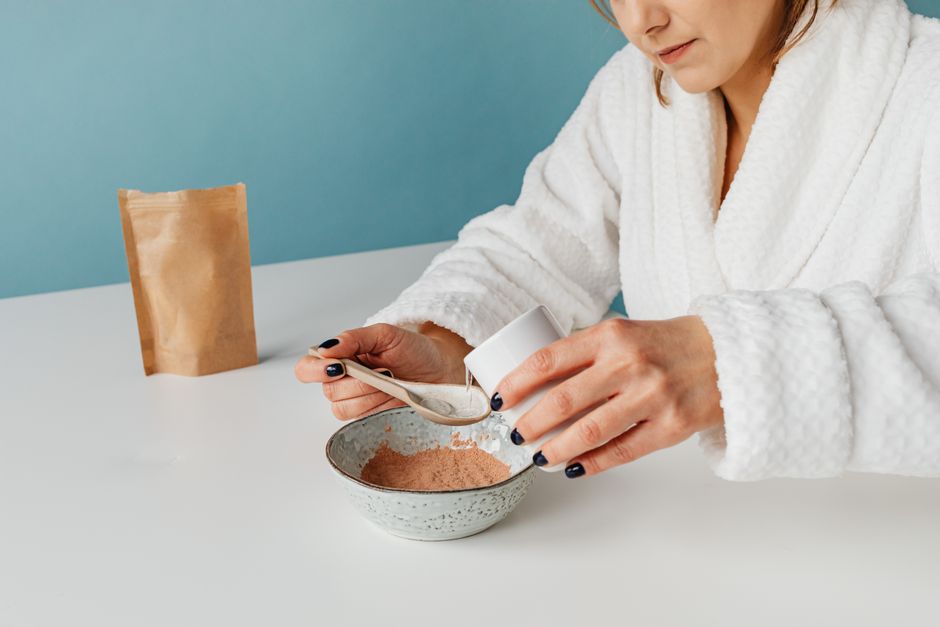
Rooting powder is a formulation of synthetic auxin — usually indole-3-butyric acid (IBA) — that encourages cuttings to form adventitious roots. The standard way to use it in water is to dissolve a small, measured amount in clean water and either soak the cutting’s base briefly or root the cutting directly in that solution. The critical point most people miss: IBA is only sparingly soluble in plain water, so powders sold for water use are typically pre-formulated with a solubilizing agent, or they must be dissolved in a small amount of alcohol first. Getting this step wrong is the single most common reason home propagation attempts fail.
What Is Rooting Powder and What Is Actually In It?
Rooting powder is a plant growth regulator product. The active ingredient in most commercial formulations is indole-3-butyric acid, a synthetic auxin that mimics the plant’s own rooting hormone. Some products use indole-3-acetic acid (IAA) or naphthaleneacetic acid (NAA) instead, and a few combine two of these.
Auxins work by promoting cell division and elongation at the cut surface. When a stem is severed, the wound site accumulates auxin, and that accumulation signals the tissue to reorganize into root primordia — the tiny clusters of cells that become new roots. Applying extra auxin pushes that process along faster and, in many species, increases the number and quality of roots formed.
Commercial rooting powders are rarely pure IBA. They usually contain a carrier — talc is common — plus a fungicide in some formulations to reduce rot at the cut. This matters for water use, because talc-based powders are designed for dipping dry cuttings, not for dissolving. Products labeled as “water-soluble” or “liquid rooting concentrate” are formulated differently and are the appropriate choice if you plan to root in water.
How To Use Rooting Powder In Water For Propagation?
There are two workable methods, and they are not interchangeable. Which one you use depends on the formulation you bought.
Method 1: The Quick Soak
This is the method for liquid concentrates and true water-soluble powders. Mix the product according to its label directions — concentrations vary widely between brands, and there is no single universal dilution. A typical commercial liquid concentrate will specify a dilution for softwood versus hardwood cuttings, and those differ.
Dip the bottom 1 to 2 inches of the cutting into the solution for the time stated on the label, then move the cutting into your rooting medium or clean water. Longer is not better here. Auxin above an optimal concentration can inhibit rooting rather than promote it, and over-soaking soft tissue can damage the stem base.
Method 2: The Alcohol Pre-Dissolve
If you have a talc-based powder and want to use it in water, the powder will not dissolve properly on its own. The standard workaround is to dissolve a small measured amount in a minimal volume of isopropyl or ethyl alcohol first, then dilute with water. This is a technique used in horticultural practice, not a manufacturer’s instruction, so exact ratios vary and no universal guideline exists.
If this sounds fiddly, that is because it is. For most home growers, buying a product designed for water use is simpler and more reliable than improvising with a talc powder.
What About Just Rooting in Plain Water?
Many species root in plain water with no hormone at all. Pothos, philodendron, tradescantia, and willow are well-known examples. Adding rooting hormone to the water for these plants may speed things up slightly, but it is not necessary, and the evidence for a meaningful advantage in easy-to-root species is not strong.
Where hormone treatment tends to matter more is with species that are slow or reluctant to root — woody shrubs, some conifers, and certain ornamental trees. Even then, results vary by species, cutting type, and timing.
Which Plants Respond to Rooting Hormone and Which Do Not?
Response to auxin treatment is species-dependent, and this is one of the most consistently observed patterns in propagation research.
- Strong responders: Many woody ornamentals, including some roses, hibiscus, and certain evergreens, show improved rooting rates with auxin treatment.
- Easy rooters: Pothos, spider plant, mint, and willow root readily without any hormone. The benefit of adding it is marginal at best.
- Poor responders: Some species root poorly regardless of hormone treatment. In these cases the limiting factor is usually something else — temperature, light, or the physiological state of the parent plant.
If a cutting fails to root with hormone treatment, adding more hormone is rarely the answer. The problem is more often environmental.




Does Rooting Powder in Water Actually Work?
Yes, for species that respond to auxin, and when the product is properly dissolved. The mechanism is well established in plant physiology: exogenous auxin at the wound site promotes the cell divisions that form root primordia.
What is less certain is how much difference it makes in practice for the average home grower. Controlled studies generally show benefit for difficult-to-root species. For easy species, the effect is often small or not detectable. The marketing around rooting products tends to overstate consistency across all plants.
One clarification worth making: rooting hormone does not “feed” a cutting or keep it alive. It only influences root initiation. A cutting that fails because the water went anaerobic, the temperature was wrong, or the tissue dried out will not be saved by any amount of auxin.
Common Mistakes That Cause Failure
Most failures trace back to a handful of avoidable errors.
- Using talc powder directly in water. It will not dissolve. You end up with clumps and uneven exposure.
- Over-concentrating the solution. More is not better. Excess auxin can suppress rooting.
- Soaking too long. Follow label timing. Soft cuttings are easily damaged.
- Letting the water stagnate. Change it regularly and keep the cut end submerged, not the leaves.
- Contaminating the stock solution. Never dip a cutting directly into the container of concentrate. Pour out what you need and discard the leftover.
Does Rooting Powder Pose Any Health or Safety Concerns?
Rooting products are pesticides under US regulation, because they are intended to alter plant growth. That means they carry EPA-registered label instructions, and those instructions are the authority on safe handling — not general gardening advice.
Indole-3-butyric acid has a relatively favorable safety profile compared to many agricultural chemicals, but it is not harmless. The concentrated powder can irritate skin, eyes, and airways. Wear gloves, avoid generating dust, and keep the product away from children and pets.
Do not pour leftover solution down a drain or into a waterway. Follow the label’s disposal instructions. And never use a rooting product on edible plant parts you intend to eat, unless the label specifically permits it for that crop.
If you are pregnant, breastfeeding, or handling these products around young children, treat the label warnings as the governing guidance. There is no separate clinical guidance for these groups specific to rooting hormones, so the standard precaution is to minimize exposure.
How Long Does It Take To See Roots?
Timelines vary enormously by species and conditions, and no reliable universal figure exists. Soft-stemmed tropicals may show roots in one to two weeks. Woody cuttings can take four to eight weeks or longer. Some slow species take several months.
Temperature is often the biggest lever. Most cuttings root best in a warm range — roughly 65 to 75°F for many common houseplants — with bright, indirect light. Rooting hormone does not shorten these timelines dramatically. It mainly improves the odds and the number of roots.
Frequently Asked Questions
Can I just mix rooting powder into a glass of water?
Only if the product is specifically formulated as water-soluble or liquid. Standard talc-based powders do not dissolve in water and will clump. Check the label before assuming it will work.
How long should I soak a cutting in rooting hormone water?
Follow the timing on your product’s label, since concentrations and recommended durations vary by brand. Longer soaking is not better and can damage soft tissue.
Is rooting hormone necessary to root cuttings in water?
No. Many common houseplants root readily in plain water without any hormone. It is most useful for species that are slow or difficult to root.
Can I use rooting powder on plants I plan to eat?
Only if the product label specifically permits use on that crop. Rooting hormones are regulated pesticides, and the label is the governing authority on approved uses.
