
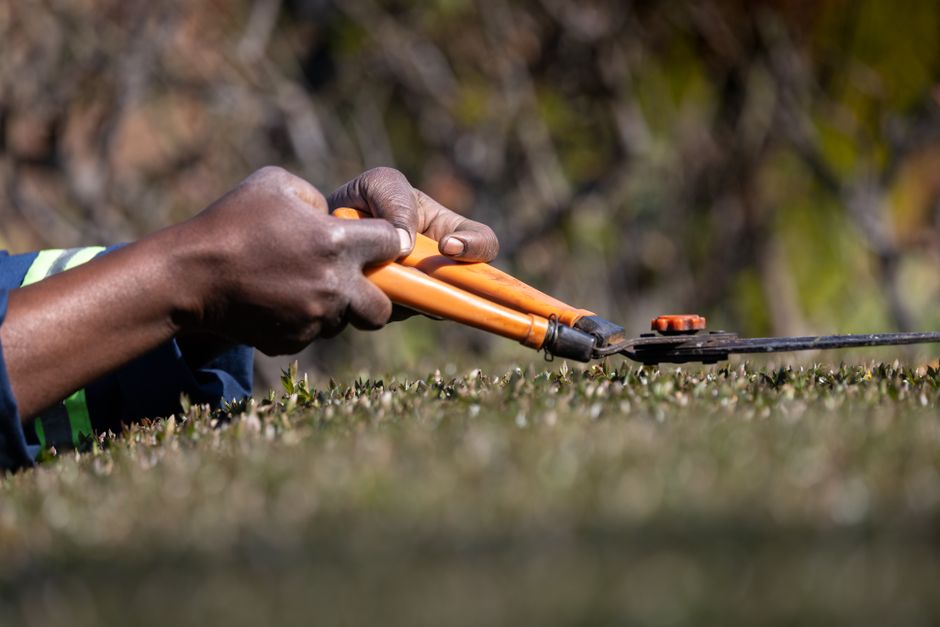
Pruning shears cut cleanly when the blade is sharp, the stem is positioned deep in the jaws, and the cutting motion is one firm squeeze rather than a chew. Clean cuts matter because a crushed stem heals poorly and invites disease. Keeping shears in good condition means sharpening the blade, cleaning sap and plant residue after use, and storing them dry. This guide covers technique, maintenance, and the safety points that matter most.
Most garden injuries from pruning tools are cuts to the hand holding the branch, not the one holding the shears. That single fact shapes almost everything below about how to hold, cut, and care for the tool.
How Do You Hold and Position Pruning Shears for a Clean Cut?
Hold the shears in your dominant hand with the thumb and fingers wrapped around both handles. The branch you are cutting should be held by your other hand, or steadied against your body, never left to wobble free.
The single most useful technique is to place the branch deep in the jaws, close to the pivot. Cutting near the tips of the blades forces the stems apart and produces a ragged, crushed end. Cutting deep in the throat of the tool gives you the mechanical advantage the design was built for.
On bypass shears, the curved blade passes outside the branch and the straight blade cuts through. Turn the tool so the straight cutting blade sits on the side of the stem you are keeping, and the curved blade on the side you are removing. This puts the clean cut on the wood that stays on the plant.
Keep your wrist straight and let your whole hand close the handles. A single firm squeeze finishes the cut. If you find yourself rocking the handles back and forth, the branch is too thick for the tool or the blade is dull.
What Is the Difference Between Bypass and Anvil Pruning Shears?
Bypass shears cut like scissors, with one blade passing beside the other. Anvil shears cut like a knife on a board, with one blade pressing the branch against a flat surface. The two are built for different jobs, and using the wrong one is a common reason for damaged stems.
- Bypass shears make clean cuts on living wood and are the standard choice for roses, shrubs, and fruit trees.
- Anvil shears crush the stem slightly as they cut. They suit dead wood, dry twigs, and cleanup work where a clean living cut is not needed.
- Ratchet shears use a geared mechanism to multiply your force. They help people with limited hand strength cut thicker branches.
- Loppers are two-handed versions of bypass or anvil shears for branches too thick for one hand.
For anything you want the plant to heal cleanly from, bypass is the right tool. Anvil shears on living tissue leave a bruised end that heals poorly.
How Do You Cut a Branch Without Damaging the Plant?
Cut just outside the branch collar, the slightly swollen ring of tissue where a branch meets the trunk or a larger stem. The collar contains the plant’s own wound-sealing tissue, and cutting into it removes the plant’s ability to close the wound.
Do not leave a long stub. A stub dies back and becomes an entry point for decay. Do not cut flush into the trunk either, which removes the collar. The correct cut sits just beyond the collar without cutting into it.
For branches too thick to cut in one squeeze, use the three-cut method. First make a small cut on the underside of the branch, a short distance out from the trunk. Then cut from the top, slightly further out, until the branch drops. The underside cut stops the falling branch from tearing bark down the trunk. Finally, cut the remaining stub back to the collar.
Make cuts at a slight angle so water runs off rather than pooling on the cut surface. Avoid cutting at a steep slant, which exposes more tissue than necessary.
Clean your blades between plants when working on anything with a known disease problem. Sap and debris on the blade can carry pathogens from one plant to the next. Some growers use a disinfectant wipe or a diluted bleach solution between cuts on infected material. This is common practice rather than a strongly trial-tested rule, but it is a reasonable precaution.




How Do You Sharpen Pruning Shears?
A sharp blade cuts cleanly with less force. A dull one crushes, and crushing is what damages stems. Sharpen when the blade drags, when cuts look torn, or when you need extra force to get through a stem you used to cut easily.
Disassemble the shears if the design allows, or open them fully. Clamp the tool steady or hold it firmly. Use a fine file or a sharpening stone and follow the existing bevel angle of the blade. A few light strokes along the bevel is enough. Do not sharpen the flat back of a bypass blade; it should stay flat.
Work in one direction along the edge, matching the angle the manufacturer put on the blade. A common mistake is sharpening at too steep an angle, which makes the edge fragile, or too shallow, which leaves it blunt. A few passes, then test on a piece of soft green stem or a sheet of paper. If it slices cleanly, stop.
Never sharpen the curved blade of bypass shears on its inner flat face. That face needs to stay flat to meet the cutting blade cleanly.
How Do You Clean and Store Pruning Shears?
Clean the blades after every use. Sap, plant juices, and soil hold moisture against the metal and speed up rust. Wipe the blades with a damp cloth, then dry them completely.
For sticky sap, a cloth dampened with a little rubbing alcohol or a mild solvent lifts residue without damaging the steel. Avoid harsh abrasives that scratch the blade surface.
Apply a thin coat of oil to the blades and the pivot after cleaning. Light machine oil or a dedicated tool oil works. The oil protects against rust and keeps the pivot moving freely. Wipe off excess so it does not attract grit.
Store shears closed, dry, and away from damp. A sheath or a dry toolbox is fine. Leaving them outside overnight, or in a bucket of water, is one of the fastest ways to ruin a good pair.
Check the pivot screw periodically. If the blades feel loose or sloppy, tighten the pivot slightly. If they bind, loosen it a touch. The blades should pass each other smoothly without grinding.
What Safety Steps Reduce the Risk of Injury?
Keep the hand holding the branch out of the blade’s path. This is the single most effective safety habit. Position your holding hand well below the cut, and never let fingers drift toward the blades.
Wear gloves. Leather or heavy gardening gloves protect against nicks and thorns. Safety glasses are worth wearing when cutting overhead or working in dense brush, where a springy branch can snap back toward the face.
Cut away from your body. Never cut toward yourself or across your other hand. Pass shears to another person handle first, blades closed. Do not carry open shears in a pocket or tucked into a waistband.
Keep shears out of reach of children. Store them high or locked away. Treat them as the sharp cutting tools they are.
If you cut yourself, clean the wound and apply pressure. For a deep cut, one that will not stop bleeding, or a wound from a tool that has been in soil, seek medical care. Soil-contaminated wounds carry a risk of infection, and a clinician can advise on wound care and whether a tetanus booster is needed.
How Often Should You Maintain Pruning Shears?
Clean and oil the blades after each use. Check the pivot and the blade alignment every few sessions. Sharpen when the blade dulls, which for regular use in a busy garden can be several times a season. For occasional use, once a year may be enough.
A quick inspection before each pruning session catches most problems early. Look for rust, a loose pivot, a nicked edge, or a blade that no longer meets its partner cleanly. A small nick in the cutting edge can be filed out before it turns into a torn cut on every stem.
Replace shears when the blades will no longer meet cleanly, when the pivot is badly worn, or when the handles are cracked. A tool that cannot make a clean cut will keep damaging your plants no matter how carefully you use it.
Frequently Asked Questions
Can I use pruning shears on thick branches?
Only up to the size the tool is rated for, which is usually marked on the packaging or the blade. For thicker branches, use loppers or a pruning saw rather than forcing the shears.
Should I clean pruning shears between plants?
Yes, especially when working with plants that have a known disease problem. Wiping the blades with a disinfectant between plants reduces the chance of spreading pathogens on the tool.
How do I know when pruning shears need sharpening?
When the blade drags, when cuts look torn or crushed rather than clean, or when you need noticeably more force to cut a stem. Sharpening at that point restores a clean cut.
Can I put pruning shears in the dishwasher?
No. Dishwasher heat and water damage the blade edge and the pivot, and promote rust. Clean them by hand with a damp cloth and dry them fully.
