
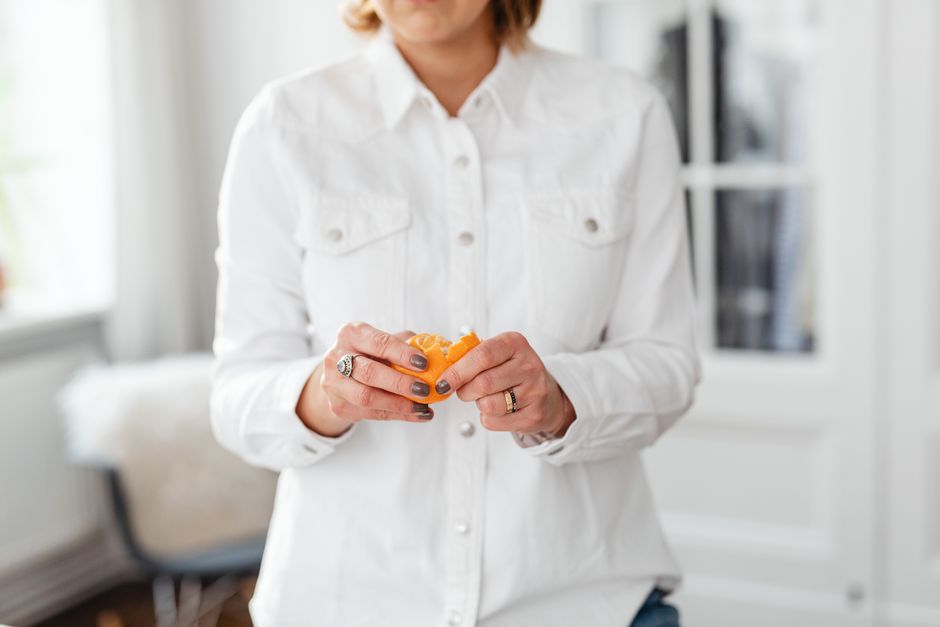
Orange peel powder is exactly what it sounds like: dried orange peels ground into a fine dust. People use it in two main ways — as a topical paste or scrub for skin, and as a rinse or mask for hair and scalp. You mix the powder with water, yogurt, honey, or oil, apply it, leave it on briefly, then rinse thoroughly. That is the short answer. The longer answer involves knowing what orange peel actually contains, what it can realistically do, and where the evidence runs thin.
What Is Orange Peel Powder and What Is In It?
Orange peel is the outer rind of the fruit, and it contains compounds the juicy inside does not. The most studied are flavonoids such as hesperidin, along with limonene — the oil responsible for the citrus smell — plus vitamin C, dietary fiber, and various plant polyphenols.
When the peel is dried and ground, these compounds stay largely intact. That is why the powder shows up in skin and hair routines. It is not a drug. It is a plant material with real chemical components, some of which have been studied in laboratory settings.
Here is the distinction that matters most. Laboratory studies show that certain orange peel extracts have antioxidant and antimicrobial activity in a dish or test tube. That is not the same as proving they treat acne, fade scars, or regrow hair on a human scalp. Biological activity in a lab is a starting point for research, not a finished result. Keep that gap in mind as you read the rest of this article.
How To Use Orange Peel Powder for Skin
For skin, orange peel powder is used as a paste, a scrub, or an added ingredient in a face mask. The general method is simple: combine the powder with a liquid until you get a spreadable paste, apply a thin layer, leave it for a short time, and rinse with lukewarm water.
Common mixing liquids include plain water, yogurt, honey, or a carrier oil like coconut or olive oil. Each changes the texture. Water makes a light paste that dries quickly. Yogurt or honey keeps it moist and easier to spread. Oil makes it heavier and better suited to dry skin.
A few practical points that reduce the chance of irritation:
- Start with a small patch on your inner arm and wait a day before using it on your face.
- Keep the paste on for only a few minutes the first time.
- Rinse gently. Do not scrub hard, especially if you have acne or sensitive skin.
- Use it a few times a week at most, not daily.
- Stop if you get redness, burning, or itching.
Citrus peel contains compounds that can irritate skin, and some people react to limonene specifically. If you have eczema, rosacea, or very sensitive skin, this is not a gentle ingredient. There is no clinical guideline that sets a safe frequency or concentration for homemade orange peel paste, because it has not been studied that way. Treat it as a traditional cosmetic practice, not a treatment.
Does Orange Peel Powder Help With Acne or Dark Spots?
This is where claims get ahead of evidence. Some laboratory research has found that orange peel extracts can inhibit certain bacteria in a petri dish. That has led to popular claims that the powder clears acne. No well-designed human trial has confirmed that applying orange peel powder to the face reduces acne.
For dark spots and uneven tone, the story is similar. Orange peel contains vitamin C, and vitamin C is used in some skincare for its effect on pigmentation. But the amount of vitamin C in a homemade paste, and whether it penetrates skin in a useful way, is not established. Marketing often borrows the reputation of an ingredient without the evidence that the finished product works. Be skeptical of any claim that a kitchen-made paste fades dark spots.
How To Use Orange Peel Powder for Hair
For hair, orange peel powder is typically mixed into a mask or a rinse. People combine it with yogurt, honey, aloe vera gel, or water, apply it to the scalp and hair, leave it for a short time, then rinse thoroughly. Some use it as a final rinse after shampooing.
The stated goals are usually to reduce oil, add shine, or support scalp health. The reasoning is that the peel’s antimicrobial compounds might help with dandruff-causing organisms, and its acidity might smooth the hair cuticle. That reasoning is plausible but largely untested in controlled human studies.
What is more reliable is the mechanical effect. A powder rinse can absorb some surface oil and give hair a temporary feeling of cleanliness. That is a real, if modest, outcome. It is not the same as treating a scalp condition.
If you try it:
- Mix to a thin, pourable consistency for a rinse, or a thicker paste for a mask.
- Apply to the scalp first, then work through the lengths.
- Rinse very thoroughly. Leftover powder can leave grit in the hair.
- Avoid getting it in your eyes.
- Do not use it on broken or irritated scalp skin.





Can Orange Peel Powder Help With Hair Growth?
No clinical evidence currently confirms that orange peel powder promotes hair growth. Hair growth is driven mainly by genetics, hormones, age, and overall health. A topical plant powder is unlikely to change those underlying factors.
Claims that it “stimulates the follicle” or “boosts circulation to regrow hair” are not backed by human trials. Some small studies have looked at citrus-derived compounds and the scalp, but they do not establish that orange peel powder regrows hair. If you are losing hair, the ingredients with real evidence behind them are things like minoxidil and certain prescription options, and those should be discussed with a doctor. A homemade paste is not a substitute.
It is fine to enjoy using orange peel powder for the way it makes your hair feel. It is a different thing to expect it to reverse hair loss. Keep those two ideas separate.
What Are the Risks and Who Should Avoid It?
Orange peel powder is not risk-free just because it comes from fruit. The main concerns are skin irritation and allergic reaction. Citrus peel contains limonene and other compounds that can cause contact dermatitis in some people — a red, itchy, sometimes blistering reaction where the skin touched the material.
There is also a sunlight issue. Citrus peel contains compounds called furanocoumarins, which can make skin more sensitive to ultraviolet light. This is the same family of compounds behind “margarita burn,” a phototoxic reaction that happens when citrus juice on the skin is exposed to sun. Applying orange peel paste and then going into strong sunlight could, in principle, cause a reaction. Rinse it off fully and avoid sun exposure on treated skin.
People who should be especially cautious:
- Anyone with eczema, rosacea, or easily irritated skin.
- People with known citrus allergies.
- Anyone using prescription retinoids, acids, or other active skincare, which can increase irritation when combined.
If you have a skin or scalp condition you are trying to treat, see a doctor or dermatologist rather than experimenting with a paste. Self-treating a real condition can delay proper care.
Does Orange Peel Powder Actually Work?
The honest position is that orange peel powder is a reasonable cosmetic ingredient with limited scientific support for most of the claims made about it. It has real antioxidant and antimicrobial compounds, confirmed in laboratory work. What is missing is strong human evidence that it treats acne, fades dark spots, or grows hair.
That does not make it useless. Many people use it and like how it feels. A powder rinse can absorb surface oil. A paste can act as a gentle physical exfoliant. These are modest, real effects. The mistake is expecting more than that.
If you enjoy it and your skin tolerates it, using it a few times a week as part of a normal routine is a personal choice. If you are hoping it will fix a medical problem, the evidence does not support that hope, and a doctor is the better path.
Frequently Asked Questions
Can I use orange peel powder every day?
It is generally better to use it a few times a week rather than daily, because citrus peel can irritate skin with repeated use. There is no clinical guideline for a safe frequency, so start slow and watch for reactions.
Does orange peel powder really help with acne?
No well-designed human study has confirmed that it clears acne. Laboratory research shows some orange peel extracts have antibacterial activity, but that does not prove it works on human skin.
Is orange peel powder safe for hair?
It is generally considered low-risk for most people when rinsed out thoroughly, but it can irritate the scalp in some users. Avoid it if you have a broken, inflamed, or sensitive scalp.
Can orange peel powder make my hair grow?
No clinical evidence currently confirms that orange peel powder promotes hair growth. Hair growth is driven mainly by genetics, hormones, and overall health, not topical plant powders.
