
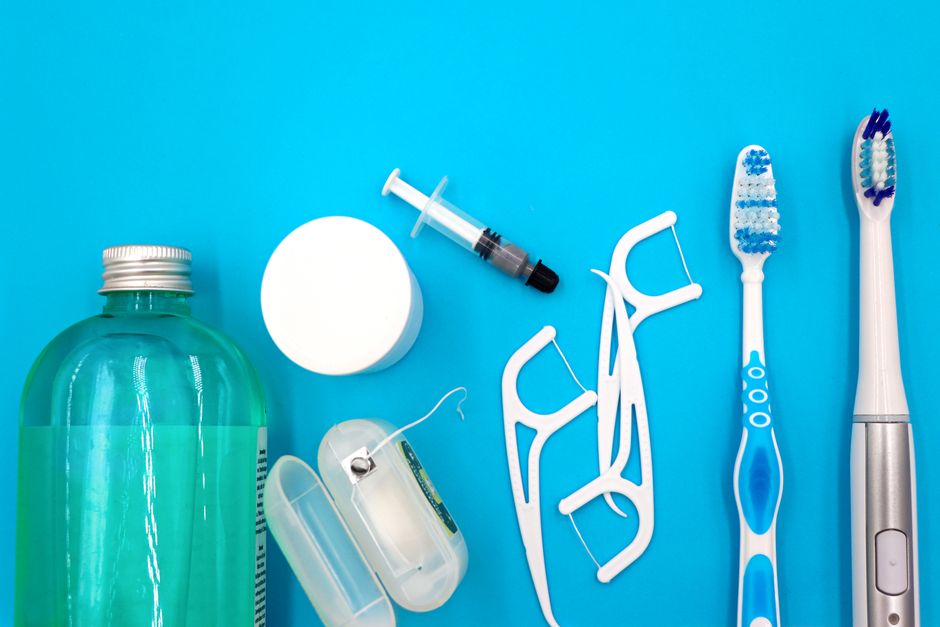
Mouthwash works best when you use it at the right time, in the right amount, and don’t eat or drink right after. The basic steps: brush and floss first, measure the dose on the cap (usually 20 mL for adults), swish for 30 to 60 seconds without swallowing, spit it out, and wait at least 30 minutes before eating or drinking. Most adults should use mouthwash once or twice a day, and it should never replace brushing and flossing.
How To Use Mouthwash Step By Step
Start with brushing and flossing. Mouthwash is an add-on, not a substitute. If you rinse first, you wash away the fluoride from your toothpaste before it has time to do its job.
Here is the sequence that makes sense:
- Brush for two minutes with fluoride toothpaste.
- Floss or use an interdental brush to clean between teeth.
- Measure the mouthwash into the cap. Most adult products list 20 mL on the label. Follow the bottle, not a generic rule.
- Swish for 30 to 60 seconds. Some products specify 30 seconds, others 60. Use the time on the label.
- Spit the mouthwash into the sink. Do not swallow it.
- Wait at least 30 minutes before eating or drinking. Water is fine sooner if you need it, but it will rinse away the active ingredients.
That 30-minute window matters more than most people realize. Fluoride needs contact time with enamel. Antibacterial agents need contact time with gum tissue. Rinsing with water or sipping coffee right after shortens that window.
Should You Use Mouthwash Before or After Brushing?
After brushing is the standard recommendation. The reason is fluoride. Toothpaste delivers a concentrated dose of fluoride to your teeth. If you rinse with mouthwash immediately after brushing, you may dilute or wash away some of that fluoride before it has fully bound to enamel.
Some dentists suggest waiting 30 minutes after brushing before using mouthwash, especially if the mouthwash contains alcohol or strong antibacterial agents. Others say using it right after brushing is fine as long as you don’t rinse with water afterward. The evidence here is not strong enough to call one approach clearly better than the other.
What is clear: mouthwash used instead of brushing does not prevent cavities or gum disease. It is a supplement.
How Much Mouthwash Should You Use?
Use the amount listed on the product label. For most adult mouthwashes, that is 20 mL, which is usually marked inside the cap. Pour to the line, not to the top.
Using more than the recommended amount does not make it work better. It increases the chance of irritation, especially if the product contains alcohol or essential oils. Using less than the recommended amount may reduce effectiveness because the active ingredients are diluted.
Children should not use adult mouthwash unless a dentist specifically recommends it. Swallowing mouthwash can cause nausea, and in rare cases, alcohol-containing mouthwash can be dangerous for a small child. Fluoride mouthwash for children, when recommended, comes in a lower concentration and is typically supervised by an adult.




How Long Should You Swish Mouthwash?
Thirty to sixty seconds is the standard range. The label on your bottle will tell you which applies. Most antibacterial mouthwashes specify 30 seconds. Some fluoride rinses recommend 60 seconds.
Swishing longer than directed does not add benefit and may irritate the soft tissues in your mouth. Swishing for only a few seconds does not give the active ingredients enough contact time to work.
If your mouth starts to burn or sting during the swish, spit it out. That is a sign the product is too strong for you or that you have an open sore or irritation that needs attention.
Should You Dilute Mouthwash With Water?
No, unless the label says to. Most mouthwashes are formulated to work at full strength. Adding water reduces the concentration of active ingredients and can make the product less effective.
The exception is some concentrated products that specifically instruct you to dilute them. If the bottle says to mix with water, follow that instruction exactly.
If full-strength mouthwash burns or stings, switch to an alcohol-free formula rather than diluting. Alcohol-free mouthwashes are widely available and are generally recommended for people with dry mouth, sensitive gums, or a history of mouth sores.
Does Mouthwash Actually Help Your Teeth and Gums?
It depends on what is in the bottle and what you are trying to address.
Fluoride mouthwash has good evidence for reducing cavities, especially in people at higher risk of tooth decay. It adds fluoride to the enamel surface, which helps prevent mineral loss.
Antibacterial mouthwash containing chlorhexidine is effective for treating gingivitis and is often prescribed after dental surgery. But it is not meant for long-term daily use because it can stain teeth and alter taste. Dentists typically prescribe it for a set period.
Essential oil mouthwashes (those containing ingredients like eucalyptol, menthol, and thymol) have some evidence for reducing plaque and gingivitis when used alongside brushing and flossing. The effect is modest compared to prescription chlorhexidine.
Cosmetic mouthwashes that only freshen breath do not treat cavities or gum disease. They mask odor temporarily. If your breath is consistently bad, the cause is usually bacteria in the mouth, gum disease, dry mouth, or a digestive issue. Mouthwash covers the symptom, not the cause.
No mouthwash on the market replaces the mechanical removal of plaque that brushing and flossing provide.
What Are the Risks of Using Mouthwash?
For most healthy adults, using mouthwash as directed is low risk. Side effects that do occur are usually mild and temporary.
- Burning or stinging — more common with alcohol-based products.
- Dry mouth — alcohol can reduce saliva flow over time.
- Tooth staining — mainly associated with chlorhexidine.
- Altered taste — also mainly with chlorhexidine, usually temporary.
- Mouth sores — some people react to certain ingredients.
Alcohol-containing mouthwash has been discussed as a possible risk factor for oral cancer, but the evidence is not consistent. Some studies suggest a link in people who also smoke or drink heavily. Other studies find no clear connection. The research is mixed, and no major health organization currently classifies alcohol mouthwash as a proven carcinogen.
If you are concerned, alcohol-free options are widely available and work just as well for most purposes.
Who Should Be Careful With Mouthwash?
Children under 6 should not use mouthwash unless a dentist recommends it. They are more likely to swallow it, and swallowing fluoride mouthwash regularly can lead to a condition called dental fluorosis in developing teeth.
People with dry mouth, sensitive gums, or a history of mouth ulcers may want to avoid alcohol-based products. Alcohol-free versions are gentler.
Anyone recovering from dental surgery, gum treatment, or a mouth injury should follow their dentist’s specific instructions. Some procedures require a prescription rinse; others require avoiding mouthwash entirely for a period.
People with an allergy to any ingredient should read labels carefully. Essential oils, artificial sweeteners, and preservatives are common triggers.
Can Mouthwash Replace Brushing or Flossing?
No. Mouthwash cannot remove plaque the way brushing and flossing do. Plaque is a sticky film that adheres to teeth and gum lines. A rinse can reach some surfaces, but it cannot break up the film or remove food particles lodged between teeth.
The American Dental Association recommends brushing twice a day and flossing once a day. Mouthwash is listed as an adjunct, not a replacement. If you only have time for one thing, brush. If you have time for two, brush and floss. Mouthwash comes after.
Frequently Asked Questions
How long should I swish mouthwash?
Swish for 30 to 60 seconds, depending on what the label says. Most antibacterial rinses specify 30 seconds; some fluoride rinses recommend 60.
Should I use mouthwash before or after brushing?
After brushing is the standard recommendation because it preserves the fluoride from your toothpaste. Some dentists suggest waiting 30 minutes after brushing before rinsing.
Can I use mouthwash every day?
Yes, most adults can use mouthwash once or twice daily as directed. Prescription rinses like chlorhexidine are usually for short-term use only.
Is it safe to swallow mouthwash?
No. Swallowing mouthwash can cause nausea and, in children, fluoride toxicity. Spit it out every time.
