
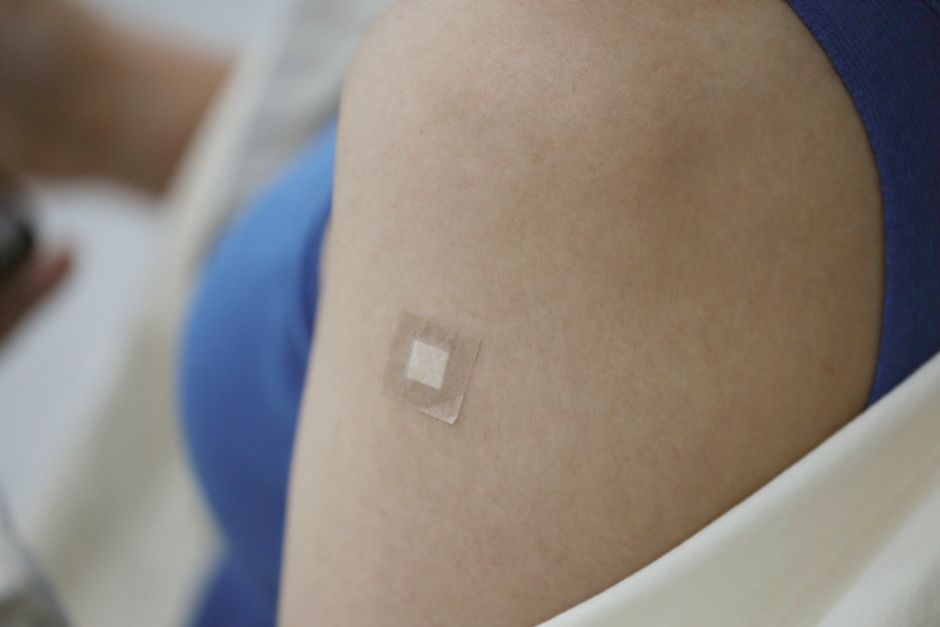
Moleskin is a soft, cotton flannel fabric with a pressure-sensitive adhesive backing. It works by creating a low-friction barrier between your skin and your shoe, which reduces the repeated rubbing that causes blisters. You cut a piece slightly larger than the hot spot, round the edges, and apply it directly to clean, dry skin before friction begins.
That is the short answer. The details matter more than most people realize — where you place it, when you apply it, and what you do once a blister has already formed all change how well it works.
What Is Moleskin and How Does It Prevent Blisters?
Moleskin is a thick, felt-like cotton fabric with an adhesive back. It was originally used in medicine for padding and wound care, and it has been sold in drugstores as foot protection for decades.
Friction blisters form through a specific sequence. When your skin rubs against a shoe or sock repeatedly, the outer layer of skin (the stratum corneum) separates from the layers beneath it. Fluid fills that space. The result is a blister.
Moleskin interrupts this sequence. The adhesive side sticks to your skin, and the fabric side faces your shoe. Instead of skin rubbing against shoe lining, the fabric takes the friction. The shear force that would have torn your skin apart gets absorbed by the moleskin instead.
This is a mechanical solution, not a chemical one. There is no medication involved. The fabric is simply tougher than your skin’s surface and sacrifices itself to protect the layer underneath.
One detail people often miss: moleskin works best applied before any redness or tenderness appears. Once you feel a hot spot, you have already started the separation process. Applying moleskin at that point can still help, but you are playing catch-up.
How To Use Moleskin To Prevent And Treat Blisters?
Prevention and treatment require different approaches. Getting this wrong is the most common reason moleskin fails.
For Prevention (Before a Blister Forms)
- Clean and dry the area completely. Adhesive does not stick to sweat or lotion.
- Cut a piece of moleskin that extends at least a half-inch beyond the area you want to protect.
- Round the corners with scissors. Square corners catch on socks and peel up.
- Apply it directly to your skin, adhesive side down. Press firmly for several seconds.
- Consider cutting a donut shape — a ring with a hole in the center — if you already have a tender spot. The hole relieves direct pressure while the ring cushions the surrounding skin.
For Treatment (After a Blister Has Formed)
If the blister is intact, do not drain it. An intact blister is a sterile environment, and the fluid inside cushions the damaged tissue underneath.
Place a donut-shaped piece of moleskin around the blister so the blister sits in the hole. This keeps pressure off the blister itself while the moleskin absorbs friction from the surrounding area. Cover the whole thing with a bandage or athletic tape if needed to hold it in place.
If the blister has already torn or drained, treat it like an open wound. Clean it gently with water, apply an antibiotic ointment if you have one, and cover it with a sterile bandage. Moleskin can go over the bandage, but never directly on broken skin.
Do not apply moleskin directly to a ruptured blister. The adhesive can irritate open tissue and make the wound worse.
Where Should You Place Moleskin for Blister Prevention?
Blisters form where your foot moves inside your shoe. The most common spots are the heel, the toes, the ball of the foot, and the arch. But the exact location depends on your foot shape and your footwear.
The best approach is to think about where you have had blisters before. If your left heel rubs in a particular pair of boots, that is where moleskin goes. If you are breaking in new shoes, apply moleskin to every spot that feels tight or loose before you wear them.
Some people apply moleskin to the shoe itself rather than the foot. This can work, but it is less reliable. Moleskin adheres better to skin than to the inside of a shoe, and shoe liners vary in texture. Skin application is the standard approach.
A useful rule: if you can feel your shoe rubbing against a specific spot when you walk, that spot needs protection. Do not wait for redness.

What Are the Limitations of Moleskin?
Moleskin is not a perfect solution. It has real limits, and knowing them helps you decide when to use something else.
First, moleskin loses adhesion when wet. Sweat, rain, and puddles all break down the adhesive. If you are hiking in wet conditions or your feet sweat heavily, moleskin may peel off within an hour. Some people carry extra pieces and reapply as needed.
Second, moleskin adds bulk. In tight shoes, a piece of moleskin can actually increase pressure and create a new friction point. If your shoes fit snugly, a thinner product may work better.
Third, moleskin does not work well on already-damaged skin. If the blister has opened, the adhesive can cause further irritation. In that case, a non-adhesive dressing held in place with tape is a better choice.
Finally, moleskin is not a substitute for properly fitting shoes. If your shoes are too small, too large, or the wrong shape for your foot, no amount of moleskin will fully solve the problem. It buys time, but it does not fix the underlying cause.
How Does Moleskin Compare to Other Blister Prevention Methods?
Several products compete with moleskin for the same job. Each has trade-offs.
| Method | How It Works | Best For | Limitations |
|---|---|---|---|
| Moleskin | Adhesive fabric barrier | Dry conditions, known hot spots | Loses adhesion when wet; adds bulk |
| Blister bandages (hydrocolloid) | Gel-like cushion that seals over skin | Existing blisters, moist environments | Can be expensive; not ideal for prevention |
| Anti-chafing balms | Reduces friction with lubricating layer | Large areas, toes, between thighs | Needs reapplication; can stain socks |
| Two-layer socks | Inner layer moves with foot, outer with shoe | Hiking, long distances | Cost; not helpful in tight shoes |
| Powder | Absorbs moisture, reduces friction | Mild sweating | Can clump; less effective in heavy sweat |
For most people, moleskin is a solid first choice for prevention in dry conditions. Hydrocolloid bandages are often better once a blister has formed because they seal the area and provide cushioning without adhesive directly on damaged skin.
Some hikers use a combination: moleskin on known hot spots, balm on broader areas, and two-layer socks for long distances. There is no single best method. It depends on your feet, your shoes, and the conditions.
When Should You See a Doctor for a Blister?
Most friction blisters heal on their own within a few days to a week. You can manage them at home with basic care.
See a doctor if you notice signs of infection: increasing redness, warmth, swelling, pus, or a red streak spreading from the blister. Fever or chills are also warning signs.
People with diabetes, poor circulation, or weakened immune systems should be more cautious. A minor blister can become a serious problem in these groups. Check your feet daily if you have diabetes, and contact your doctor if a blister does not heal or looks worse after a few days.
Also seek medical attention if the blister is unusually large, extremely painful, or keeps coming back in the same spot despite protection. Recurring blisters often mean a footwear problem that needs professional evaluation.
Frequently Asked Questions
Can you leave moleskin on overnight?
Yes, moleskin can stay on overnight if it is still adhering well. Remove it in the morning and let your skin breathe. If the adhesive has broken down or the edges are peeling, replace it.
Should you pop a blister before applying moleskin?
No. Keep the blister intact if possible, because the fluid inside protects the tissue underneath. Apply a donut-shaped piece of moleskin around the blister so it sits in the hole without direct pressure.
How long does moleskin stay on your foot?
It depends on sweat, moisture, and activity level. In dry conditions, moleskin can stay in place for a full day. In wet or sweaty conditions, it may peel within an hour or two.
Is moleskin better than a bandage for blisters?
For prevention, moleskin is generally better because it is thicker and absorbs more friction. For an open or draining blister, a hydrocolloid bandage or sterile dressing is usually a better choice because it does not put adhesive on damaged skin.
