
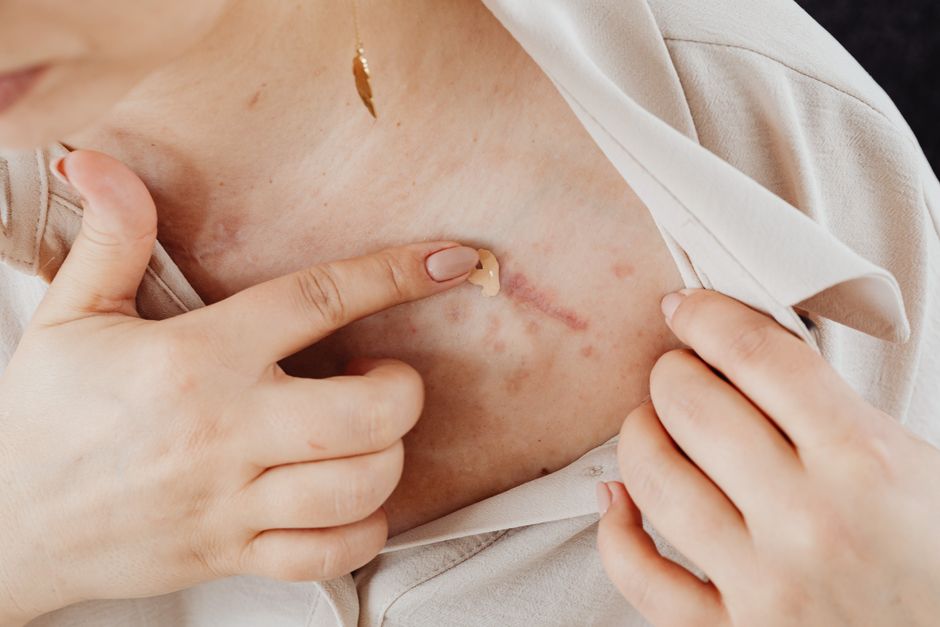
Liquid latex is a rubber compound sold for making masks, costumes, and special effects makeup. It is not a wound care product. There is no step-by-step method for using it on cuts, scrapes, or surgical incisions because it was never designed, tested, or approved for that purpose. Putting it on broken skin can trap bacteria, cause an allergic reaction, and delay healing.
If you searched this phrase because you saw it online, the honest answer is that the premise itself is wrong. What follows explains what liquid latex actually is, why it does not belong on a wound, and what to use instead.
What Is Liquid Latex Actually Made For?
Liquid latex is a milky fluid made from natural rubber. When it dries, it forms a thin, stretchy film. That film is the whole point. It lets makeup artists build fake skin, scars, and prosthetics that move with the actor’s face.
It is sold in costume shops and craft stores. It is not sold in pharmacies as a dressing. That distinction matters more than most people realize. Products intended for wounds go through a regulatory review for safety and sterility. Liquid latex does not.
Natural rubber latex also contains proteins that trigger allergic reactions in some people. Reactions can range from mild itching and redness to swelling and, in rare cases, a serious systemic response. Someone with a known latex allergy should not use it at all, on skin or anywhere else.
The ammonia used to keep liquid latex stable is another issue. It gives the product its sharp smell and can irritate skin that is already damaged.
Why Liquid Latex Should Never Go On A Wound
A wound needs three things to heal: a clean surface, a moist environment, and protection from contamination. Liquid latex fails on all three.
When you brush it over a cut, you seal the surface. Any bacteria already on the skin or in the wound get trapped underneath. That is the opposite of what a dressing should do. A good dressing lets the wound breathe and keeps contaminants out. Latex does neither.
The film also sticks to the wound bed as it cures. Peeling it off later can tear away new tissue that has started to form. That reopens the injury and restarts the healing clock.
There is a deeper problem too. Wounds heal from the inside out. New tissue forms beneath the surface while the top layer closes over it. A tight, non-breathable film disrupts that process. It can also hide early signs of infection, like spreading redness or pus, because you cannot see through it.
No clinical guideline recommends liquid latex for wound care. Not for small cuts, not for burns, not for surgical incisions, not for anything. If you find a tutorial claiming otherwise, it is describing a technique that has no place in medicine.
How To Use Liquid Latex For Wounds Step By Step — The Real Answer
There is no safe step-by-step method, because the first step would be applying an industrial rubber product to broken skin. That step is the problem.
What you may have seen online is special effects makeup. Artists use liquid latex to create fake wounds on intact, unbroken skin for film, theater, and Halloween. The latex sits on top of healthy skin. It never touches an actual injury. That is a completely different situation from treating a real cut.
If you are doing effects makeup on intact skin, the standard practice is to test a small patch first, wait, and check for a reaction before covering a larger area. Even then, it should not be used near the eyes, mouth, or on anyone with a latex allergy.
For a real wound, skip the latex entirely. The steps below are what actually works.
Basic wound care that is supported by evidence
- Wash your hands before touching the wound.
- Rinse the wound with clean running water. Mild soap around the edges is fine.
- Remove dirt or debris with clean tweezers if it does not come off with rinsing.
- Apply a thin layer of petroleum jelly or a similar ointment to keep the surface moist.
- Cover with a sterile bandage or gauze.
- Change the dressing daily, or sooner if it gets wet or dirty.
Keeping a wound moist is one of the better-supported practices in wound care. Research has consistently found that a moist environment speeds healing compared with letting a wound dry out and scab. That is why ointment and a proper dressing matter more than any home remedy.





What Are The Risks Of Putting Latex On A Cut?
Infection is the main concern. Sealing bacteria under a film gives them a warm, moist place to multiply. Signs to watch for include increasing pain, spreading redness, warmth, swelling, and pus.
Allergic contact dermatitis is another real risk. It can show up as itching, a rash, or blisters. This can happen even in people who have used latex before without problems. Repeated exposure can make a sensitivity worse over time.
There is also the mechanical damage from removal. Latex bonds to skin and hair. Pulling it off a wound can rip the fragile new tissue underneath and cause bleeding.
For anyone with a known latex allergy, the risk is higher and more serious. Symptoms can include hives, swelling, and difficulty breathing. That is a medical emergency, not a minor skin issue.
When Should You See A Doctor Instead?
Some wounds need professional care, no matter what you put on them at home. Get medical attention if:
- The wound is deep, gaping, or will not stay closed.
- Bleeding does not stop after several minutes of firm pressure.
- You can see muscle, bone, or tendon.
- The wound is on the face, hands, or over a joint.
- It was caused by an animal bite or a dirty or rusty object.
- You have not had a tetanus shot in the last ten years.
- Signs of infection appear, such as spreading redness, pus, or fever.
People with diabetes, poor circulation, or a weakened immune system should be more cautious. Wounds that would heal easily in most people can become serious quickly in these groups. When in doubt, have a clinician look at it.
What Should You Use Instead Of Liquid Latex?
For most minor cuts and scrapes, the supplies you already have at home work well. A sterile bandage, gauze, medical tape, and petroleum jelly cover the basics.
Liquid bandage products are a different thing entirely from liquid latex. These are cyanoacrylate-based skin adhesives made and tested for closing small, clean cuts. They are not the same as craft latex, and they should not be confused with it. Even these have limits. They are not for deep wounds, infected wounds, or bites.
For larger or surgical wounds, clinicians sometimes use medical-grade skin glue or adhesive strips. Those are applied by a professional and chosen based on the type and location of the wound. They are regulated medical products, not craft supplies.
The takeaway is simple. The right tool for a wound is a product designed and tested for wounds. Liquid latex is not one of them, and no amount of step-by-step instruction changes that.
Frequently Asked Questions
Can you put liquid latex on a cut?
No. Liquid latex is a craft and costume product, not a wound care item, and it can trap bacteria and cause allergic reactions. It should never be applied to broken skin.
Is liquid latex the same as liquid bandage?
No. Liquid bandage products are cyanoacrylate-based skin adhesives made for small cuts, while liquid latex is a natural rubber compound used for makeup and effects. They are completely different products with different purposes.
What happens if liquid latex gets into a wound?
It can seal bacteria inside, irritate the skin, and cause an allergic reaction, and removing it may tear new tissue. Wash the area gently with clean water and seek medical advice if you notice spreading redness, swelling, or pus.
What should I use on a small cut instead?
Rinse the cut with clean water, apply a thin layer of petroleum jelly, and cover it with a sterile bandage. Change the dressing daily or whenever it gets wet or dirty.
