
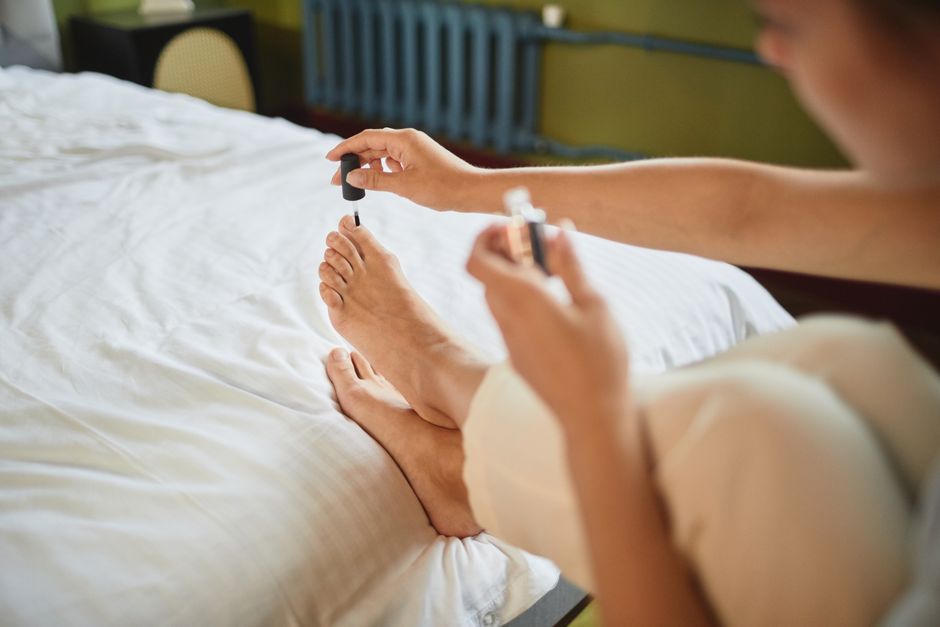
Jublia is a prescription topical solution approved by the U.S. Food and Drug Administration to treat fungal infections of the toenails. You apply it once a day to the affected nail using the bottle’s built-in applicator, and treatment usually continues for 48 weeks. It is not a quick fix, and it does not work for everyone.
What Is Jublia and How Does It Work?
Jublia is the brand name for efinaconazole 10%, a topical antifungal solution. The FDA approved it in 2014 for onychomycosis — the medical term for a fungal nail infection. It is available by prescription only.
Efinoconazole belongs to a class of antifungal drugs called triazoles. These drugs work by interfering with a compound called ergosterol, which fungi need to build their cell membranes. Without intact membranes, the fungal cells cannot grow and eventually die. This is the same basic mechanism used by several other antifungal medicines, but efinaconazole was formulated specifically to penetrate the hard keratin of the toenail.
That penetration matters. The nail plate is dense and difficult for most topical drugs to cross. Efinaconazole was designed with properties that help it move through the nail to reach the fungus growing underneath. Even so, delivery is imperfect, which is one reason cure rates are not high.
Jublia treats the most common cause of toenail fungus — dermatophyte molds, including Trichophyton rubrum. It also has activity against some yeasts and non-dermatophyte molds, though the evidence for those organisms is more limited.
How To Use Jublia For Toenail Fungus Treatment?
Apply Jublia once daily to the affected toenail. The bottle comes with a flow-through applicator that lets you spread the solution directly onto the nail surface without touching it with your fingers.
The steps are straightforward:
- Clean and dry the affected toenail and surrounding skin.
- Remove the cap and tilt the bottle so the solution flows to the applicator tip.
- Press the applicator gently against the nail and spread a thin layer over the entire nail surface, including the edges and the skin just around the nail.
- Let it dry completely. This usually takes a few minutes.
- Wipe the applicator tip clean with a tissue after each use and replace the cap tightly.
Do not rinse, scrub, or cover the nail after applying. Do not apply nail polish or cosmetic products to the treated nail. If you wear socks or shoes, wait until the solution has dried.
Wash your hands after applying, even though the applicator is designed to avoid direct contact. If you miss a dose, apply it as soon as you remember — unless it is almost time for your next dose, in which case skip the missed one. Do not double up.
One detail that is easy to overlook: the solution is flammable. Keep the bottle away from heat and open flames, and do not use it near anyone who is smoking.
How Long Does Jublia Take To Work?
Toenails grow slowly — roughly 1 to 2 millimeters per month — so any treatment that depends on the nail growing out takes time. The standard course of Jublia is 48 weeks. That is not a suggestion; it reflects how long a toenail takes to fully regrow from the base to the tip.
You may notice some improvement in the appearance of the nail within the first few months, but visible clearing of the entire nail often takes much longer. Partial improvement does not mean the infection is gone. Fungi can persist in the nail bed even when the surface looks better.
Stopping early is one of the most common reasons treatment fails. If you stop when the nail looks normal but the fungus is still present underneath, the infection can return. Completing the full course gives the best chance of a lasting result.
It is also worth knowing that a healthy new nail growing in does not guarantee the fungus is gone. Some clinicians recommend confirming cure with a lab test after treatment ends, though this is not universally done.





How Well Does Jublia Actually Work?
The honest answer is that Jublia works for some people and not others, and the cure rates are modest. In the clinical trials that led to its approval, complete cure — meaning the nail looked normal and lab testing found no fungus — occurred in a minority of participants. Many more people saw partial clearing, but partial clearing is not the same as cure.
This is not unique to Jublia. Topical antifungals in general struggle to cure toenail fungus because the drug has to cross a hard, thick nail plate to reach the infection. Oral antifungals tend to have higher cure rates, but they carry a risk of liver effects and drug interactions that require monitoring.
Several factors affect how well Jublia is likely to work for you:
- Severity of infection — mild to moderate infections respond better than severe ones.
- How much of the nail is involved — infections near the tip or edges are easier to treat than those involving the entire nail or the nail matrix.
- Whether the infection has spread to the nail bed or matrix — deeper involvement is harder to reach.
- Consistency of use — daily application without gaps matters.
- Other health conditions — diabetes, poor circulation, and immune suppression can slow healing and complicate treatment.
If Jublia does not work after a reasonable trial, your clinician may consider oral antifungals, a different topical, or other approaches. Combining treatments is sometimes done, though evidence for combination therapy is limited.
What Are the Side Effects and Precautions?
Jublia is generally well tolerated. The most commonly reported side effects in clinical trials were minor and local to the application site — things like ingrown toenails, redness, itching, and irritation around the nail. These were usually mild.
Serious side effects appear to be uncommon, but you should tell your clinician if you notice severe irritation, blistering, or signs of an allergic reaction such as swelling or difficulty breathing.
A few precautions matter:
- Jublia is for external use only. Do not swallow it.
- Keep it away from your eyes, mouth, and other mucous membranes.
- Do not use it on children unless a clinician specifically prescribes it. Safety and effectiveness in children have not been well established.
- Tell your clinician if you are pregnant, planning to become pregnant, or breastfeeding. There is limited information on use during pregnancy and breastfeeding, so this is a decision to make with medical guidance.
- If you have diabetes or poor circulation, nail infections need closer attention because they raise the risk of more serious foot problems.
Jublia has not been studied in combination with nail polish, so avoid polish on treated nails. It has also not been well studied alongside oral antifungals, so do not add other treatments without asking your clinician first.
What Else Helps Toenail Fungus Treatment Work?
Treating the nail is only part of the picture. Fungus thrives in warm, damp environments, and reinfection is common if those conditions persist.
Practical steps that support treatment:
- Keep your feet clean and dry, and dry between your toes after washing.
- Change socks daily, and more often if your feet sweat heavily.
- Choose shoes that breathe and rotate pairs so they dry out between wears.
- Do not share nail clippers, towels, or shoes with others.
- Trim nails straight across and avoid cutting them too short.
- Treat any fungal infection on the skin of your feet, such as athlete’s foot, since it can spread back to the nails.
Some people also use over-the-counter antifungal powders or sprays on their shoes and socks. These may help reduce reinfection, though evidence for their role in nail cure is limited.
If you have diabetes, peripheral artery disease, or a weakened immune system, foot infections deserve prompt medical attention rather than self-treatment.
When Should You Talk to a Clinician?
Toenail fungus can look like other conditions. Psoriasis, trauma, and other nail disorders can produce thickening, discoloration, and separation of the nail that resembles a fungal infection. A clinician can confirm the diagnosis, sometimes with a scraping or clipping sent to a lab.
Talk to a clinician if:
- You are not sure whether you have a fungal infection.
- You have diabetes, circulation problems, or a weakened immune system.
- The nail is painful, or the skin around it is red, swollen, or draining.
- You have used Jublia as directed for several months with no improvement.
- You are pregnant, breastfeeding, or considering treatment for a child.
Getting the diagnosis right matters. Treating the wrong condition wastes time and delays the right care.
Frequently Asked Questions
How often should I apply Jublia?
Apply it once a day to the affected toenail, every day, for the full course your clinician prescribes. Missing doses regularly can lower your chance of clearing the infection.
Can I paint my nails while using Jublia?
No. Nail polish and cosmetic nail products should not be used on treated nails, because they can block the medicine from reaching the nail. Wait until treatment is finished and your clinician confirms the infection is cleared.
How long do I need to use Jublia?
The standard course is 48 weeks, which matches how long a toenail takes to regrow. Stopping early is a common reason the infection comes back.
Does Jublia cure toenail fungus in everyone?
No. Complete cure rates in clinical trials were modest, and many people see only partial improvement. If it does not work for you, other treatments may be options to discuss with your clinician.
