
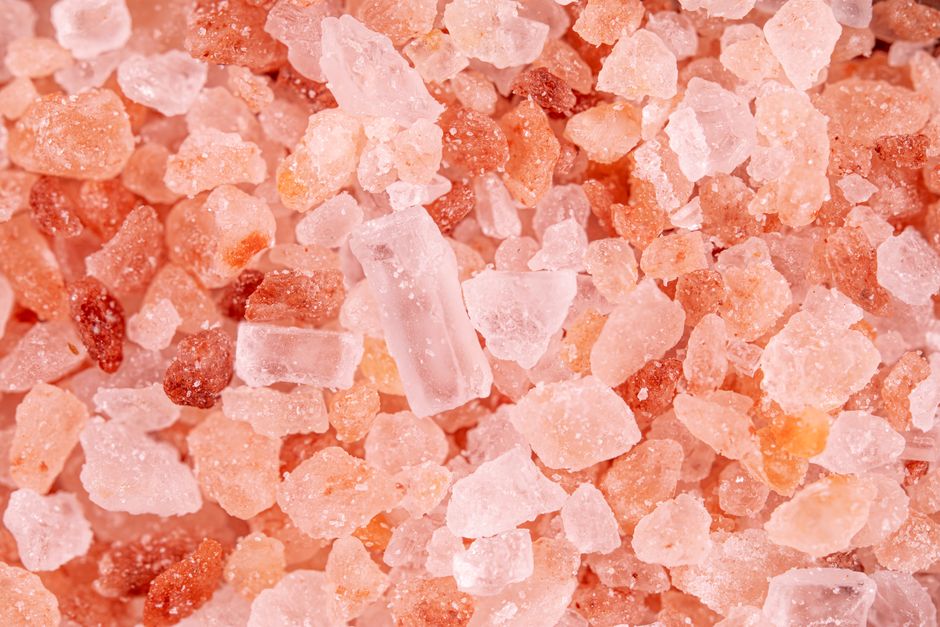
Himalayan salt is a pink rock salt mined mainly in Pakistan. People use it the same way they use any salt: to season food, and sometimes in salt lamps, bath soaks, or drinking water. The most honest expert tip is this — treat it as salt, not as a supplement. Its trace minerals are real but present in tiny amounts, and your body gets far more of those minerals from food.
If you want to use it, the practical approach is simple. Use it for flavor and texture where you enjoy it. Keep total sodium within healthy limits regardless of which salt you choose. And skip the viral claims about detoxing, hydration, or curing disease, because none of them hold up.
What Is Himalayan Salt and How Is It Different From Table Salt?
Both are almost entirely sodium chloride. Himalayan salt is roughly 98% sodium chloride, and table salt is close to 99% or higher. The difference that gets marketed — dozens of trace minerals — amounts to a very small fraction of the total weight.
Those trace minerals include iron oxide, which is what gives the salt its pink color. They also include small amounts of calcium, magnesium, and potassium. The amounts are so small that they have no meaningful nutritional effect. You would have to eat an unreasonable and unsafe amount of salt to get a useful dose of magnesium from it.
Table salt is often iodized, meaning iodine is added. That matters. Iodine is essential for thyroid function, and iodine deficiency remains a public health concern worldwide. Himalayan salt is not a reliable iodine source. If you switch entirely to Himalayan salt and drop iodized salt, you may reduce your iodine intake. That is a real consideration, not a marketing talking point.
There is one non-obvious point worth knowing. The texture and crystal size of Himalayan salt change how it tastes and how it dissolves. Coarse crystals dissolve slowly and give a burst of saltiness on the tongue. That is a culinary difference, not a health difference.
How To Use Himalayan Salt in Cooking and Everyday Eating
Use it exactly as you would any coarse salt. The crystal size is the main practical variable. Fine Himalayan salt measures and dissolves like table salt. Coarse crystals take up more volume for the same weight, so a spoon of coarse salt contains less sodium than a spoon of fine salt.
That volume difference trips people up. If a recipe calls for a teaspoon of fine salt and you swap in coarse crystals, you are adding less salt than intended. Taste as you go rather than assuming the swap is one-to-one.
- Finishing salt: Sprinkle coarse crystals on finished dishes for texture and a salty hit.
- Cooking salt: Use fine Himalayan salt when you want even distribution in doughs, sauces, or marinades.
- Salt blocks and plates: These are used for chilling or searing food. They do impart some salt, but the amount is hard to control, so they are a novelty more than a precise cooking tool.
- Grinders: Coarse crystals work well in a mill. Grind over food just before eating.
None of this makes the salt healthier than another salt. It is about matching the form of salt to the job.
Does Himalayan Salt Have Health Benefits?
No clinical evidence confirms that Himalayan salt provides health benefits beyond what ordinary salt provides. That is the honest position. The trace mineral content is too low to matter nutritionally, and no large human trials have shown that swapping salts improves health outcomes.
Some claims suggest Himalayan salt supports hydration or electrolyte balance. Sodium is indeed an electrolyte, and your body needs it. But you get sodium from any salt. The pink color and mineral content do not add a hydration benefit.
Other claims involve detoxification, improving sleep, or balancing body pH. The body regulates its own pH tightly through the kidneys and lungs. Food does not meaningfully shift blood pH. There is no established mechanism by which a salt lamp or a pinch of pink salt detoxifies anything.
Where the evidence is genuinely mixed is in the broader question of salt and health. Research consistently shows that very high sodium intake raises blood pressure in many people. But the picture at lower intakes is debated, and some studies have raised questions about very low sodium levels too. That debate is about sodium overall, not about which crystal it came from.
How Much Himalayan Salt Is Safe to Eat?
The sodium guidance is the same whether the salt is pink, white, or sea salt. Major health authorities generally recommend keeping sodium intake below about 2,300 mg per day for most adults, which is roughly one teaspoon of table salt. Many guidelines suggest aiming lower, closer to 1,500 mg, especially for people with high blood pressure.
Himalayan salt is not lower in sodium than regular salt, so it does not let you eat more salt safely. This is where marketing can mislead. A product being “natural” or “mineral-rich” does not change its sodium content.
Some people have medical reasons to be far more careful with salt, including those with high blood pressure, heart failure, or kidney disease. If that applies to you, the amount of salt you use is a conversation to have with your clinician, not something to gauge from a label.
There are no clinical guidelines for using Himalayan salt as a supplement, because it is not one. No reliable dosing data exists for treating any condition with it.
What About Salt Lamps, Bath Salts, and Sole Water?
These are popular uses, and each deserves a straight answer. Salt lamps are marketed as air purifiers and mood boosters. No clinical evidence confirms that a salt lamp cleans air or improves health. The amount of negative ion output, if any, is negligible in a normal room.
Himalayan bath salts are used for soaking. Warm baths can feel relaxing, and that effect is real enough as a comfort measure. But there is no strong evidence that the minerals in bath salt absorb through skin in meaningful amounts. The relaxation likely comes from the warm water and the ritual, not the salt.
Sole water is a concentrated saltwater made by dissolving Himalayan salt in water, sometimes sipped in small amounts. This is essentially drinking very salty water. It adds sodium with no proven benefit, and it can be risky for people who need to limit sodium. No clinical guidelines support drinking concentrated saltwater for health.
Is Himalayan Salt Worth the Cost?
It costs more than table salt, and the premium buys flavor preference and appearance, not health. If you enjoy the taste and texture, that is a legitimate reason to buy it. Food you enjoy eating is part of a healthy relationship with food.
If your main goal is nutrition, the money is better spent elsewhere. Iodized table salt is inexpensive and provides iodine, which Himalayan salt does not reliably supply. Many households do well using both: iodized salt for everyday cooking and a coarse pink salt for finishing dishes where you want the texture.
One practical note on buying. Himalayan salt is a natural product, and natural products vary. Color and crystal size differ between batches. That is normal and not a sign of quality or purity either way.
Frequently Asked Questions
Is Himalayan salt healthier than regular salt?
No. Both are almost entirely sodium chloride, and the trace minerals in Himalayan salt are too low to provide health benefits. Iodized table salt actually supplies iodine, which Himalayan salt does not reliably provide.
Can I use Himalayan salt every day?
Yes, within the same sodium limits that apply to any salt, generally under about 2,300 mg of sodium per day for most adults. The type of salt does not change the sodium guidance.
Does Himalayan salt have iodine?
It contains very little iodine and is not a reliable iodine source. If you rely on it exclusively and drop iodized salt, your iodine intake may drop.
Is drinking Himalayan salt water safe?
Drinking concentrated saltwater adds sodium with no proven benefit and can be risky for people who need to limit sodium. No clinical guidelines support it as a health practice.
