
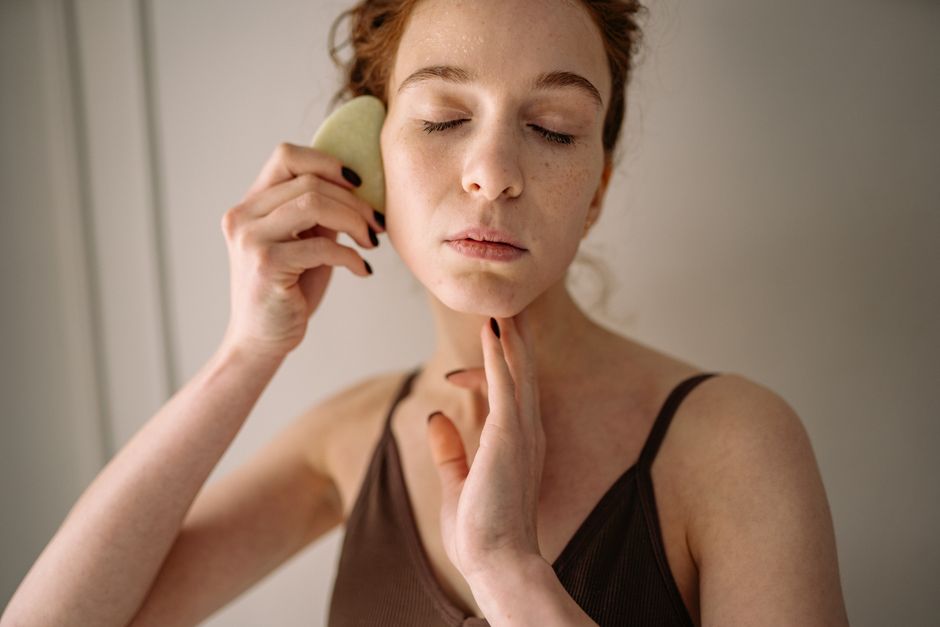
Glycerin is a humectant. That means it pulls water toward itself, and when you put it on your skin, it helps your outer layer hold onto moisture. To use it safely at night, apply a thin layer to clean, slightly damp skin, then seal it with a moisturizer or facial oil so it doesn’t draw water back out of your skin in dry air. It suits most skin types, but it is not a treatment for acne, rosacea, or aging, and pure glycerin should be diluted before it touches your face.
What Does Glycerin Actually Do to Your Skin?
Glycerin is one of the most studied and least dramatic ingredients in skin care. It is a small molecule that occurs naturally in human skin and is classified as a humectant. Humectants attract and hold water. When applied to the skin surface, glycerin draws water from the deeper layers of the skin and from the surrounding air into the outermost layer, the stratum corneum.
That outer layer works best when it contains enough water to stay flexible and intact. When it dries out, it cracks, flakes, and lets irritants through more easily. Glycerin helps keep that barrier functioning. Research published in the British Journal of Dermatology found that glycerin supports the skin’s barrier and helps it retain water, which is a well-established function rather than a marketing claim.
What glycerin does not do is exfoliate, fight bacteria, fade dark spots, or stimulate collagen. It is a support ingredient, not an active treatment. That matters for setting expectations. If your goal is softer, less tight-feeling skin, glycerin can help. If your goal is clearing acne or reversing sun damage, glycerin is not the tool for that job.
How To Use Glycerin On Your Face At Night Safely
The safest way to use glycerin overnight is to dilute it and apply it to damp skin before your moisturizer, not instead of it. Pure glycerin straight from the bottle is thick, sticky, and can irritate skin when undiluted. Most drugstore glycerin is sold as a concentrated liquid, so a little goes a long way.
A practical routine looks like this:
- Wash your face with a gentle cleanser and pat it so it stays slightly damp.
- If you are using a diluted glycerin mix, apply a few drops and press it in gently. Skip this step if your moisturizer already lists glycerin near the top of the ingredients.
- Follow immediately with a moisturizer or a few drops of facial oil to seal the water in.
- Apply any prescription treatments in the order your clinician instructed, since some actives work better on bare skin.
The damp-skin step is not a small detail. Glycerin needs water to work with. Applied to completely dry skin in a dry room, it can pull moisture from your skin instead of adding to it. Sealing it with an occlusive layer — something that blocks water loss, like petrolatum, shea butter, or squalane — prevents that from happening.
If you want to dilute glycerin yourself, a common approach is mixing one part glycerin with three to four parts water or rose water in a clean bottle. This is a common practice rather than a formal guideline, so treat it as a starting point, not a rule. Keep homemade mixes in the refrigerator and make small batches, because water-based mixtures without preservatives can grow bacteria.
Can Glycerin Cause Breakouts or Irritation?
Glycerin is generally well tolerated and has a low irritation potential. It is not comedogenic in most formulations, meaning it does not typically clog pores. For the majority of people, it is one of the gentler ingredients available.
Problems usually come from what glycerin is mixed with, not the glycerin itself. A glycerin product that also contains fragrance, alcohol, or heavy oils may cause irritation or breakouts in sensitive or acne-prone skin. If you react, check the full ingredient list before blaming glycerin.
There is one honest caveat. Very high concentrations of glycerin, especially in dry climates, can cause stinging or a pulling sensation. Some people with sensitive skin notice this. If it happens, dilute further or switch to a moisturizer that contains glycerin as one of several ingredients rather than applying it as a standalone layer.
Anyone with a known allergy to glycerin — which is uncommon but real — should avoid it. If you have a skin condition like eczema or rosacea, patch test any new product on your inner forearm for a couple of nights before using it on your face.
Is Glycerin Better Than Hyaluronic Acid?
Both are humectants, and both help skin hold water. The comparison is less about which is “better” and more about how they behave. The evidence does not support a clear winner for all skin types.
| Feature | Glycerin | Hyaluronic Acid |
|---|---|---|
| Type | Small-molecule humectant | Large-molecule humectant |
| Cost | Very low | Higher |
| Texture | Thick, sticky when concentrated | Light, slippery |
| Water-binding | Strong, well documented | Strong, well documented |
| Irritation risk | Low | Low |
| Evidence base | Extensive | Extensive |
Glycerin has a longer track record in dermatology and appears in more moisturizers than almost any other ingredient. Hyaluronic acid feels lighter and is often marketed more heavily, but both draw water into the skin. Many well-formulated moisturizers combine them. You do not need both as separate steps.
What Should You Avoid When Using Glycerin?
Do not apply undiluted glycerin to your whole face and leave it there overnight. It is too concentrated, feels uncomfortable, and in dry air can work against you. A small amount blended into a moisturizer is enough.
Do not skip the sealing step. Glycerin applied alone on a dry night, especially in winter or in air-conditioned rooms, can leave skin feeling tighter rather than softer. Always follow with something that holds the water in.
Do not assume glycerin replaces treatment for a skin condition. If you have persistent acne, eczema flares, or a rash that is not improving, glycerin will not resolve it. See a clinician for those concerns.
Do not buy a glycerin product just because the label says “hydrating.” Read the full ingredient list. Glycerin is often the third or fourth ingredient in a good moisturizer, which is exactly where it should be.
Who Should Be Careful With Glycerin?
Most people can use glycerin without issue. A few groups should be more cautious.
People with very dry, cracked, or broken skin may feel stinging from concentrated glycerin. Dilute it or use a moisturizer that contains it instead. Those with sensitive skin should patch test first. Anyone with a diagnosed glycerin allergy should avoid it entirely.
There are no established clinical guidelines for using topical glycerin during pregnancy or breastfeeding specifically, though it is widely used in cosmetic products and is generally considered low risk in that context. If you are pregnant or breastfeeding and unsure, ask your clinician before adding a new product.
For children and infants, no specific clinical guidelines exist for topical glycerin use on the face. Gentle, fragrance-free moisturizers that contain glycerin are commonly used in pediatric skin care, but check with a pediatric clinician for any concern.
Frequently Asked Questions
Can I leave glycerin on my face overnight?
Yes, diluted glycerin can be left on overnight when sealed with a moisturizer. Undiluted glycerin should not be left on the whole face.
Should I apply glycerin to wet or dry skin?
Apply it to slightly damp skin. Glycerin needs water to work, and damp skin helps it hold moisture rather than pull it away.
Can glycerin cause acne?
Glycerin itself is not typically comedogenic. Breakouts are more often caused by other ingredients in the product, such as heavy oils or fragrance.
How do I dilute glycerin for my face?
A common approach is one part glycerin to three or four parts water. This is a common practice, not a formal guideline, so start with a small batch and patch test first.
