
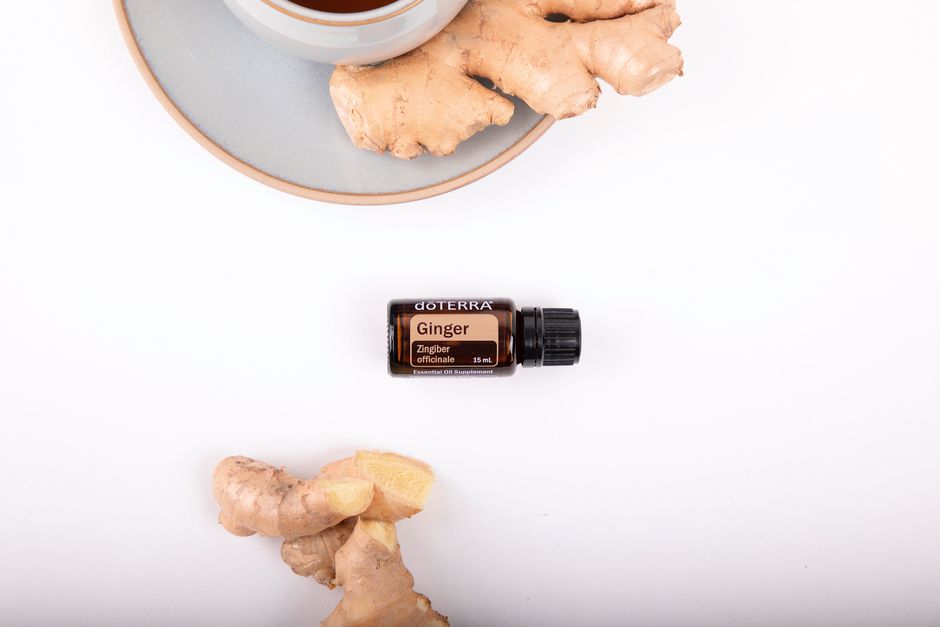
Ginger has a long history in cooking and traditional medicine, and ginger essential oil is a concentrated extract made from the root. It is often promoted online as a weight loss aid. The short answer is that no clinical guidelines recommend ginger essential oil for weight loss, and no human trials have shown that using it — in any form — produces meaningful weight loss. What research does show is that ginger itself, taken orally, has been studied for effects on appetite and metabolism, with modest and inconsistent results. Using the essential oil is a different matter entirely, and the evidence for it is far thinner.
What Is Ginger Essential Oil and How Is It Made?
Ginger essential oil is a volatile oil extracted from the rhizome of the ginger plant, Zingiber officinale. It is produced mainly through steam distillation, which separates the aromatic compounds from the plant material.
The oil contains concentrated volatile compounds, including gingerols, shogaols, and zingiberene. These are the same families of compounds that give fresh ginger its smell and taste, but in a far more concentrated form. A single drop of essential oil can contain aromatic compounds equivalent to a much larger amount of raw ginger.
That concentration matters. It cuts both ways. It means the oil is potent in aroma and flavor, but it also means the potential for irritation or adverse effects is higher than with the whole root. Essential oils are not dilute versions of the plant. They are chemical concentrates.
Ginger essential oil is most often used for its scent, in diffusers or diluted for topical application. It is not typically sold or intended as a food ingredient, and the US Food and Drug Administration does not approve essential oils as weight loss drugs or supplements.
How To Use Ginger Essential Oil For Weight Loss?
There is no established method for using ginger essential oil for weight loss, because there is no evidence that it causes weight loss. Any instructions you find online are based on theory, tradition, or marketing — not clinical trials.
Here is what the actual evidence covers. Oral ginger — the powdered root, not the essential oil — has been studied in small human trials for effects on body weight, appetite, and metabolic markers. Results have been mixed. Some studies suggest minor changes in appetite or blood sugar markers. Others show no meaningful effect. The changes reported, when they appear, are small and not comparable to the effects of diet, exercise, or approved weight loss medications.
Ginger essential oil has not been studied in weight loss trials in humans. The leap from “oral ginger showed a small effect in some studies” to “ginger essential oil helps you lose weight” is not supported by research. It is a guess built on biological reasoning, and biological reasoning is not the same as demonstrated benefit.
Some people use ginger oil in the following ways, none of which have evidence for weight loss:
- Diluted with a carrier oil and massaged into the skin
- Added to a diffuser for its scent
- Added to bath water or a warm compress
None of these methods has been shown to reduce body fat or body weight. If you choose to use the oil for other reasons, such as its aroma, that is a separate decision from weight loss.
Can Aromatherapy With Ginger Oil Affect Appetite or Metabolism?
Aromatherapy is the practice of inhaling essential oil vapors for a claimed therapeutic effect. Some small studies have looked at whether inhaling certain scents affects appetite or food choices. The results are not consistent, and the studies are generally small and short.
One idea is that certain scents reduce cravings. Another is that they increase alertness or mood, which might indirectly affect eating. Neither idea has been confirmed in large, well-controlled human trials for ginger oil specifically.
Metabolism is a separate claim. Resting metabolic rate is mostly determined by body size, muscle mass, age, sex, and genetics. No inhaled essential oil has been shown to meaningfully raise it. Claims that ginger oil “boosts metabolism” are not supported by clinical evidence.
This is where a lot of online content goes wrong. It takes a plausible mechanism — a compound affects a pathway in a lab dish — and presents it as a proven human outcome. Those are very different things. A cell study is not a weight loss result.





Is There Any Evidence Ginger Helps With Weight?
Some research suggests oral ginger may have small effects on appetite, blood sugar, or cholesterol markers. The evidence is mixed, and the studies tend to be small and of varying quality.
Even in the studies that show an effect, the changes are modest. They are not the kind of change that produces noticeable weight loss on their own. No study has shown that ginger, in any form, produces weight loss comparable to established approaches like calorie reduction, increased physical activity, or medications approved for weight management.
There is also an important distinction between ginger the food and ginger essential oil. A teaspoon of ground ginger in a recipe is not the same as a drop of concentrated oil. The research on oral ginger does not transfer to the oil. When a website says “ginger helps with weight,” check what form of ginger was actually studied. Usually it is the powder or extract, not the essential oil.
What Are the Risks and Safety Concerns?
Ginger essential oil is not safe to swallow undiluted. Essential oils are concentrated, and ingesting them can cause burning in the mouth and throat, stomach upset, and in larger amounts, more serious harm. Some essential oils are toxic when swallowed. Do not drink ginger essential oil or add it to drinks.
Applied to skin, ginger oil can cause irritation and allergic reactions, especially if used undiluted. It is a known skin sensitizer for some people. Always dilute it with a carrier oil such as jojoba or coconut oil before putting it on skin, and test a small area first.
Other safety points worth knowing:
- Keep essential oils away from the eyes and mucous membranes
- Do not use undiluted oil on children, and check with a pediatrician before any use
- Avoid use during pregnancy and breastfeeding unless a clinician approves it — no clinical guidelines establish safe use in these groups
- Keep bottles out of reach of children and pets, as some essential oils are toxic to animals
- If you take blood-thinning medication or have a bleeding disorder, talk to your doctor before using ginger in any concentrated form
These cautions apply to essential oil use generally. They are not specific to weight loss, because weight loss is not an established use for this oil.
What Actually Works for Weight Loss?
Weight loss comes down to energy balance over time, though the biology behind it is more complex than that phrase suggests. The approaches with the strongest evidence are not exotic. They are well studied and widely recommended.
Research consistently shows that reducing calorie intake and increasing physical activity produce weight loss for many people. Behavioral programs that include counseling and follow-up tend to work better than going it alone. For some people with obesity, medications approved for weight management or bariatric surgery are appropriate and effective, and these are decisions to make with a clinician.
Sleep, stress, and certain medical conditions also affect weight. So do some medications. If weight gain has been unexplained or rapid, that is worth a conversation with a doctor rather than a reason to try essential oils.
There is no shortcut here, and that is the honest position. A diffuser or a massage oil will not replace the factors that actually move body weight. If ginger oil helps you feel calmer or enjoy a massage, that has value on its own. It just is not a weight loss tool, and treating it as one can delay the approaches that do work.
Frequently Asked Questions
Does ginger essential oil burn fat?
No clinical evidence confirms that ginger essential oil burns fat or causes weight loss in humans. Claims about fat burning are based on lab studies and theory, not human trials on the oil.
Can I put ginger essential oil on my stomach for weight loss?
Applying diluted ginger oil to the skin has not been shown to reduce weight or belly fat. Topical use may cause irritation, so it should always be diluted with a carrier oil if used at all.
Is it safe to ingest ginger essential oil?
No, ginger essential oil should not be swallowed undiluted, and doing so can cause burning and stomach harm. Essential oils are concentrated and are not meant to be consumed like food.
Does drinking ginger tea help with weight loss?
Some small studies suggest oral ginger may have minor effects on appetite or metabolic markers, but the evidence is mixed and the changes are modest. Ginger tea is not a proven weight loss method on its own.
