
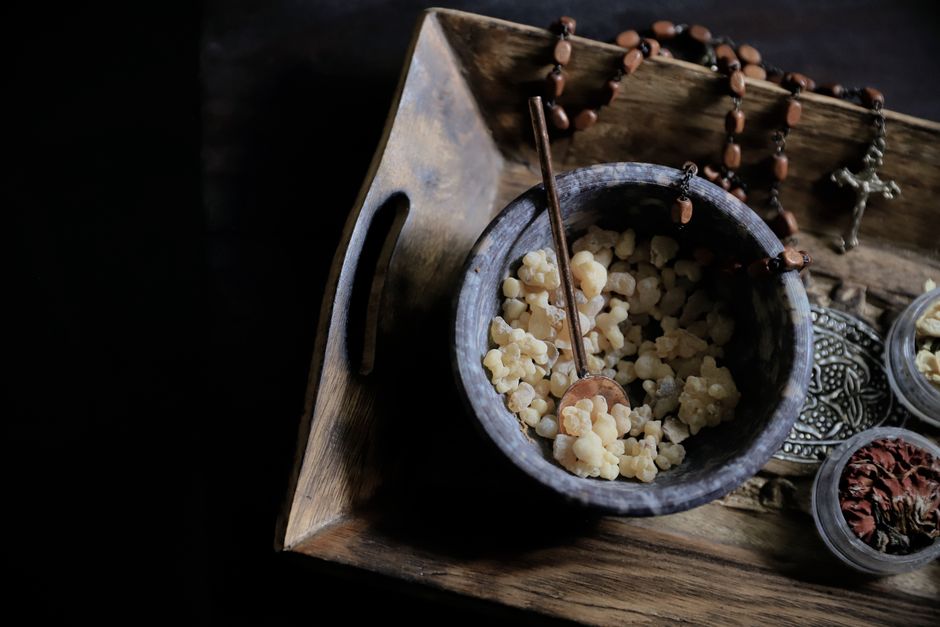
Frankincense oil is a plant extract with a long history of use in incense, religious ceremonies, and traditional medicine. Today it is sold mostly for skin care, aromatherapy, and general relaxation. The most common way to use it is diluted in a carrier oil and applied to the skin, or diffused into the air for its scent. It is not a proven treatment for any disease, and it should never be swallowed without medical supervision.
That last point matters more than most articles admit. A lot of what you see online about frankincense oil goes far beyond what research actually supports. This guide separates the established facts from the marketing claims, and explains how to use it sensibly if you choose to.
What Is Frankincense Oil?
Frankincense oil is an essential oil distilled from the resin of trees in the Boswellia genus. The trees grow in parts of Africa, the Arabian Peninsula, and India. Workers cut the bark, and the tree releases a gummy resin that hardens into tear-shaped lumps. That resin is steam-distilled to produce the oil.
The chemical makeup varies by species. Boswellia sacra, Boswellia carterii, Boswellia frereana, and Boswellia serrata are among the most common. Each produces a somewhat different oil, and the label often does not tell you which species you are buying.
Here is a distinction worth knowing. Boswellia serrata is the species most studied in clinical research, and most of that research uses standardized resin extracts in capsule form, not the distilled essential oil. These are not the same product. A study on a Boswellia extract capsule does not tell you much about the bottle of essential oil on your shelf.
How To Use Frankincense Oil Safely
Essential oils are concentrated. Used undiluted on skin, frankincense oil can cause irritation, redness, and a burning sensation, especially on sensitive areas. Dilution is the standard approach.
A common guideline in aromatherapy practice is to add about 1 to 2 drops of essential oil per teaspoon of carrier oil for adults. That works out to roughly a 1 to 2 percent dilution. For larger areas of skin, or for people with sensitive skin, a lower concentration is often used. Carrier oils include jojoba, sweet almond, fractionated coconut oil, and olive oil.
Patch testing comes first. Apply a small amount of the diluted oil to the inner forearm and wait 24 hours. If redness, itching, or swelling appears, do not use it.
Diffusion is simpler. Add a few drops to a diffuser with water and let it run in a ventilated room. Keep the door open. Strong or prolonged exposure to any essential oil vapor can irritate the eyes, nose, and throat, and can trigger headaches in some people.
A few cautions that apply to everyone:
- Do not swallow frankincense oil. Essential oils are not meant for internal use, and swallowing them can cause serious harm.
- Keep it away from the eyes, inside the nose, and other mucous membranes.
- Store the bottle tightly closed, away from heat and light. Essential oils degrade over time.
- Never leave a diffuser running unattended around pets or small children.
Can You Apply Frankincense Oil Directly to Skin?
Undiluted application is not recommended. Some people do it anyway, and some tolerate it. That does not make it a good idea. The risk of contact dermatitis and chemical burns from undiluted essential oils is real and well documented.
If you want to use frankincense oil on your face, dilute it more than you would for the body. Facial skin is thinner and more reactive. A common approach is a very low concentration in a light carrier oil, applied at night.
One thing to be clear about: frankincense oil is widely marketed for wrinkles, scars, and uneven skin tone. No large human trials confirm that it reverses aging or fades scars. Some small studies have looked at frankincense extracts and skin, but the evidence is limited and the products tested were not always the same as retail essential oil. If you use it for skin, treat it as a pleasant-smelling moisturizing oil, not a treatment.
Does Frankincense Oil Help With Pain or Inflammation?
This is where the gap between marketing and evidence is widest. Boswellia resin extracts have been studied for osteoarthritis and joint inflammation, and some trials have shown modest benefit. But those trials used standardized oral extracts, often at specific doses, over weeks to months. They did not test diluted essential oil rubbed on the skin.
Whether frankincense essential oil applied topically reduces pain has not been established in large controlled trials. Some people report relief. Reports are not evidence. Aromatherapy massage in general can feel soothing, and that effect may come from the massage and the scent rather than the oil itself.
If you have joint pain or chronic inflammation, talk to a clinician. Do not replace a treatment plan with an essential oil.
What About Stress, Sleep, and Mood?
Frankincense oil is often used in aromatherapy for relaxation. The evidence here is thin but not zero. Some small studies suggest that inhaling certain essential oils, including frankincense, may reduce feelings of anxiety or stress in specific settings. Most of these studies are small, short, and hard to blind, because people know what they are smelling.
The honest position: the evidence is limited. A pleasant scent can make a room feel calmer, and that experience is real. Whether the oil causes a measurable physiological change in stress hormones is not well established.
If diffusing frankincense oil helps you wind down, there is little harm in it as long as the room is ventilated and no one in the household has asthma or scent sensitivity. If you are using it to manage anxiety or insomnia instead of getting care, that is a different situation.
Who Should Avoid Frankincense Oil?
Some groups should be cautious or skip it entirely.
- Pregnant and breastfeeding women. No clinical guidelines currently establish safe use of frankincense essential oil during pregnancy or breastfeeding. The safest approach is to avoid it unless a clinician says otherwise.
- Infants and young children. Essential oils are not recommended for infants. For children, no reliable dosing guidance exists, and some oils can cause breathing problems.
- People with asthma or sensitive airways. Airborne oil vapor can trigger symptoms in some people.
- People with pets, especially cats. Cats cannot metabolize many compounds in essential oils, and diffused or topical oils can be toxic to them.
- Anyone with a known allergy to Boswellia or related plants.
- People taking blood-thinning medication. Some Boswellia extracts have been associated with effects on clotting in research settings. Whether this applies to diluted topical oil is unclear, so check with a clinician first.
How Should You Choose a Frankincense Oil?
Labels vary a lot, and the words on them are not tightly regulated. “Therapeutic grade” and “pure” are marketing terms, not official standards. There is no government body that certifies them.
What you can check:
- The botanical name of the species, listed as Boswellia followed by the species.
- Whether it is labeled as 100 percent essential oil or as a blend diluted with other ingredients.
- A batch or lot number on the bottle.
- A clear statement of origin and distillation method, if the seller provides one.
Price is not a reliable signal of quality. Neither is a pretty bottle. If a seller claims the oil cures a disease, that is a reason to be skeptical, not a reason to buy.
Can You Ingest Frankincense Oil?
No. Do not swallow essential oil. This is not a gray area. Ingesting essential oils can cause poisoning, burns to the mouth and throat, and serious complications. Some Boswellia products are sold as oral supplements, but those are formulated extracts, not essential oils, and they are a different product category with their own dosing and safety questions.
If someone swallows essential oil by accident, contact poison control right away.
The Bottom Line on Frankincense Oil
Frankincense oil is a fragrant plant extract that is reasonable to use diluted on skin or diffused for scent, as long as you patch test first and keep it away from children, pets, and mucous membranes. It is not a proven treatment for arthritis, scars, wrinkles, cancer, or any other condition.
If you enjoy the scent and tolerate it well, using it is a personal choice. If you are hoping it will replace medical care, the evidence does not support that hope. Talk to a clinician about whatever you are trying to treat.
Frequently Asked Questions
Can I put frankincense oil directly on my skin?
It is not recommended. Undiluted essential oils can irritate skin and cause contact dermatitis, so dilute it in a carrier oil first and patch test on your forearm for 24 hours.
Can you drink frankincense oil in water?
No. Swallowing essential oils can cause poisoning and burns to the mouth and throat, and it should never be done without medical supervision.
Is frankincense oil safe during pregnancy?
No clinical guidelines currently establish safe use of frankincense essential oil during pregnancy or breastfeeding. Avoid it unless a clinician tells you otherwise.
Does frankincense oil actually help with pain or arthritis?
Some trials show modest benefit from oral Boswellia resin extracts, but those are not the same as diluted essential oil applied to skin. No large controlled trials confirm that topical frankincense oil reduces pain.
