
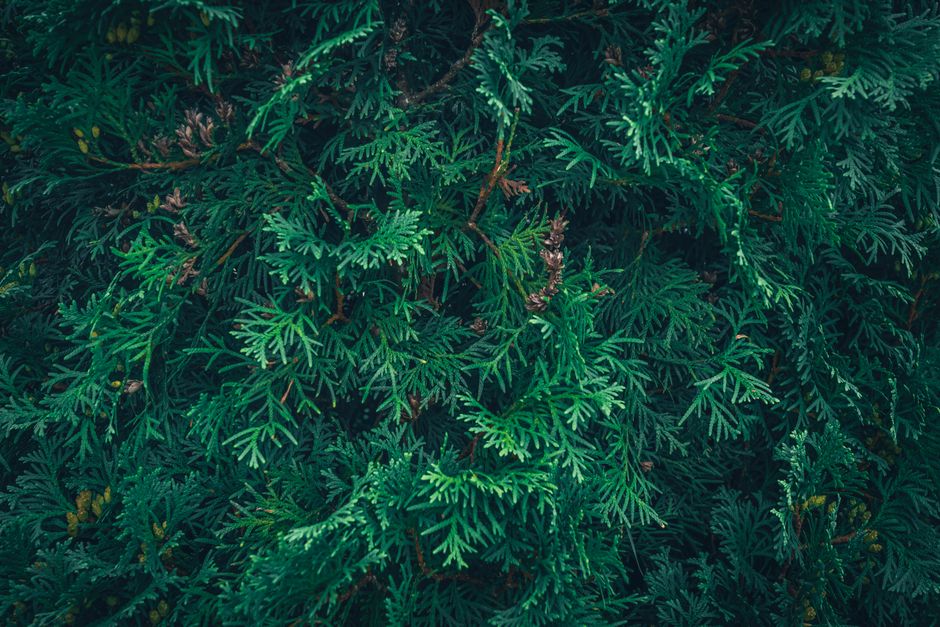
Fire Chief Arborvitae is a compact evergreen shrub that stays small and changes color with the seasons. You can use it as a low hedge, a foundation plant, or a container specimen. Its natural shape requires little pruning, and its red-tipped new growth adds visual interest from spring through fall.
What Makes Fire Chief Arborvitae Different From Other Evergreens?
Most evergreens stay green all year. Fire Chief Arborvitae does not. In spring, new growth emerges bright red or orange. This color fades to gold and then settles into deep green by summer. In cold weather, the tips turn bronze or plum.
This color shift is the main reason people choose it. It is a dwarf variety, reaching about 3 to 4 feet tall and wide. The USDA Natural Resources Conservation Service classifies it as Thuja plicata ‘Fire Chief’, a cultivar of western red cedar. It grows slowly and keeps a naturally rounded shape.
Many compact arborvitaes need constant trimming to stay tidy. Fire Chief does not. You can leave it alone for years and it still looks neat. This makes it a good choice for gardeners who want color without extra work.
Where Should You Plant Fire Chief Arborvitae?
Sunlight matters most. Fire Chief Arborvitae needs full sun to develop its red color. In shade, the new growth stays green or pale yellow. The plant itself will survive in partial shade, but you lose the feature that makes it special.
Soil drainage is the second factor. This shrub does not tolerate wet feet. If water pools in your yard after rain, plant it in a raised bed or on a slope. The soil should be loamy and slightly acidic, but it adapts to most garden soils as long as drainage is adequate.
Spacing depends on your goal. For a hedge, place plants 3 feet apart. Allow 4 feet between plants if you want each shrub to keep its individual rounded form. The University of Connecticut Plant Database notes that this cultivar matures at about 3 to 4 feet in both height and spread, so crowding leads to poor air circulation and disease.
How To Use Fire Chief Arborvitae In The Landscape for Maximum Effect
Use it as a low hedge along a walkway or drive. The red tips in spring create a soft border that does not block views. It works well under windows because it stays short. A row of Fire Chief along a foundation draws attention to the house without hiding it.
Container planting is another strong use. The slow growth means you do not need to repot every year. Use a pot at least 18 inches wide with drainage holes. Fill with a mix of potting soil and sand for drainage. Water when the top inch of soil feels dry. In cold climates, move the container to a sheltered spot or wrap it in burlap for winter.
Mix it with other shrubs for contrast. Pair it with dark green evergreens like boxwood or holly. The red and gold tones stand out against deeper colors. It also works alongside ornamental grasses or perennials that bloom in spring. The table below shows common planting combinations.
| Companion Plant | Why It Works | Spacing From Fire Chief |
|---|---|---|
| Boxwood (Green Velvet) | Dark green contrasts with red tips | 2.5 to 3 feet |
| Korean Spice Viburnum | Spring flowers add fragrance | 3 to 4 feet |
| Blue Fescue Grass | Blue-gray leaves complement warm tones | 1.5 to 2 feet |
| Dwarf Burning Bush | Fall red echoes spring red of Fire Chief | 3 feet |





How Do You Care For Fire Chief Arborvitae After Planting?
Water deeply once a week for the first year. After that, the shrub is fairly drought-tolerant. In sandy soil or hot weather, check moisture more often. Overwatering is a common mistake. Let the soil dry between waterings.
Fertilize lightly in early spring. Use a balanced slow-release fertilizer like 10-10-10. Apply at half the rate recommended on the bag. Too much nitrogen causes leggy growth and reduces red color. Research from North Carolina State University Extension advises against fertilizing in late summer because it can push tender growth that winter kills.
Pruning is optional. If you trim, do it in late winter or early spring before new growth starts. Remove dead or broken branches. Shape lightly if needed. Do not cut into old wood with no green leaves — it may not regrow. Some people report that light shearing in early spring encourages more red growth, but strong evidence for this claim is limited.
What Are the Common Problems With Fire Chief Arborvitae?
Spider mites can appear in hot, dry weather. You might see fine webbing or yellow speckles on the leaves. Hosing the plant down with water once a week often solves the problem. Insecticidal soap works if the infestation is heavy. The American Horticultural Society recommends avoiding broad-spectrum pesticides that kill beneficial insects.
Winter burn is another issue. In cold, windy areas, the foliage can turn brown on the side facing the wind. This happens because the plant loses water through its leaves faster than its frozen roots can replace it. To prevent this, water the shrub well before the ground freezes. You can also wrap it in burlap or use an anti-desiccant spray. The Iowa State University Extension reports that anti-desiccants reduce water loss but must be applied correctly or they can trap heat.
Root rot is the most serious problem. It happens in heavy clay soil or overwatered beds. The leaves turn yellow or brown, and branches die back. Once root rot sets in, the plant rarely recovers. Prevention is the only real solution — plant in well-drained soil and avoid overwatering.
Does Fire Chief Arborvitae Work in Cold Climates?
Yes, with some care. This shrub is hardy in USDA zones 5 through 8. That means it can survive winter temperatures as low as minus 20 degrees Fahrenheit. In zone 5, winter protection helps. Apply a 2 to 3 inch layer of mulch around the base after the ground freezes. Do not pile mulch against the trunk.
Snow load can bend or break branches. In areas with heavy snow, gently brush snow off after storms. Do not shake the branches — frozen wood is brittle and snaps easily. If you get ice storms, let the ice melt naturally. Trying to remove ice damages the bark.
Some people report that Fire Chief Arborvitae loses more color in colder zones. The red tips may appear less vibrant after a harsh winter. As of 2026, there is no clinical evidence that cold permanently damages the plant’s color genetics. The color returns in spring as long as the plant is healthy.
Frequently Asked Questions
How fast does Fire Chief Arborvitae grow?
It grows slowly, about 6 to 12 inches per year. It takes 5 to 7 years to reach full size.
Can Fire Chief Arborvitae grow in shade?
It survives in partial shade but loses its red color. Full sun is needed for the best color.
How far apart should you plant Fire Chief Arborvitae for a hedge?
Space plants 3 feet apart for a dense hedge. For individual rounded plants, use 4 feet of spacing.
Is Fire Chief Arborvitae deer resistant?
Deer generally avoid it but will eat it if food is scarce. No shrub is fully deer-proof.
