
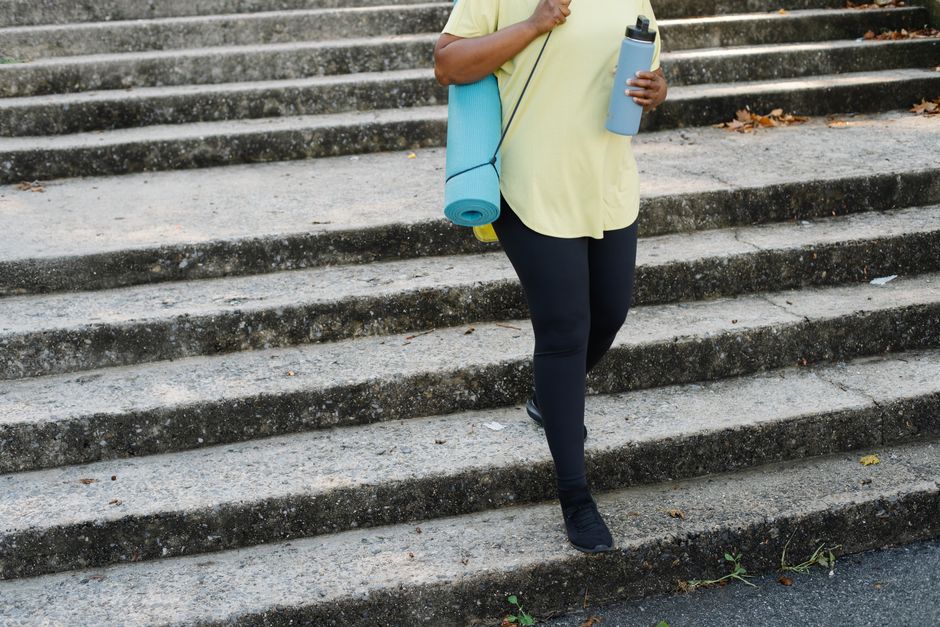
Going up and down stairs on crutches without a railing means relying on the crutches and your body for every bit of support. The rule is simple: lead with your strong leg going up, lead with the crutches going down. Move one step at a time, keep your weight close to the wall or handrail side if one exists, and never rush. When there is no railing at all, you go sideways or use the wall for balance — and if the staircase feels unsafe, do not use it.
Stairs are one of the most common places people fall while recovering from a leg injury. The good news is that the technique is teachable and, once learned, becomes fairly automatic. What follows is how to do it safely, what to do when there is nothing to hold onto, and when to ask for help instead.
How To Use Crutches On Stairs Up Down No Railing?
The core principle is that your stronger, uninjured leg does the pushing going up, and the crutches do the supporting going down. This keeps the injured leg out of the load-bearing role as much as possible.
Here is the sequence for going up a step:
- Stand close to the step, crutches planted on the lower level.
- Push down through the crutches and step up with your strong leg first.
- Bring the crutches and the injured leg up onto the same step.
- Repeat one step at a time. Do not try to skip steps.
Here is the sequence for going down a step:
- Stand at the edge of the step, crutches placed on the step below.
- Lower the crutches and the injured leg down first.
- Shift your weight onto the crutches, then bring the strong leg down to meet them.
- Repeat one step at a time.
A memory phrase many physical therapists use is “up with the good, down with the bad.” The “good” leg goes up first. The “bad” leg — along with the crutches — goes down first. It is worth saying out loud the first few times until it sticks.
Keep your crutches close to your sides, not stretched far in front of you. Reaching too far forward shifts your weight and makes a fall more likely. Take the stairs slowly and pause between steps if you need to.
What Do You Do When There Is No Railing At All?
Without a railing, the wall becomes your backup. Turn slightly so your shoulder or free hand can rest against the wall for balance while you manage the crutches. You are not leaning on the wall for support — you are using it as a reference point so you do not drift sideways.
If the staircase is narrow, open on one side, or has no wall within reach, the honest answer is that it may not be safe to use alone. That is not a reason to feel defeated. It is a reason to plan around it.
Options that physical therapists and rehabilitation teams commonly suggest include:
- Ask someone to stand on the stairs below you as a spotter.
- Use a temporary handrail that clamps onto the wall, if one can be fitted safely.
- Arrange to stay on one floor as much as possible until you are more mobile.
- Ask your care team about a stair lift or a different exit route.
Some clinicians recommend practicing on a single step first — a low, stable step with a wall beside it — before attempting a full staircase. That is common practice rather than something proven in trials, but it is a reasonable way to build confidence.
Why Is Going Down Harder Than Going Up?
Going down is harder because gravity is working with you in the wrong direction. Each step down requires you to control your descent and absorb force through the crutches and your arms. Going up, by contrast, is mostly a push.
This is why more falls on crutches tend to happen on the way down. The crutches have to land squarely on the step below before you commit your weight. If a crutch tip slips off the edge, you have very little time to correct.
Two things help. First, look at where the crutch tips are landing, not at your feet. Second, keep the crutch tips well back from the edge of each step. Placing them too close to the lip is one of the most common reasons a crutch slips.
How Should You Set Up Your Crutches Before You Start?
Fit matters more than most people realize. Crutches set too high or too low change how your weight travels through your arms and make stairs harder to manage.
A general guide used in clinical settings: when you stand with the crutches under your arms, the top of the crutch should sit about two to three finger-widths below your armpit. The handgrips should sit at roughly wrist height when your arms hang relaxed. Your elbows should be slightly bent, not locked straight.
Never rest your body weight in your armpits. That pressure can compress nerves and blood vessels in the armpit area, which can cause numbness, tingling, or weakness in the arm. Your weight should go through your hands and forearms.
Check the rubber tips before every trip up or down. Worn or cracked tips grip poorly and are a real fall risk. If they look smooth or split, replace them before using the stairs.
What Footwear and Clothing Help on Stairs?
Footwear matters more on stairs than on flat ground. Wear shoes with a firm sole and good grip. Socks, slippers, and loose sandals are a poor choice on stairs — they slip, and they give you less control over where your foot lands.
Loose clothing that drags near the floor can catch on a crutch tip or a step edge. Fitted pants or shorts are safer. Carry bags on your back or in a small crossbody bag so both hands stay free for the crutches.
If you need to carry something up or down the stairs, the safer approach is to ask someone to carry it for you, or to make the trip twice. Trying to hold a bag and manage crutches on stairs at the same time is how many falls happen.
When Should You Ask for Help Instead of Doing It Yourself?
Ask for help when the staircase is steep, narrow, poorly lit, or has no wall or railing within reach. Ask for help when you are tired, in pain, or taking medication that affects your balance or alertness. Ask for help the first few times you use a new staircase, even if you feel confident.
Fatigue is a real factor that gets overlooked. Crutch walking uses more energy than normal walking, and your arms and shoulders tire faster than your legs would. If your arms feel shaky, stop and rest before continuing.
Talk to your physical therapist or doctor about your specific situation. They can watch you practice on stairs and correct your technique. Some rehabilitation programs include stair training as part of recovery — it is worth asking whether yours does. If you have not been shown how to manage stairs on crutches, ask before you try it at home.
Frequently Asked Questions
Which leg goes first when going up stairs on crutches?
Your strong, uninjured leg goes up first, then the crutches and injured leg follow onto the same step. This keeps most of the load off the injured leg.
Which goes first when going down stairs on crutches?
The crutches and the injured leg go down first, then your strong leg comes down to meet them. Going down, the crutches lead the way.
Can you use crutches on stairs without a railing?
It can be done if there is a wall to use for balance, but it is riskier and you should go slowly, one step at a time. If the staircase has no wall or railing within reach, it may be safer to ask for a spotter or avoid it.
What if my crutch slips on the stairs?
Keep the crutch tips well back from the edge of each step and check the rubber tips for wear before you start. If a crutch slips, stop, reset your footing, and do not continue until you feel steady.
