
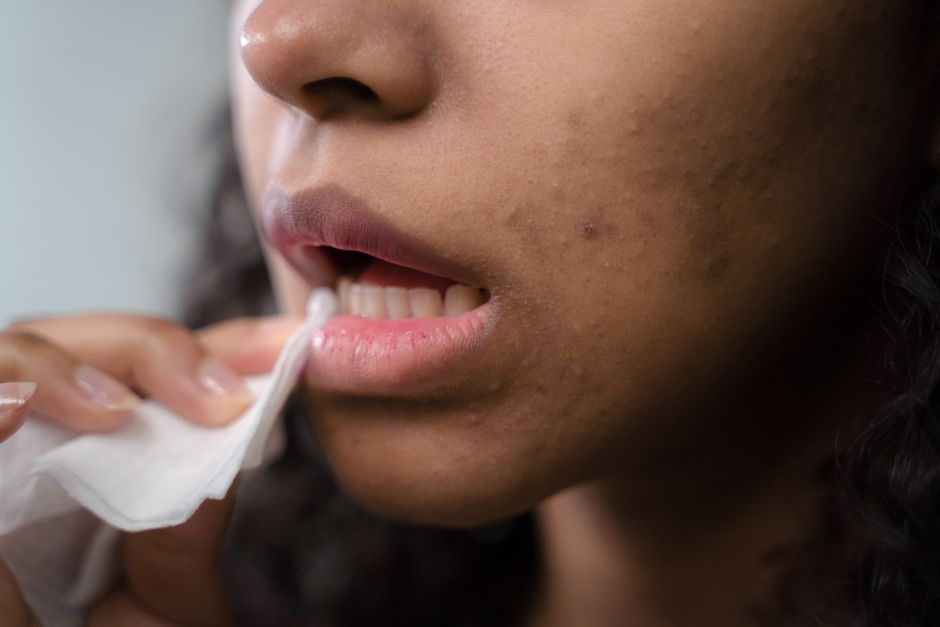
Cicaplast Baume B5 is a barrier repair cream, not an acne treatment. It contains no ingredients that fight acne bacteria or unclog pores, and it was not designed or tested as an acne product. That said, many people with acne-prone skin use it — and some dermatologists suggest it — as a soothing layer when prescription acne treatments leave the skin dry, red, or irritated. The key is understanding what it can and cannot do.
What Is Cicaplast Baume B5 and What Is It Actually For?
Cicaplast Baume B5 is a thick, occlusive skin cream made by La Roche-Posay. It was formulated to soothe and protect compromised skin — the kind of skin that is raw, peeling, or irritated after a burn, a cosmetic procedure, or harsh topical treatment. It is not marketed as an acne treatment, and the company does not position it as one.
The product’s main ingredients include panthenol (provitamin B5), shea butter, glycerin, madecassoside (a compound from the Centella asiatica plant), and zinc gluconate. Panthenol and glycerin are humectants — they draw and hold water in the skin. Shea butter and dimethicone act as occlusives, forming a barrier that slows water loss. Madecassoside has been studied for its role in wound healing and skin soothing, though most of that research is preliminary and not specific to acne.
Zinc gluconate is sometimes included in acne products because zinc has mild anti-inflammatory properties. In Cicaplast, the concentration is low and the product is not formulated for that purpose. It would be inaccurate to call this cream an acne treatment based on its zinc content.
What the product does well is reduce transepidermal water loss and calm irritation. That matters for acne-prone skin because many effective acne treatments — benzoyl peroxide, retinoids, salicylic acid — cause dryness, peeling, and redness, especially in the first weeks of use.
How To Use Cicaplast Baume B5 For Acne Prone Skin
If you choose to add Cicaplast to an acne routine, the general approach is to use it as a finishing layer after your acne treatment, not as a replacement for it. Apply your acne medication first, let it absorb for a few minutes, then apply a thin layer of Cicaplast over the top.
Timing matters. Many dermatologists suggest using Cicaplast at night, when the heavier texture is less noticeable and the skin has hours to recover. During the day, a lighter moisturizer may be more comfortable, especially if you wear makeup or sunscreen.
Use a small amount. This cream is thick. A pea-sized amount is usually enough for the full face. Applying too much can feel greasy and may contribute to clogged pores in people who are already prone to them.
Spot-treat irritated areas rather than applying it everywhere. If your cheeks are peeling from a retinoid but your forehead is tolerating treatment well, there is no need to cover the entire face. Targeted application reduces the risk of the cream itself causing problems.
Do not layer Cicaplast over freshly applied adapalene, tretinoin, or other retinoids if your dermatologist has told you to apply them to dry skin and wait. Occlusive creams can increase absorption of some active ingredients, which may increase irritation. Ask your prescriber whether the order of application matters for your specific regimen.
Can Cicaplast Baume B5 Cause Breakouts?
Yes, it can — for some people. The product contains shea butter and dimethicone, which are occlusive ingredients. Occlusives are not inherently comedogenic, but they can trap oil and debris against the skin. For someone with active acne or very oily skin, that environment may worsen clogged pores.
The term “non-comedogenic” is used loosely in the skincare industry. There is no standardized testing protocol that all brands follow, and individual responses vary. A product labeled non-comedogenic can still cause breakouts in some users.
If you notice new blackheads, whiteheads, or inflamed pimples appearing in areas where you applied Cicaplast, stop using it and see whether your skin improves. That is the most reliable way to know whether the product is contributing to your breakouts.
People with dry, irritated, acne-prone skin tend to tolerate Cicaplast better than those with oily skin and widespread active breakouts. If your acne is primarily inflammatory and your skin is already oily, a lighter, gel-based moisturizer may be a better fit.
What Does the Evidence Actually Show?
There is very little published research on Cicaplast Baume B5 specifically for acne-prone skin. Most studies on the product have looked at its use after procedures like laser therapy or chemical peels, or in patients with irritated skin from other causes. Those studies generally found it improved redness and comfort.
Panthenol, glycerin, and occlusive ingredients are well-established in dermatology for supporting barrier function. That part is not controversial. What is not established is whether adding Cicaplast to an acne routine improves acne outcomes or simply makes treatment more tolerable.
No large clinical trial has compared Cicaplast plus acne treatment against acne treatment alone with respect to clearing acne. It is reasonable to say that the product may help you stick with your acne treatment by reducing side effects. It is not reasonable to say it treats acne.
Be cautious of online claims that Cicaplast “heals acne” or “repairs the skin barrier to cure breakouts.” The skin barrier matters for overall skin health, but impaired barrier function is not the root cause of acne. Acne is driven by four main factors: excess sebum production, clogged hair follicles, the bacterium Cutibacterium acnes, and inflammation. A barrier cream does not address any of those directly.
How Does Cicaplast Compare to Other Moisturizers for Acne-Prone Skin?
The main difference between Cicaplast and standard acne-friendly moisturizers is texture and occlusivity. Cicaplast is heavier and more protective. Most moisturizers marketed for acne-prone skin are lighter gels or lotions designed to hydrate without adding weight.
| Product Type | Texture | Best For | Risk of Clogging Pores |
|---|---|---|---|
| Cicaplast Baume B5 | Thick, balm-like | Irritated, peeling, or post-procedure skin | Higher for oily or breakout-prone skin |
| Gel moisturizer | Light, water-based | Oily skin, daily hydration | Lower |
| Lotion moisturizer | Medium weight | Combination skin | Moderate |
| Ceramide cream | Medium to thick | Dry, compromised skin | Varies by formulation |
If your skin is oily and you do not have significant irritation from acne treatment, a gel moisturizer is usually a better daily choice. If your skin is dry, flaky, and red from retinoids or benzoyl peroxide, Cicaplast may be more helpful.
Some people use both: a gel moisturizer in the morning and Cicaplast at night during the adjustment period when starting a new acne treatment. That approach is reasonable, though it has not been formally studied.
When Should You See a Dermatologist Instead?
If your acne is moderate to severe, or if it is causing scarring or significant distress, a barrier cream is not going to be enough. Acne that involves deep nodules or cysts can lead to permanent scarring, and early treatment with prescription medications — including oral antibiotics, hormonal therapies, or isotretinoin — may be appropriate.
Signs that you should seek medical care include:
- Painful, deep bumps under the skin
- Acne that is not improving after several months of over-the-counter treatment
- Scarring or dark marks that persist after pimples heal
- Sudden severe acne, especially with other symptoms like fever or joint pain
- Acne that is affecting your mental health
A dermatologist can help you build a routine that addresses the causes of acne and manages side effects. Cicaplast may be part of that routine, but it should not be the foundation.
Frequently Asked Questions
Can I use Cicaplast Baume B5 every day on acne-prone skin?
Yes, many people use it daily as a nighttime moisturizer. If you notice increased breakouts, reduce frequency or stop using it.
Does Cicaplast Baume B5 clog pores?
It can for some people because it contains occlusive ingredients like shea butter and dimethicone. There is no way to predict who will experience clogged pores from it.
Should I apply Cicaplast before or after my acne treatment?
Apply your acne treatment first, then Cicaplast on top. If your dermatologist has given you specific instructions, follow those instead.
Is Cicaplast Baume B5 a substitute for acne medication?
No. It does not treat acne. It may help soothe irritation caused by acne treatments, but it does not address the underlying causes of acne.
